

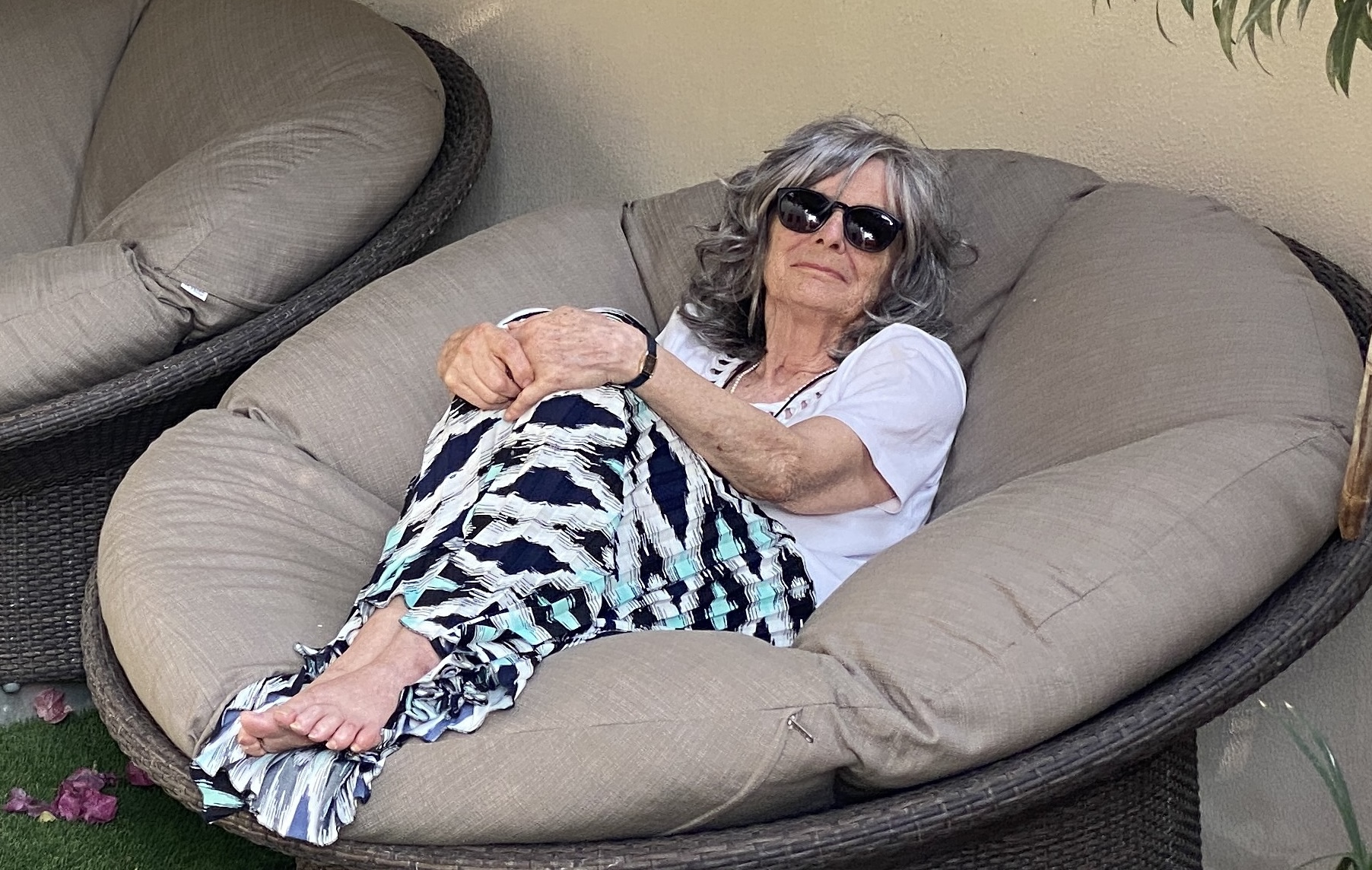
Some time after my dad died, I asked my mum what she wanted to do. She could come to Ipswich and live with us? or go to London and live with my sister? or downsize from the large house we moved to in 1992? or stay in the house? Her answer:
“You’ll carry me out of this house in a box.”
Mission accomplished.
She was living on her own in that house (with a steady stream of friends and piano pupils coming by) until mid-March, when, after we got the “no further treatment available” talk from her oncologist, she started to get rapidly weaker, and we her kids decided that one of us had to be there all the time. It’s a testament to how ill she was that she didn’t fight us on it.
She taught her last piano lesson on March 23rd, and died on April 28th.
She used to say that every morning she’d wake up and think how lucky she was, and every night she’d go to bed thinking how lucky she was. And I have to say, she was right. Stage 4 cancer diagnosed in 2022, at age 81. Independent to the last month, and in all that time, two nights in hospital. She died in her own bed, with excellent support from the Macmillan nurses, with me on one side of her, and my sister on the other. They are both very churchy, so Claire was singing hymns (thankfully she can actually sing or that could have been an awful way to go).
While we’ve been sorting through the house we’ve found lots of old photographs. Here’s my favourite, which sums them up beautifully. My dad, the vet, is spoon feeding a baby leopard.
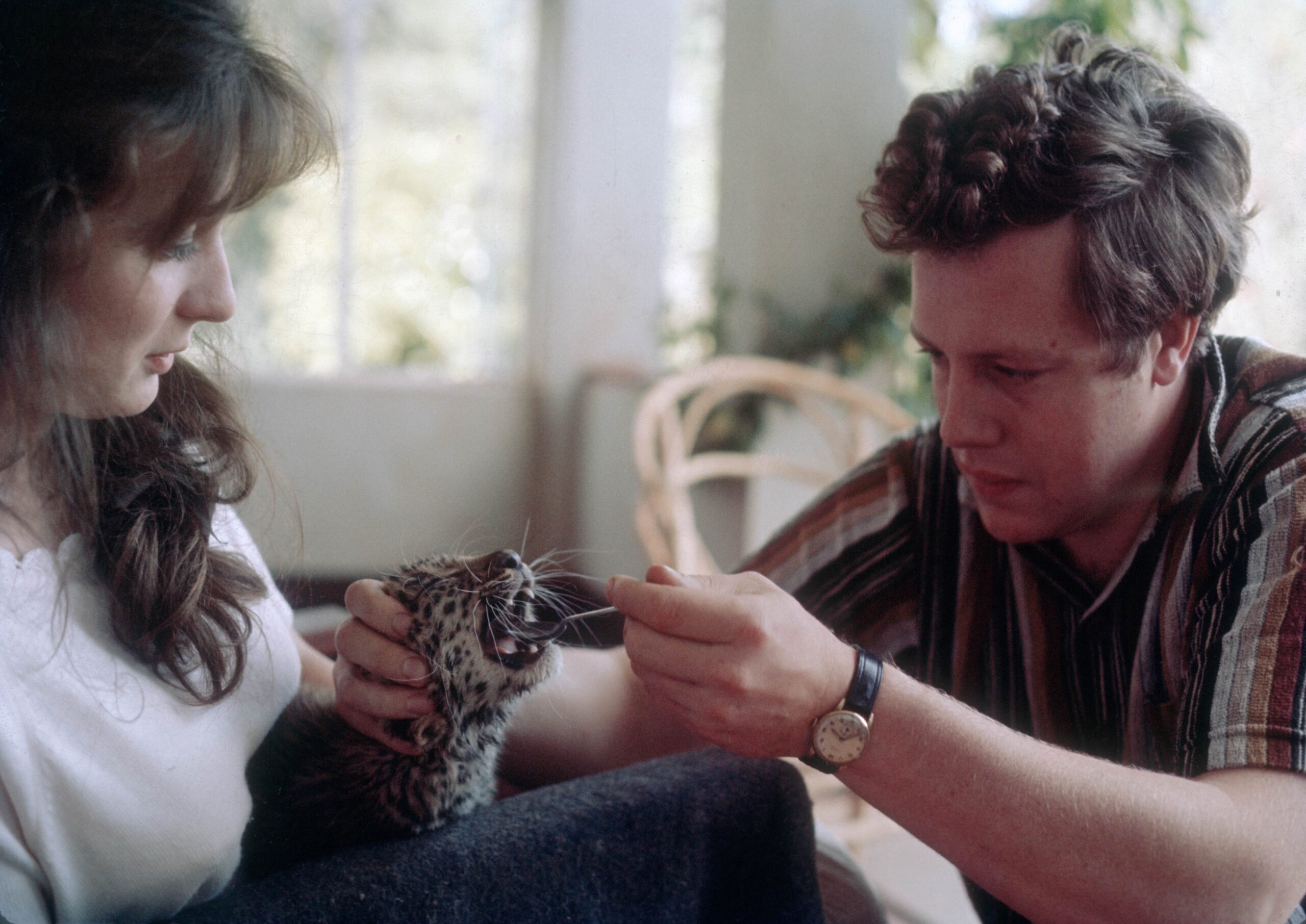
My mum is holding the wild animal so the vet can do his work. As a pianist mum was well known in the area as the person to call when somebody let you down or there was a problem you couldn’t fix. Need an accompanist for an exam? Call mum. Need a soloist for a concert? Call mum. Your violin student has no sense of rhythm? Call mum. We were fielding such requests the day she died (and for days afterwards, until word got round). She was a good pianist, but she was a great teacher. So what lessons can I draw from her life and death? Here are a few:
Filling the void
We really were very lucky. This could have been a million times worse. She was herself to the very end, and on the really serious class-A drugs for only a couple of days. We knew it was coming, and were prepared. But still. It feels like someone has broken into my home and emptied one of the rooms. There’s empty space where there shouldn’t be. This is just bereavement, I guess. But it’s also an opportunity. Left to itself, I can fill that void with whisky and chocolate (I can hear my mum telling her oncologist that she’ll be having her glass of wine with dinner every evening regardless). An empty room can quickly fill up with shit. Or, I can deliberately, carefully, redesign that interior space into something useful, beautiful, and kind. I've spent a lot of time since she died pottering about in my shed doing more or less useful things, and even more time de-cluttering and re-organising my workshop, study, and home. This is externalising an internal process.
Know your goal
It’s very useful having a goal. She wanted to die in her own home, and we did all sorts of things to help that happen. As irony would have it, the men came to measure up for a stairlift for my father the day he died. He went much faster than expected, and we could have cancelled the order, but I told mum it would future-proof her house. What if she twisted an ankle and couldn’t manage the stairs for a bit? In her last month that stairlift was absolutely critical for her to be able to sleep in her own bed, and have a social life.
In four years of cancer, she spent two nights in hospital. Very lucky, but also partly down to having a goal and working accordingly. In her last week she was still a bit reluctant to take my arm to get from the music room to the kitchen. I told her that if she had a fall, she’d probably have to go to hospital, and would probably die there. “Oh all right then”.
How lucky we are
Her short-term memory wasn’t great, thanks to the chemo, so she’d repeat herself quite a lot. One thing she’d tell us over and over is ‘every morning when I wake up I think “how lucky I am”, and every night when I go to bed I think “how lucky I am”’. She was resolutely focussed on the positive things in her life. Never mind the cancer, concentrate on Mozart, and friends, and family.
You just have to get on with it
She would also say, when asked how she was, “well, you’ve just got to get on with it.”
That’s the attitude she took when dad was in bed with hepatitis, I was in hospital with paratyphoid, and my brother fell off a horse, all in the same happy week in Argentina in 1979. She just got on with it. I try to channel that when things get tricky.
A beautiful death
Death is often squalid and ugly. Hers was, in its own way, beautiful. This was possible thanks to the really stellar support she got from the NHS and the Macmillan nurses. But it also required that everyone around her, including her kids, were able to accept that she was dying. No denial, no false hope, no desperate pleas to the doctors for last-second miracles. We had our miracles: state of the art treatment that gave her four extra years. Years in which she taught maybe 3000 more piano lessons, and most importantly saw her youngest grandchildren grow to an age where they’d have their own clear memories of her. Once you accept that death is inevitable, you can stop scrabbling about for extra days or weeks bought with needles and pain, and make the last days and hours worth living.