Guy's Blog

Guy frequently keeps this blog updated with thoughts, challenges, interviews and more!

Tag: Experiment

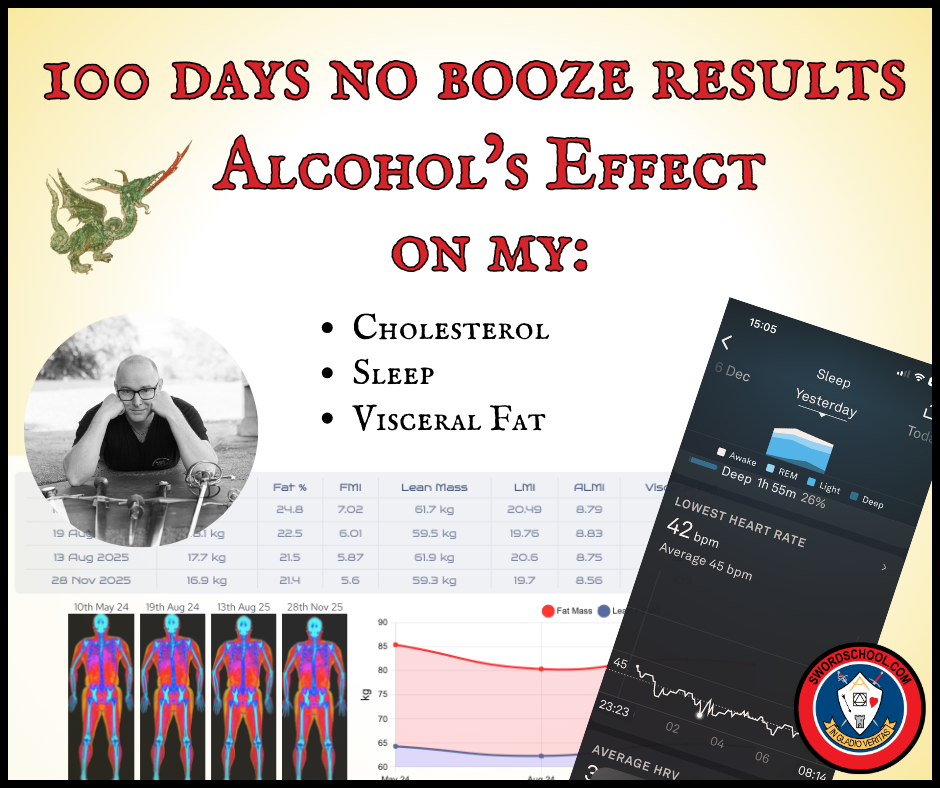
100 days no booze banner image with Guy Windsor, dexa results, oura ring results

I stopped drinking alcohol on August 19th, aiming for 100 days. In the end, I reached 103 days without booze, and without much effort. This post unpacks my 100 days no booze results, including cholesterol, visceral fat, sleep, heart rate, and the strange mysteries of my DEXA scans.

If you want the background and the halfway-point update, you can read that here — but let’s jump into the results.

Weight and Waist: The Simple Home Measurements

So what happened?The only measurements I can reasonably make at home are overall weight and waist circumference. Those have both improved.

  • Weight: 81.2kg 78.7kg
  • Waist: 91cm 88cm

Not bad results, but not stellar. I did once lose 10kg in three weeks

Two noticeable effects:

•Reflux definitely improved

•Sleep did not noticeably improve

But the most important finding wasn’t from any measurement device:

My wife and daughters all agreed I was much less irritable when not drinking.

That’s definitive.

The two main metrics I was trying to improve were cholesterol levels, and visceral fat. I was hoping for improved sleep and thus more creative juice too.

Cholesterol and Triglycerides

Let’s start with cholesterol. Here are the results over the last year:
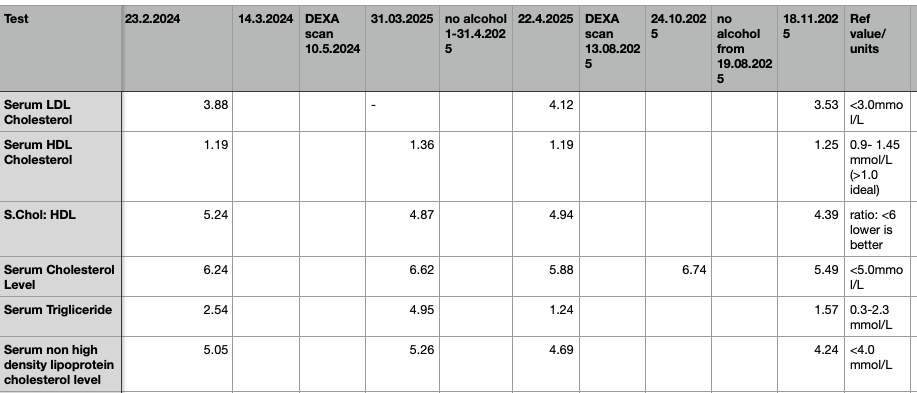
spreadsheet with my cholesterol test results as affected by booze intake

Back on 31 March, my triglycerides were so high the lab couldn’t even calculate LDL. After just three weeks without alcohol, everything had improved dramatically by 22 April.

The 100 Days No Booze Results

After the full 100 days:

•LDL: down from 4.12 3.53

•Triglycerides: up slightly from 1.24 1.57, but still well within reference range

These numbers fluctuate, and any single blood test is just a snapshot — like a photo of a busy street rather than a full documentary. But overall:

The trend is clear: not drinking alcohol helps my cholesterol and triglycerides.

These things are not an exact science: there are too many variables affecting cholesterol levels on any given day. Any blood test is a snapshot of a moment in time, like a photograph of a busy street. But the trend seems positive. From a cholesterol and triglycerides perspective, it’s clear that cutting out alcohol helps me a lot.

A Coffee Cholesterol Surprise

Two weeks before the final blood test, I learned that diterpenes in unfiltered coffee can raise cholesterol. Since then I’ve switched to paper-filtered coffee. This may have helped too.

Visceral Fat: The Most Interesting (and Confusing) Results
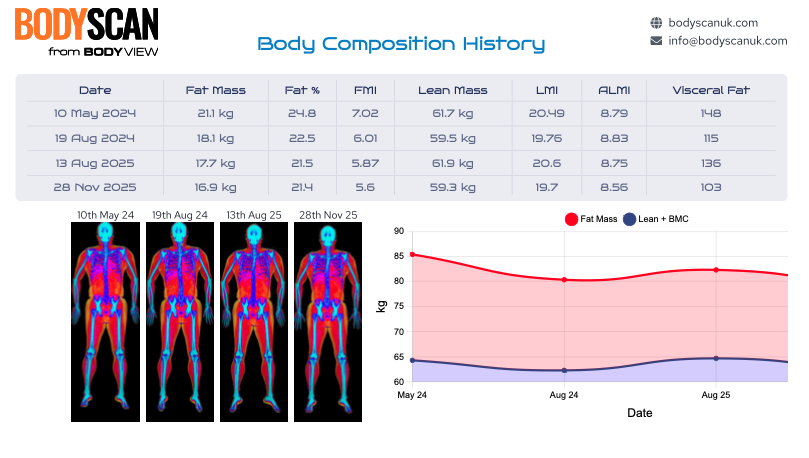
page from my DEXA scan results

Now the visceral fat. It was baffling to me that at my previous DEXA scan in August, my overall body fat was down quite a bit, but my visceral fat had jumped back up from 115 to 136. This latest scan, on November 28th, was even weirder. According to the weighing scales at the DEXA clinic, I’d lost a total of 1.8kg exactly.

My visceral fat is down to 103 cm2. (Visceral fat is measure in cm2 because it’s a calculation of the area of the cross-section of your torso at the navel. So if you cut me in half with a very sharp sword at my navel and measured the total area of fat, it would be 103cm2 out of a total of about 730)

Here's the pdf of the entire scan results: Guy_Windsor_2025-11-28-report

This is excellent, and what I was hoping. But here’s the thing. A bottle of wine is about 700 calories. I was averaging a bottle a day. So over 100 days, my overall calorific intake was down by about 70,000 calories (not counting the extra food I would have also eaten, because drinking with food tends to increase how much you eat). Fat stores about 9000 calories per kilo, so that’s about 7.8kg of fat.

But I’d lost a total of 785g. What the actual? That’s maybe 10% of what one might reasonably expect.

The rest of my weight loss came from “lean tissue”, mostly in the torso. 1.929kg from my trunk to be exact. That’s obviously not muscle (or at least mostly not muscle). There simply isn’t that much muscle to lose- and I’m stronger now than I was in August, including in my so-called “core”. So that’s either fluid, or organ mass, with perhaps some of it being gut contents (though my bowels were fine both that day and for the previous scan).

I also don’t understand how I can be 1.8kg lighter, having lost 2.631kg of lean mass and 785g of fat. That’s a total of 3.416kg… so where’s the extra 1.616kg? I certainly haven’t added that much to my bones! And I wasn’t bloated during the previous scan.

This was baffling enough that I contacted the company, and after a bit of email back and forth got on a call with one of their technicians. He pointed out that in my previous scans the DEXA total mass measurement agreed quite closely with the impedance scale measurement, except for my August 2025 scan, where it disagrees by just over 2kg. The simplest explanation is that the technician on the day recorded my weight wrong: he put 80.6kg in when it should have been closer to 82 (the DEXA recorded it at 82.298).

It’s normal for the DEXA scan to calculate total body mass about 2-400 grammes higher than the scale weight. But not 1.7kg high. And that 1.7kg is very close to the 1.6kg discrepancy in these figures. So if we correct that weight measurement, the numbers basically add up.

Here’s another mystery. According to the scan, I’ve gained 98g of lean mass (probably muscle) in my right leg… but lost 718g from my left leg! Without any noticeable change in relative strength (and yes, I am right handed and footed, but I do all my training on both sides, and in August, they were basically equal).

So, getting back to the actual point of the scan: it does seem that cutting alcohol cuts my visceral fat, but does nothing at all for my other fat. And it’s somehow fucked my left leg, even though it feels fine.

That was Friday, day 102 of my 100 days. So I had a small glass of wine that evening, and a few more on Saturday (my wife’s birthday), and a lot more on Sunday (my birthday). My reflux did not approve, but it was worth it.

Alcohol vs. Heart Rate: Oura Ring Data

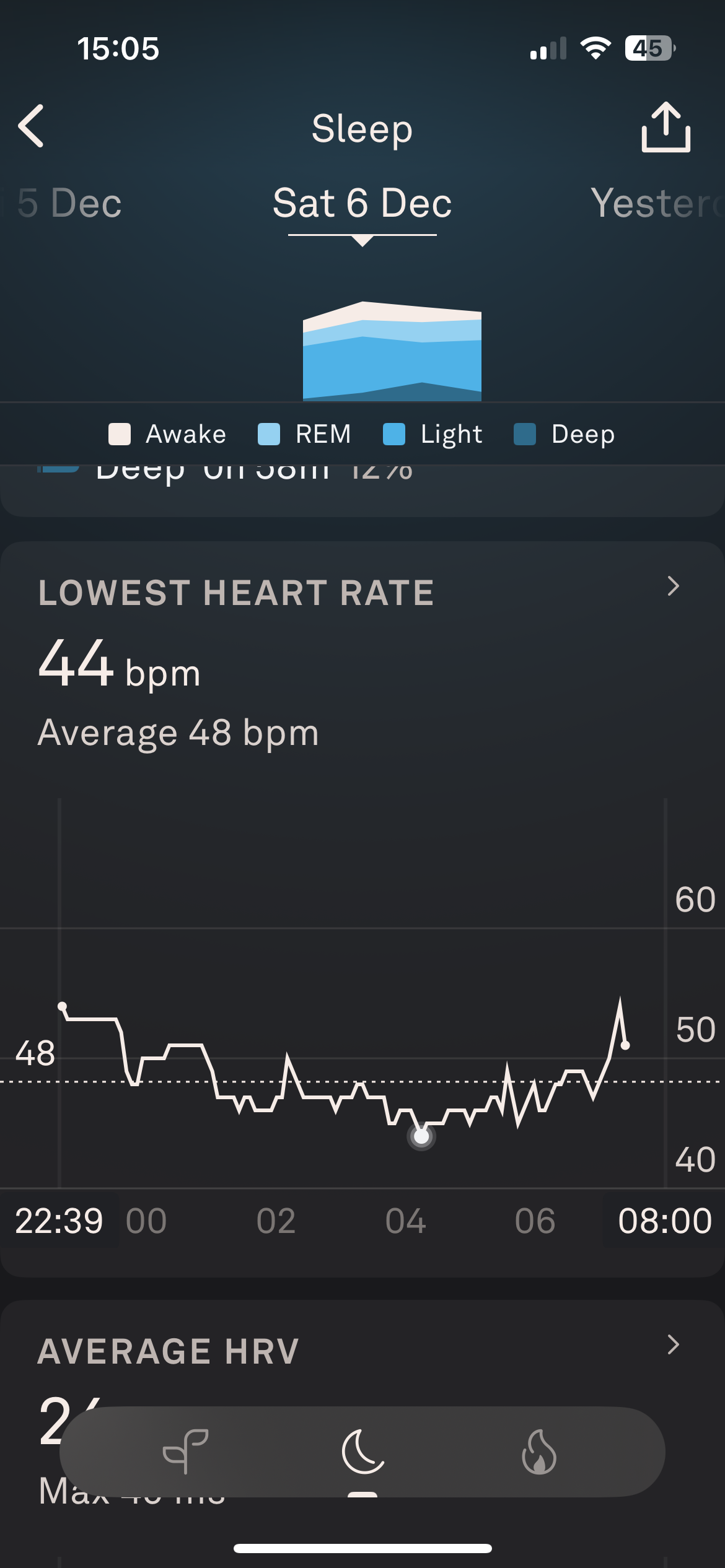
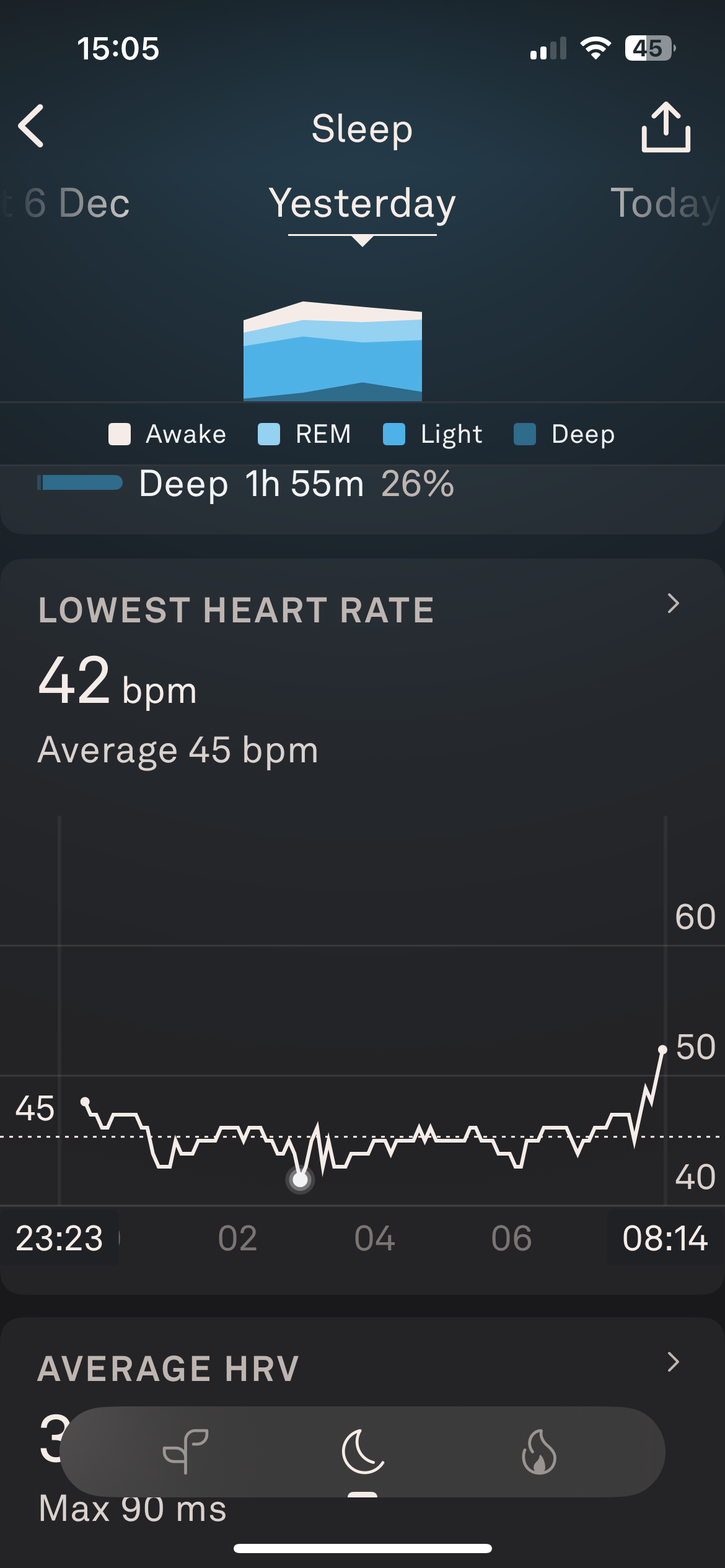
Leaping down off the wagon like that gave me an opportunity to double check alcohol’s effect on sleep, so just for fun I put on my Oura ring and measured my heart rate. If you’re familiar with my Oura woes, I don’t take anything it measures seriously except heart rate, temperature, and HRV. It certainly can’t tell the difference between me lying in bed trying to sleep and me actually sleeping. But I do think it measures heart rate pretty well.

Here’s what the graphs look like. In each case I went to bed sober, and stopped drinking by 7pm, four hours before lights out.
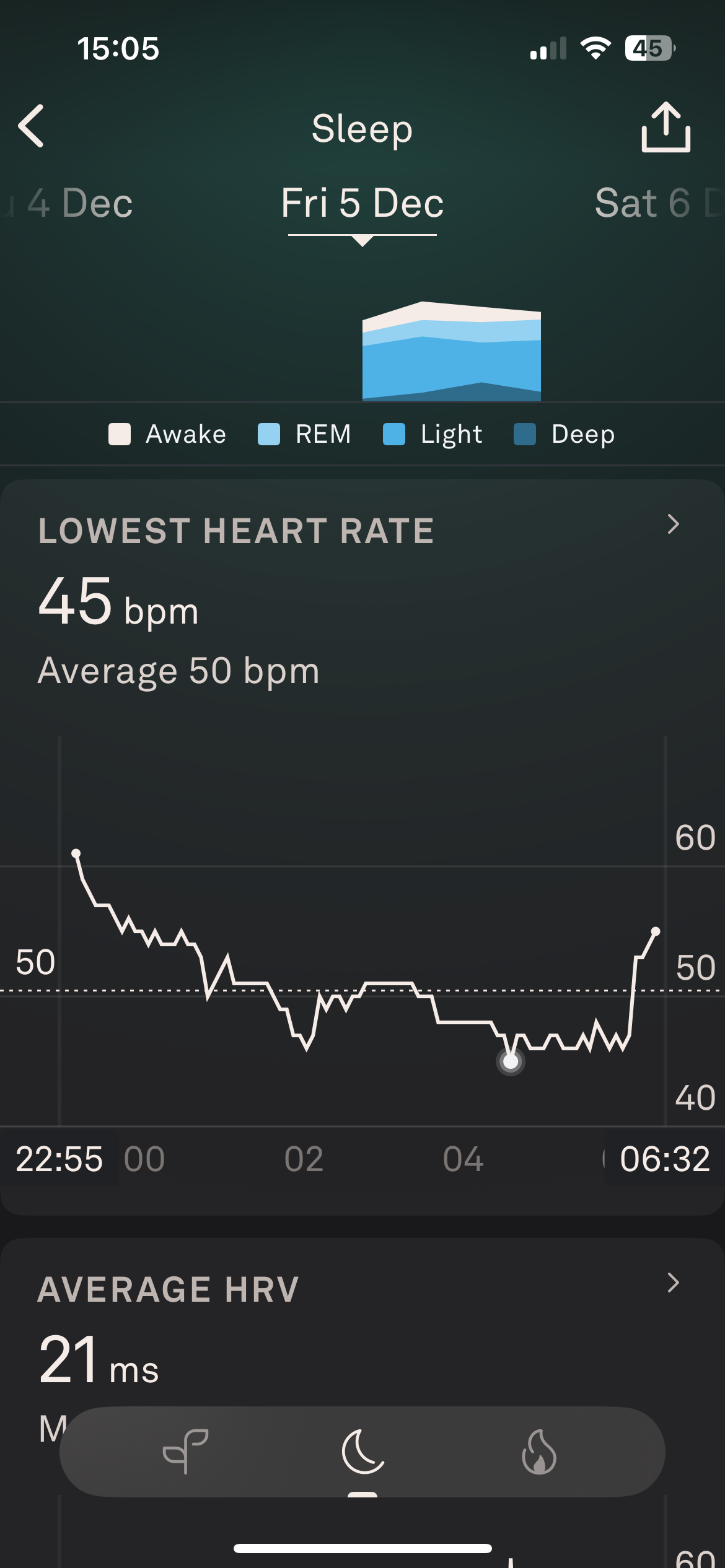
Friday:
Friday night with a little booze: hr lowest 45 average 50

Saturday:Effect on HR with some alcohol on the Saturday: hr lowest 44, average 48.

Sunday:

Sunday no alcohol, so HR average 45, lowest 42.

So whether I actually feel better or not, it’s really obvious that my heart prefers me to not drink at all. I mean, average HR 45, lowest 42, that’s pretty decent. Generally speaking, any night when I haven’t drunk any alcohol, it’ll average something below 50, and get down to 45 or below.

Just for fun: here’s what it looked like after I got accidentally shitfaced at my friend’s party. Last booze in about 4pm, I think.
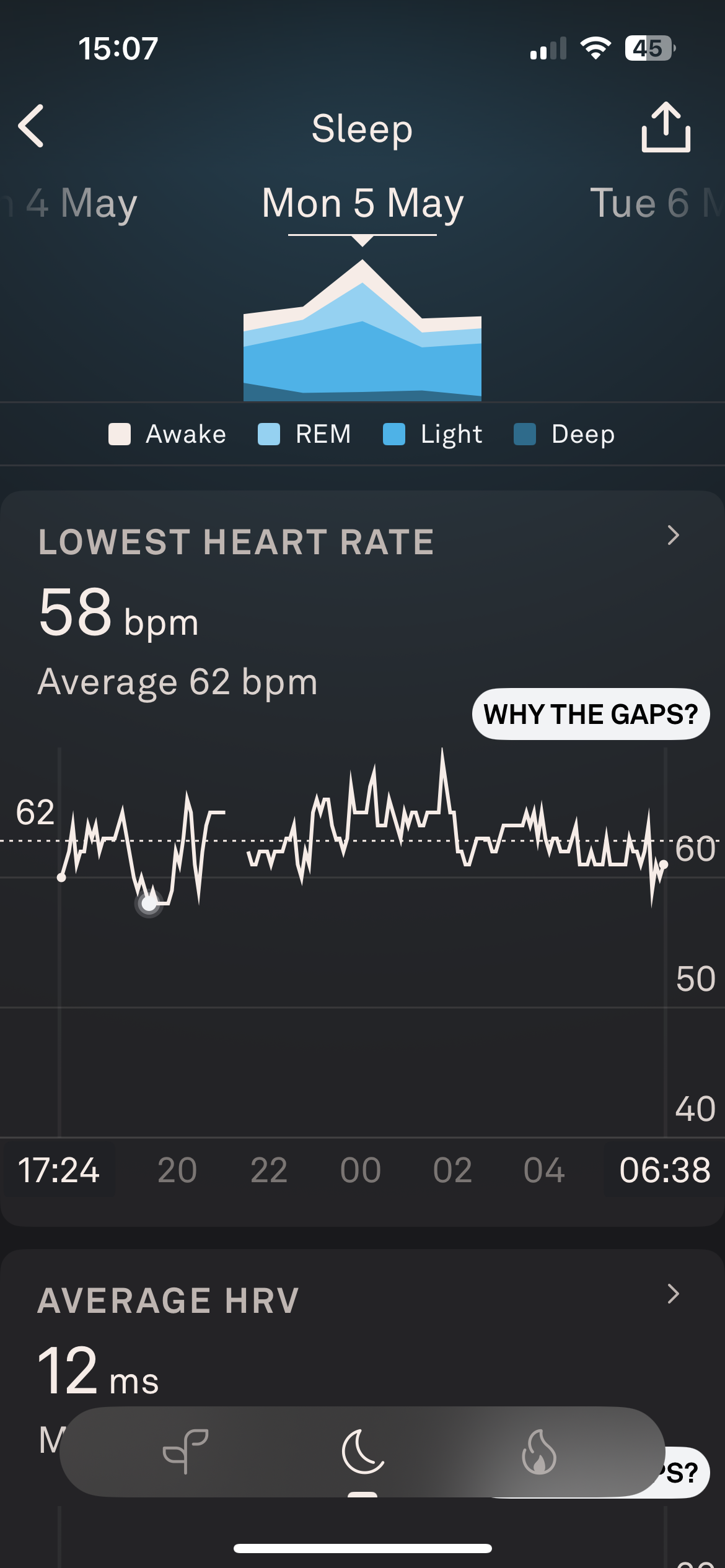
party time: average HR 62!


What 100 Days Without Alcohol Really Changed

Putting aside the data inconsistencies, the genuine results are:

Positive effects

  • Major improvement in visceral fat
  • Lower LDL cholesterol
  • Overall waist reduction
  • Less irritability (confirmed by independent household authorities)
  • Significantly lower resting heart rate on sober nights

Little or no effect

  • Sleep quality (subjective)
  • Subcutaneous fat

Negative effects:

  • None.

So what am I going to actually do now?

I’d like to get my body fat percentage below 18. Here’s how I’ll approximate that:

1. Waist measurement down from 88 to 86cm.

2. Weight down from ~79kg to ~76kg.

Approach:

1. Restrict booze. Generally speaking, no drinking unless it’s a special occasion. Tuesday is not a special occasion.

2. Go slow-carb. It worked very well for me before, let’s try it again. Being careful to maintain protein intake, and continue with weight training, to preserve muscle mass.

3. Cycle on and off, cutting weight (which gets rid of fat and a bit of muscle), and bulking up (which adds muscle and a bit of fat).

4. Fast occasionally. I normally have about 15 hours between last calorie in at night and first in the morning anyway (just because it’s more comfortable for me). Increasing the fasting time to 18 hours is not hard, so I’ll think about doing that more often, with an occasional 24 hour fast, or even longer. I train too much to want to fast too often- I’m concerned about losing muscle mass.

4. Track weight, waist, and strength. If my waist is down and my strength is up, I’ll call that a success, whatever the scales or DEXA says.

December is not the month for this, so I’ll play around with various things as convenient, and get consistent and serious about it on January 2nd. Another 100 days no booze, with a strict slow-carb diet (no starch, no sugar, lots of veg and protein), will take us to April 12th. I will probably make exceptions to the no-booze thing, but only for very special occasions. There is a world of difference between two glasses of wine in a fancy restaurant every couple of months, and two glasses of wine before dinner every evening.

Final Thoughts on 100 Days No Booze Results

The headline takeaway is simple: Alcohol has a strong negative effect on my visceral fat, cholesterol, irritability, and sleeping heart rate.

It doesn’t magically melt fat off me, but it clearly improves a bunch of meaningful health indicators.

The basic idea behind all of my training and health related activities is this:

Find out what works for you, then do that.

Both of those components are hard. Healthcare professionals can tell you what the current-ish state of the science suggests should work for most people most of the time, but they aren't much good at targeting what works for you specifically. The only way to know what works for you is to try it, and track the results.

Then, having discovered that doughnuts make you fat, or alcohol is bad for you, or whatever it is, you have to figure out how to incorporate that insight into your daily life. That can be simple and easy, or it can be really hard, especially when it involves going against mainstream cultural expectations. Even if the intervention is simple, it may not be easy. I'm lucky in that this one was both simple and quite easy, but many others I've tried are a lot harder.

My book The Principles and Practices of Solo Training covers this approach in depth and detail. If you've enjoyed these alcohol posts, you'll probably enjoy that book. And we have a sale on until the end of the year: use the code GUYSBIRTHDAY25 for 25% off any digital product, and BIRTHDAYPRINT10 for 10% off any print product, at swordschool.shop.

I share this kind of thing on my newsletter quite often, so sign up below to stay informed.
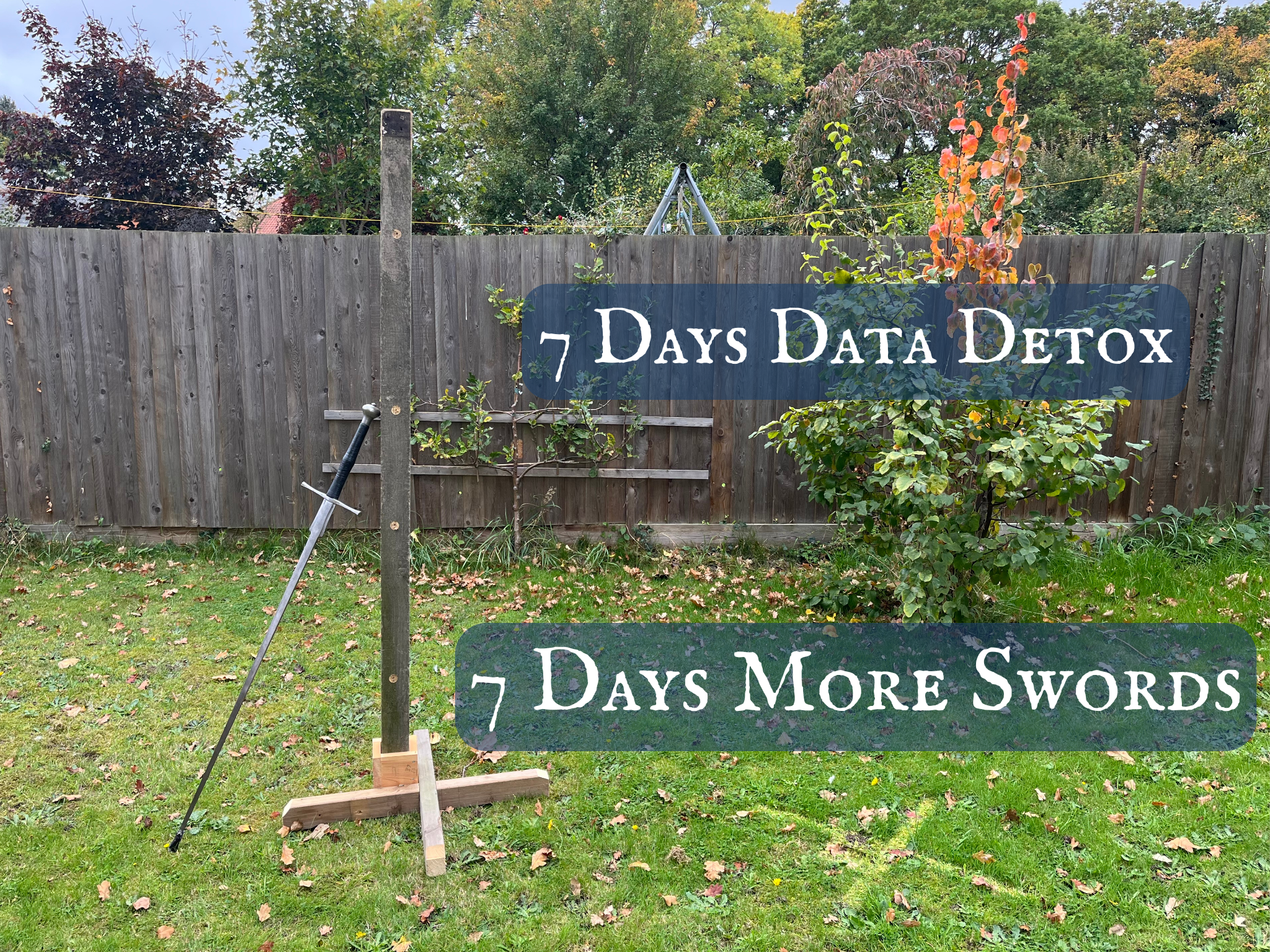
My pell on its new base, with a longsword leaning against it, put together during my 7 day data detox.

I spent the first week of October on a data detox. No emails, no whatsapp, no socialz, no scrolling. It’s been a lovely mental break. My initial reason for trying this was to allow my inner visionary to be heard, as per this post

The single biggest surprise is how little I missed it. I was really looking forward to it, and enjoyed the lack of distraction very much indeed. Days one and two were very relaxing. For reasons I can’t pin down, but which may be related to withdrawal, I was grumpy as hell for days three and four. Oddly though I didn’t have any urge to get online, so I don’t think it was withdrawal exactly. Then things perked up immensely on days 5-7, and I got a bunch of things done that I’ve been meaning to get round to. More on that below.

Filling the Void

So what filled the void created by the data detox? That gaping chasm of boredom and ennui that our marvellous machines cover up with clicks and scrolling?

1. I’ve thought a lot. It’s actually nice to be back in my own head a bit more.

2. I’ve did a lot more actual sword practice, in addition to my usual physio/fitness/strength stuff.

3. Coincidentally (I think, because these were planned ages ago) I went to the actual theatre, and met friends for lunch in the pub (yes I’m still off booze, 50 more days to go), and been to a talk (given by Roland Allen, of The Sword Guy and A History of Thinking on Paper fame). All analogue, real people in a room together, offline goodness.

I should point out that I was not religious about this. I used my wife’s laptop to print out crosswords, and fired up my phone to be able to navigate to drop off my daughter at a friend’s house for a party (I don’t have a paper map of the area, which I should!). But outside some very sensible exceptions, I’ve kept the phone turned off, and did not check any messaging apps or email when I did turn it on. The computer was not turned on at all.

I finished making my mum’s birthday present, put a new base on my pell so it stops falling over when it’s windy (see the photo above), and rearranged my study such that I could get my point control wall target up (it needs a sturdy wall to hang on, and room in front and to the sides for footwork). 

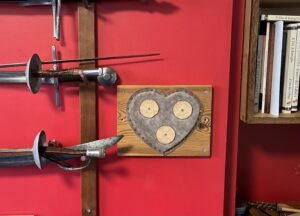
Wall target put up during my 7 day data detox. Leather and wood, on a red wall.

I also planned a new launch, thought about the overall structure of my business, and got a bunch of CEO stuff done. I don’t think my visionary woke up particularly, so I need to think about how to make that happen.

One of the things I’ve been thinking about is how we have all sorts of social rules and norms around other addictive behaviours, such as drinking and smoking. If someone offered you a glass of wine at 11am you might say “it’s a bit early for me”. Because these days it’s normal to avoid drinking during the day. Likewise smoking. It used to be everywhere, all the time. But now it would be very very rude to light up inside someone’s home without asking, and most smokers would automatically go outside.

But watch any TV show from the 80s and just about every rich person is having a drink at 10am, and everyone rich or poor is smoking indoors at all hours. These healthier rules around smoking and drinking are relatively new, and relatively unconnected with legislation.

I do well with rules if they’re my own. (I do much less well with other people’s rules.) Both phones and computers are incredibly useful. But they are inherently built for distraction. So here are my rules for using my computer and my phone.

Rules for the Computer

1. Be a cat. I’ve borrowed this from Jaron Lanier’s excellent 10 Arguments for Deleting All Your Social Media Accounts Right Now. Cats don’t try to please people. They just pursue their own agenda, and allow the people in their life to serve their needs. If a cat wants stroking, you’ll know. The computer belongs to me. It’s a critically important tool for writing books, editing video, running my business, and communicating with people.

But it’s been warped by the internet into also being a major source of distraction. So I will approach my computer the way a cat approaches the humans that feed it. I’ve always had all notifications turned the hell off, but that doesn’t stop me from getting distracted.

2. Decide what I want to do before waking it up. That could be work on the next book, or some critical business task like paying a freelancer, or emailing someone about something. Then do that thing first. After my week away I have a long list of things to do, including drafting this blog post, that comes ahead of checking my emails. Happy to report I’m following my own rules.

3. Unless I have a good reason, don’t open any communications app before 2pm. Exceptions include scheduled zoom sessions (running a trainalong or doing crosswords with my mum are both good reasons), or if I’m expecting a time-critical message about something actually important.

4. Turn off all comms apps at or before 5pm. Exceptions as per rule 3. And take at least one full day per week off all comms. I think probably Thursdays, which I generally keep free anyway. 

5. Be a cat. It’s worth an extra rule to be reminded of the first one.

What do I want my Fondleslab Distraction Engine (aka “phone”) for?

There are many excellent things about the phone that I want to keep, that I missed during the data detox. In no particular order they are:

  • Camera
  • Podcast player
  • Music player
  • Sound recorder (when recording videos etc.)
  • Maps/navigation
  • Payments
  • Wallet for tickets, boarding passes, etc.
  • Calendar
  • The Sword People app for keeping in touch with my sword people and posting sword photos
  • Calculator
  • Notes app for when I don’t have a notebook or pen with me. Rare, but it happens.
  • StrengthLog app for tracking weights workouts
  • Family Whatsapp channel. I’d like to move it to Signal, but I don’t think we’d get everyone on board with it (my siblings, their kids, my kids, it’s actually quite a lot of people).
  • Some friends prefer Signal, so I have that for talking with them. 
  • One dear friend, and my godson only really use Discord, so I have that too.

But other than those excellent things, why would I want to be continually distracted?


Rules for the Fondleslab Distraction Engine

1. Be a really fucking grumpy cat.

2. Delete all addictive apps. No games, nothing that makes me likely to scroll (Ebay, Vinted, Chrono24, etc.). No emails. I have the accounts still there in the system settings, but I’ve turned off the email function. That way if I need to be able to check email on my phone for some reason, it’s easy to turn back on, but it’s not on by default.

3. Turn off all notifications. All of them. Especially badges (those red things that flag the app's icon). I’ll check the apps when I want to. The phone still rings if you call me, but that’s it.

4. WhatsApp, Messenger, etc. are strictly friends and family only. I have SwordPeople for work-related messaging. (Feel free to sign up there if you want to be able to message me outside email.)

5. Switch off the phone completely for at least one full day per week. So e.g. turn it off in the evening, and not turn it on until the morning of the day after next.

Final Thoughts on the Data Detox

I’m also thinking about getting a new phone number, and relegating the current one to a no-data phone, so I can use it for two-factor authentication, and as my “business” number, and keep my other number entirely private, so only people I’ve actually given it to will have it. My current number is clearly on too many databases, given the number of spam calls and texts I get.

I’m not alone in fighting this fight. Useful resources are the aforementioned Jaron Lanier’s 10 Arguments. Also Cal Newport’s Deep Work, and for non-algo-poisoned tech solutions, the Creative Good forum has all sorts of options and suggestions. Once you have all this distraction-free time you'll need to learn to prioritise, so you may find my post about deciding what to focus on helpful.

It's worth explicitly stating that I welcome emails from my students, readers, friends, family, and even some newsletters and other things. Email isn't the problem. It's letting it spill out of a confined space to take over my brain that’s the problem. The same is true for messaging apps generally. I've broken the cycle of reflexively checking for anything new coming in with my seven days off, so now I need to keep that cycle broken. Or I'll end up having a (metaphorical) whisky and a cigarette for breakfast again.

wine glass and bottle, scenery background, no alcohol 100 days

As I posted on Sword People last week, I'm taking 100 days off alcohol. Why would I do that?

The DEXA Scan: an uncomfortable truth

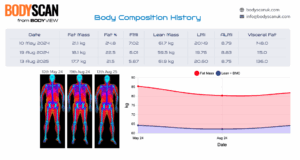
I was in London a couple of weeks ago for a family reunion, and took the opportunity to wiggle along for another DEXA scan (at BodyScan UK). My last was a year ago. On the positive side, I’ve put on about 2.4kg of ‘lean mass’ (the scan can identify fat, bone, and ‘lean mass’, which is everything that isn't fat or bone), mostly in the upper torso. And my overall fat percentage has come down from 24.8% in May 2024, to 21.5% now. Great.

But my genetics put the remaining fat mostly in my viscera, the absolutely worst place to have it. I had 148

cm² (which is a weird way to measure a volume, but hey) in May '24, down to 115cm² in August '24, but as the muscle piled on (yay!) it brought some fat with it (as it almost always does), and it all went round my organs, so it's back up to 136cm². Boo.

Dexa scan body composition history for Guy Windsor

Subcutaneous fat isn’t such a big health problem, in reasonable amounts. But visceral fat is bad for inflammation, blood lipids, diabetes risk, the works. And it seems that’s where I store it.

I've uploaded the results as a pdf here, in case you're interested in the actual numbers: Guy_Windsor_DEXA_2025-08-13-report


So why cut alcohol specifically?

I’m not a big believer in calorie restriction as the main driver of fat loss, because while the laws of thermodynamics are absolute, your body is insanely complicated, and has all sorts of ways of adjusting your metabolism to lose or put on weight depending on various triggers. What you eat, and when, is as important as how much. And don't get me started on gut biome. I first really understood this when I accidentally lost 10kg in three weeks. But if there are a bunch of unnecessary calories coming in from somewhere, that's the obvious place to start.

For me the biggest source by far of “empty” calories is alcohol. My natural state is to have a glass of wine or two while cooking, and another glass or three while having dinner, and maybe a dram afterwards, pretty much every day. I normally get through about 7 bottles of wine a week minimum, without hangovers or other obvious ill effects. I think my soul is mostly Italian!

When I went alcohol-free for a month this Spring (thanks to a bad cholesterol test), I lost about 2kg and 4cm around my waist. It messed with other things though- I didn’t get a word written in all that time, other than newsletters. And I didn’t feel any particular energy benefits. Though I ought to have been sleeping better, I wasn’t waking up full of beans and ready to face the day any more so than usual.

But, several credible sources (the folk I listen to most on these subjects are Dr. Peter Attia, and Dr. Rhonda Patrick) suggest that the real benefits to cutting booze come around the three month mark. Kevin at BodyScan said the same thing. So I’ve decided to take 100 days off alcohol. I started on August 19th. Day 100 is November 26th, four days before my birthday.

Why not just cut back?

It's very hard to measure a small amount every now and then. Sure, I bet I could get most of the benefits if I just had one glass of wine on a Friday night. I've previously established with sleep monitors that a glass of wine with dinner has no measurable effect on my sleep (I eat early). But then what happens to the rest of the bottle? How much wine is that really? What if I swapped out the wine for a dram of Lagavulin? It's just much easier to measure “no booze” than figure out “some booze”. And from a self-control issue, it takes very little effort (for me) to have decided to not drink at all, than to stop at one. The hard part is making the decision to stop. Now that's done, thanks to bastard DEXA, it's really no big deal (for me).

I know that other people have much more serious issues with alcoholism or other addictions, so please don't read this as minimising their struggles. And I can think of several life events that could occur that would lead to me immediately abandoning this experiment in favour of getting blootered. So no judgement.

The Pros and Cons of alcohol restriction

You may find the pro/con analysis I do for any intervention a useful rule of thumb, so here goes.

Cons first (always):

1. Is there any known, or likely, health downside? If someone were to suggest going without vegetables for 100 days, or going without protein, or going without exercise, or without in-person social interaction, I’d want to see an awful lot of peer-reviewed studies suggesting that it was a good idea. But there is no known health benefit (that actually stands up to scrutiny) of consuming alcohol. So I won’t be sacrificing any useful nutrients. The polyphenols in wine? I get way more of them from blueberries and dark chocolate.

2. The most common downsides of any intervention are time and money. Exercise costs time. Supplements cost money. Cutting out alcohol saves money and takes no time.

3. Alcohol has been a major component of Western culture since at ancient times. The slaves that built the pyramids were fed a kind of beer. 2600 years later Jesus's first miracle was turning water into wine. 2000 years on, not much has changed. Just about every major event is marked with booze of some kind. We drink with friends, we drink to celebrate success, to commiserate in disaster, to raise a toast or to drown a sorrow. Wine, beer, spirits of every kind have been part of our culture (and many others) since forever, and there is a huge amount of artistry that goes into creating a perfect wine to go with your steak, or the smokiest of single malts. That's the only thing that makes this in any way difficult: the sheer number of times already (it's been less than a fortnight!) when I've had to risk being thought anti-social to decline an offered drink. People who like to drink (like me!) can take this as a critique of their current habits. Nothing could be further from the truth. But cutting out alcohol does carry a social risk.

I worked out that the last time I went 100 days with no booze I was 13. It’s been nearly 40 years since I last tried this, and it’s just an experiment, not a moral position.

So the worst-case scenario is I get no noticeable benefit (but save some money), and lose out on some gustatory delight, and some people will find me stand-offish. I can live with that, for SCIENCE. I don't judge other people by what they choose to drink, so have no interest in the judgements of those that do.

Pros:

1. There is good reason to suppose that I’ll cut the visceral fat down, because it’s happened before (between my first two DEXA scans, in May and August 2024 which established a clear correlation between waist size and visceral fat quantity), and because of the waist reduction this year, in just 33 days of no alcohol.

2. There ought to be improvements in sleep quality. This is very hard to measure, and regular readers will know that I’ve tried several different sleep trackers and found problems with all of them. The only metric that seems at all reliable is heart rate. With alcohol, my heart rate is higher and more erratic when sleeping; without it, it’s lower and steadier. I've confirmed this many times since getting my first sleep tracker in 2017.

3. It’s a clear break from a habit I know is not healthy, and a fairer test of sobriety. I wouldn’t necessarily judge the effects of a diet or exercise program after just a month, so it seems reasonable to give no booze a fair crack of the whip.

The best case scenario is that I get amazing health and vitality benefits from this. But that will raise the issue of do I go back or not? I’ll have to entirely re-think the place that alcohol plays in my way of life. So I’d be lying if I said I wasn’t kind of hoping that it doesn’t help much.

It’s important to keep any test to just one variable. If I replaced booze with doughnuts I could reasonably expect to not lose any visceral fat. So I’m giving myself a couple of weeks to let my usual dietary rules slip a bit (I had four slices of my daughter’s banana bread after dinner last Sunday, with marmalade) but once I’m back from Swords of the Renaissance this weekend I’ll be pretty careful about keeping the rest of my diet as it was.

And finally…

I intend to report back here (maybe even with another DEXA scan) in due course. But I keep my friends on Sword People, and my newsletter subscribers updated on all sorts of things, including my various health experiments. Join us there, or sign up for the newsletter (or both!).

And let me just re-iterate: I'm running a health experiment. I have no moral problem with alcohol, and I don't think of myself as an alcoholic. If alcohol is damaging your health, or getting in the way of your goals, feel free to try 100 days off, or better yet get professional help. But it says nothing about your moral worth whether you drink or not.

Update at 50 Days

50 days into this experiment: so far, so good. The hard part was making the decision. Once it was decided, not drinking is normal. There are open bottles of booze in the house, but no temptation. Every now and then I fancy a drink, but the urge passes quickly. This was as true on day 1 as it is on day 50.

The closest thing to an exception has been a couple of social events in pubs, where I had a low-alcohol (0.5% or lower ABV) beer. I’ve done that twice. I don’t think it matters particularly, but I’ve decided to be careful in the last 50 days to stay off even that.

My weight is down about a kilo and a half (3.5lb), and my waist is down about 2cm. These are averages: weight fluctuates a lot during the day and from day to day: have a glass of water and you gain half a pound or so. Eat more fibre the day before and there’s more water held in your gut. So I measure weight and waist every day, and average them up over the week. Waist is especially problematic to measure, as it’s me with a tape measure, trying to be consistent about exactly where on my body I’m putting it, and exactly how tight, at what point in my breathing cycle. Sucking in my gut gets me down to 84, expanding as much as possible gets me to 96 (which is significantly smaller than my relaxed measurement in May 2024). So I’m not treating these figures as hard or accurate, but they are a reasonable guide to progress.

The oddest thing about this is that all of the weight and waist gains occurred in the first 25 days; they have been basically stable since then. Though I suppose it’s possible I’ve been losing fat and gaining muscle (or the other way round) since then. My weight training is the most reliable guide to muscle mass until the next DEXA scan, and I’m getting gradually stronger (as one would expect), so I doubt I’m losing significant muscle mass. I’m also careful to keep my protein intake quite high (about 1.5g/1kg of body mass, so about 120g/day for me).

I’m not sure if I’m sleeping better or not. I don’t wake up feeling any more rested than I did before, but I have several times slept a lot longer than I used to, for no apparent reason. I’m hoping that my brain is adapting to the lack of booze and getting better at staying asleep, but it’s too early to tell. Sleeping longer means I’m waking up later, so my usual habit of getting an hour or so of writing in before the house wakes up isn’t happening, but that’s ok; I seem to be productive enough.

On balance, this has been underwhelming in terms of health gains so far. I was expecting significantly more benefits already, given that I’ve come down from drinking an average of a whole bottle of wine every day. But who knows, maybe the next 50 days will hold some surprises.

This experiment is an example of my overall guiding principle of training: figure out what works for you, then do that. Both of those aspects are challenging: how do you figure out what works for you? And how do you maintain the practice of applying it? I go over all these things and more in The Principles and Practices of Solo Training.

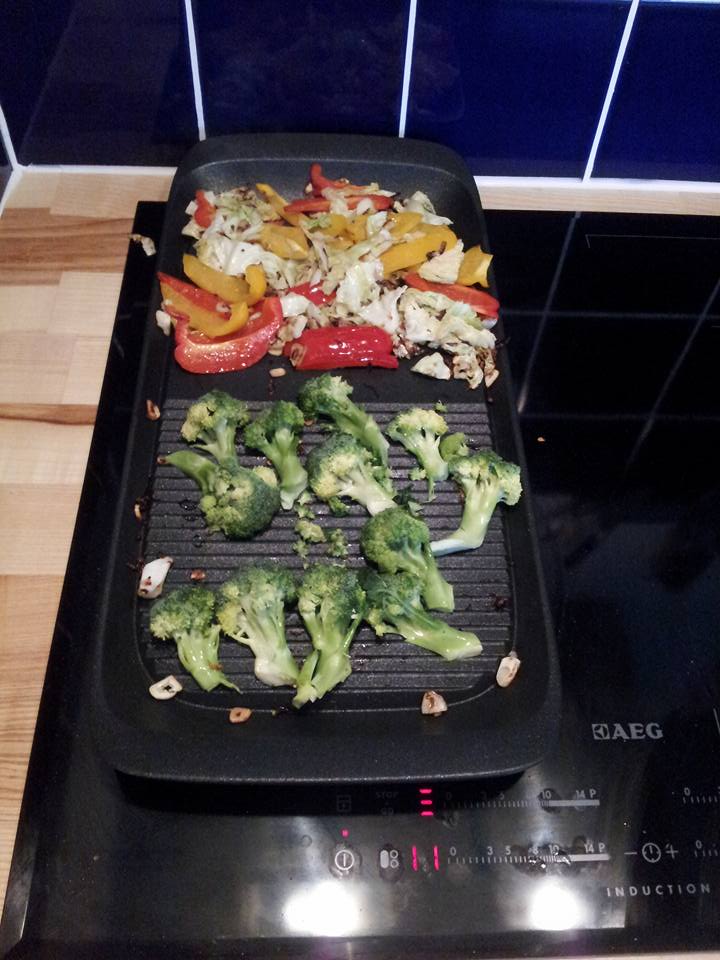
You can't eat too many vegetables...
You can't eat too many vegetables…

I am not a doctor. And even if I was, I’m not your doctor. If you have any kind of medical issue, don’t get your info from the internet, still less from swordsmanship instructors. Do some research, then go talk to your doctor. Clear?

I dropped 10kg from round my waist, almost by accident. Here’s what happened. I’ll go back to the very beginning, so you can see the process.

In the beginning:
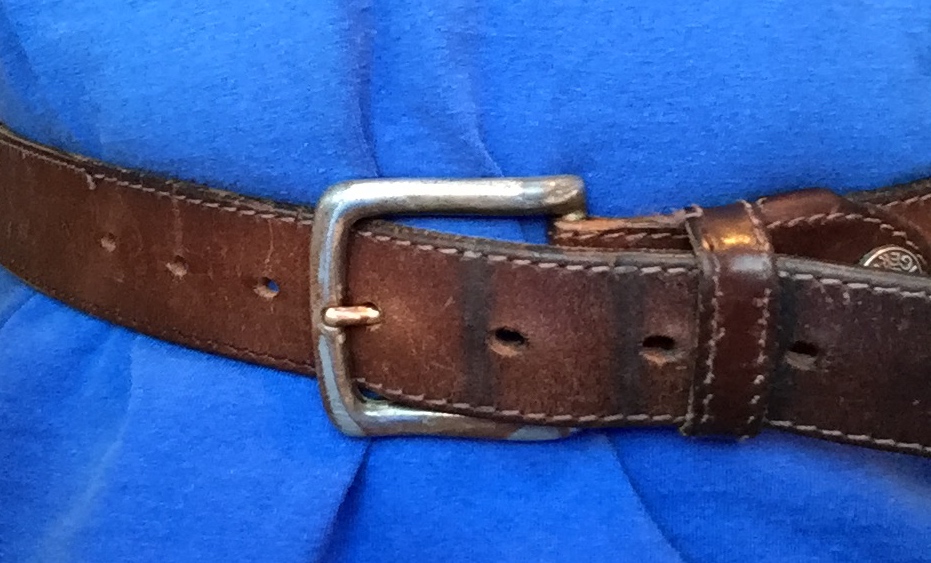
In the late nineties, the metabolism I inherited from my father started to kick in, and without my really noticing it, I had to let my belt out, notch by notch. I got this belt from my sister when I was 21, so I’ve had it round my waist for about half my life. It tells a sorry tale…


See the grooves?
See the grooves?

Back when I was 21, I wore this belt on its fourth or fifth notch from the end. By the middle of 2000, it was on the third. Then, after coming down from the mountain and deciding to open my school, I started training at dawn every day, on the top of Arthur’s Seat in Edinburgh (I do love my traditional martial arts training tropes). In about three weeks, I lost 7kg (15 lb), from round my waist. 3 weeks later, the weight was back, but round my shoulders. I had to get a new jacket because my old one was suddenly too tight. I was 26, with all the metabolic advantages that gives.

When I got to Finland in 2001, what with the stress of starting the school, and lots and lots of training, I ate what I wanted and stayed skinny. On a normal day, I was training for two or three hours and teaching for two or three. I had to eat every three hours or so, or Hungry Guy would appear and make everyone’s life miserable. The closest I have come to murder was probably when I hadn’t eaten for four hours, went to a Thai restaurant for an emergency feed, and the waiter seemed to dilly dally about getting the food on the table.

I (mis)diagnosed the problem as too-low body weight. I was about 73kg at that point. I ate like crazy to try to put the weight on, but was too stressed and training too much to gain an ounce. Then I met Michaela in 2005, and chilled the fuck out. One of the ways I knew she was the One was that within a few months of meeting her, I’d put on the 4kg (9lb) I was looking for. That did help with Hungry Guy, but only up to a point. I still needed to eat every four hours or so. At this point, my weight was up to 77kg, so I instituted a rule: if my weight got up to 80kg, I’d cut out sugar and alcohol until it was back below 78. Then I could eat what I want. This very often (maybe 5 times a week) included an entire 200g bar of chocolate after dinner, ‘shared’ with Michaela (she’d get maybe one row, so, an eighth of it).

What with one thing and another, by April 2014 I was seriously considering adjusting the rule to anything below 80kg is fine, over 82 cut out sugar and alcohol. (Self-indulgent bullshit is a specialty of mine.) I was at 83kg, and my belt was on the penultimate notch. As you can see, it still has the deepest groove; it had been there for a long time. I had already read Michael Pollan’s The Omnivore’s Dilemma, and Gary Taubes’ Good Calories, Bad Calories, so I should have known better. But sugar, oh, sugar; sweet heaven.

The Slow Carb diet

Then, on a flight to Melbourne, I read Tim Ferriss’s The Four Hour Body. It was the final straw. There was just no way I could justify the level of sugar I was eating, especially given my family history of high blood pressure, my father’s serious weight problem, and everything I had ever read on the topic of metabolism, nutrition (not counting the junk science rubbish that occasionally made it onto my reading list; I highly recommend Bad Science by Ben Goldacre to help you distinguish the good from the bad), health and longevity.

When I got to Australia, I decided to try the Slow Carb diet. Let me summarise it for you.
1) No fast carbs; no sugar, no starch. No potatoes, no rice, no bread, no biscuits, no pasta, no white food except cauliflower, in other words.
2) Eat the same few meals; perhaps half a dozen different dishes.
3) Don’t drink calories. Avoid alcohol, sweet drinks (especially sodas, obviously, but less obviously also fruit juice).
4) Cheat one day a week. On that day, eat and drink whatever you like, as much as you like. But just one day a week.
You can see the blog post that started it all here.

If you think about it, rule 3 is really just the same as rule 1, and rule 2 is a bit boring, and rule 4 should be optional. What I ended up doing is basically just rule 1, and I was reasonably strict about it.

On the day I arrived in Australia, jetlagged to hell, and about to teach a 4 day intensive seminar, my metabolism was still demanding to eat every 3-4 hours. So obviously, I never went anywhere without back-up chocolate. I arrived on Friday morning and started Slow-carb right away, and taught Saturday-Tuesday, five or six hours a day. Up until this point there was no way I could get through a 6 hour seminar without a sugar hit in the afternoon. I’d crash about 3pm, sugar-up to get me through to the end, then need dinner, large and fast.

On the Monday, after teaching for three days straight, I was digging through my bag for something, and found my chocolate stash. In three days of teaching, in the most energy-demanding situation (jet-lag, long days), I had forgotten to eat in the afternoons. I was astonished.

This was because I was not spiking my blood sugar at any point, and so was not crashing. Cutting out starch and sugar proved to be a complete game-changer, because it evened out my energy demands. Please note though that I was not cutting out carbs, only fast carbs. I was still eating about eight tons of vegetables every day, and a lot of meat (the food in Australia is superb!).

Slow Carb, Low Carb, and Ketogenic: 
Let's take a moment to define a few things:
1) Slow Carb v. Low Carb. They are very different. A classic low-carb diet gives you most of your calories from fat and protein. A slow carb diet gives you a lot of carbohydrates, but all with a low glycaeimic index, so you avoid the blood-sugar spike. I think any diet that tells you to steer clear of vegetables is fundamentally dangerous.
2) Ketogenic versus Low Carb. A ketogenic diet, as the name suggests, is a diet that keeps your body running on fat. It is very high fat, and obviously restricts carbs, but it also restricts protein. This is because protein is easily broken down into glucose, and so your body will switch back to a glucose based energy delivery system, rather than stay in a fat based energy delivery system (a state called ketosis). Ketogenic diets are mostly used medicinally to treat children that have drug-resistant seizures. I personally would not recommend long-term ketosis, because it is very hard to do in the modern world, and there is no evidence that any human population has ever subsisted long-term on a ketogenic diet (the Inuit may be an exception, but probably not). Ketogenic diets should be further subdivided into calorie-restricted (less than 1000 per day) and unrestricted. The best-known proponents of the unrestricted ketosis diet are Dom D’Agostino and Peter Attia (both medical doctors). Their podcasts and websites are well worth a listen/look.

Bye-bye Hungry Guy
What I was doing in Australia was a not-terribly-strict Slow Carb diet; after class, at dinner, I quite often wolfed down a bunch of fast carbs in the form of beer, and chips with my steak, that sort of thing. But breakfast and lunch were fast-carb-free. The difference in my energy levels was enough to sell me on the idea. But when I got home less than three weeks later and trod on the scales, I got a shock. I was down from 83 to 74kg, and had not once, even once, gone hungry. I ate like a pig, just not starch or sugar. I was so pleased with the results I decided to keep it up. I now hover around the 72-73kg mark.

Most incredibly, Hungry Guy has disappeared. To test this, in September 2014 I decided to see what would happen if I missed a meal or two. I had lunch on Monday at about 1pm, taught class on Monday night, ate nothing when I got home, had one cup of coffee instead of breakfast on Tuesday, missed lunch, and ate dinner with the kids at 6pm. So, about 29 hours of not eating anything. And I was completely fine. Not even that hungry. Certainly no dizziness, or feeling of weakness. Nothing associated with low blood sugar problems. It's also why I wrote “avoid sugar” as one of my top 3 stay-sane-and-healthy tips for modern living.

Fasting
This has lead me to do some further research on fasting; it comes in all shapes and sizes. The simplest is just don’t eat for a while. I would not try that without preparation, if I were you. The health benefits of at least occasional ketosis are well-documented; I think of it as a metabolic spring-clean. But you can fast for a couple of days and not get into ketosis because your body breaks down your muscles to produce glucose. So if you don’t want to a) feel too hungry and b) lose muscle mass, it’s a very good idea to get into ketosis before you fast. Here’s how.

1) Be very strict about fast carbs for a week or two. This gets you off any sugar-high rollercoaster. When you fast your blood sugar will probably fall a bit, so make sure that it’s not a dramatic drop.
2) Follow a ketogenic diet for a couple of days. Use pee-sticks to make sure it’s working. Not everyone can handle a ketogenic diet, so if it makes you feel ill, stop. Try step 3 instead.
3) You can dose yourself with exogenous ketones to speed up the process of switching over. Exogenous ketones or ketogenic foods that I have used successfully (as measured by pee-sticks) include medium chain triglyceride (MCT) oil, branch-chain amino acids (BCAAs), and raspberry ketones. When your pee-sticks tell you you are in a moderate state of ketosis, such as about 2-3 mmol/L, then stop eating. See how 24 hours feels. If you get really hungry, or dizzy, or your blood pressure drops, or anything like that, then BREAK YOUR FAST. With breakfast, obviously. But unless there are some odd medical issues, 24 hours should be no big deal. Just remember to drink plenty of water. Tea and coffee are also ok.

Just to test this, last Thursday I skipped breakfast, and ate lunch at about 2pm. At 11am I had a ketone level at or close to 0. Lunch was a small salad, with a tin of smoked mackerel in oil, and two teaspoons of MCT oil, and a splash of olive oil. I also took 2 125mg capsules of rasperry ketones (Hi-tech Pharmaceuticals brand) and a 6.33g dose of BCAA's (USPlabs “ModernBCAA+” brand). At 4pm my peesticks told me that I was in ketosis at a level of 4mmol/L. Easy enough!

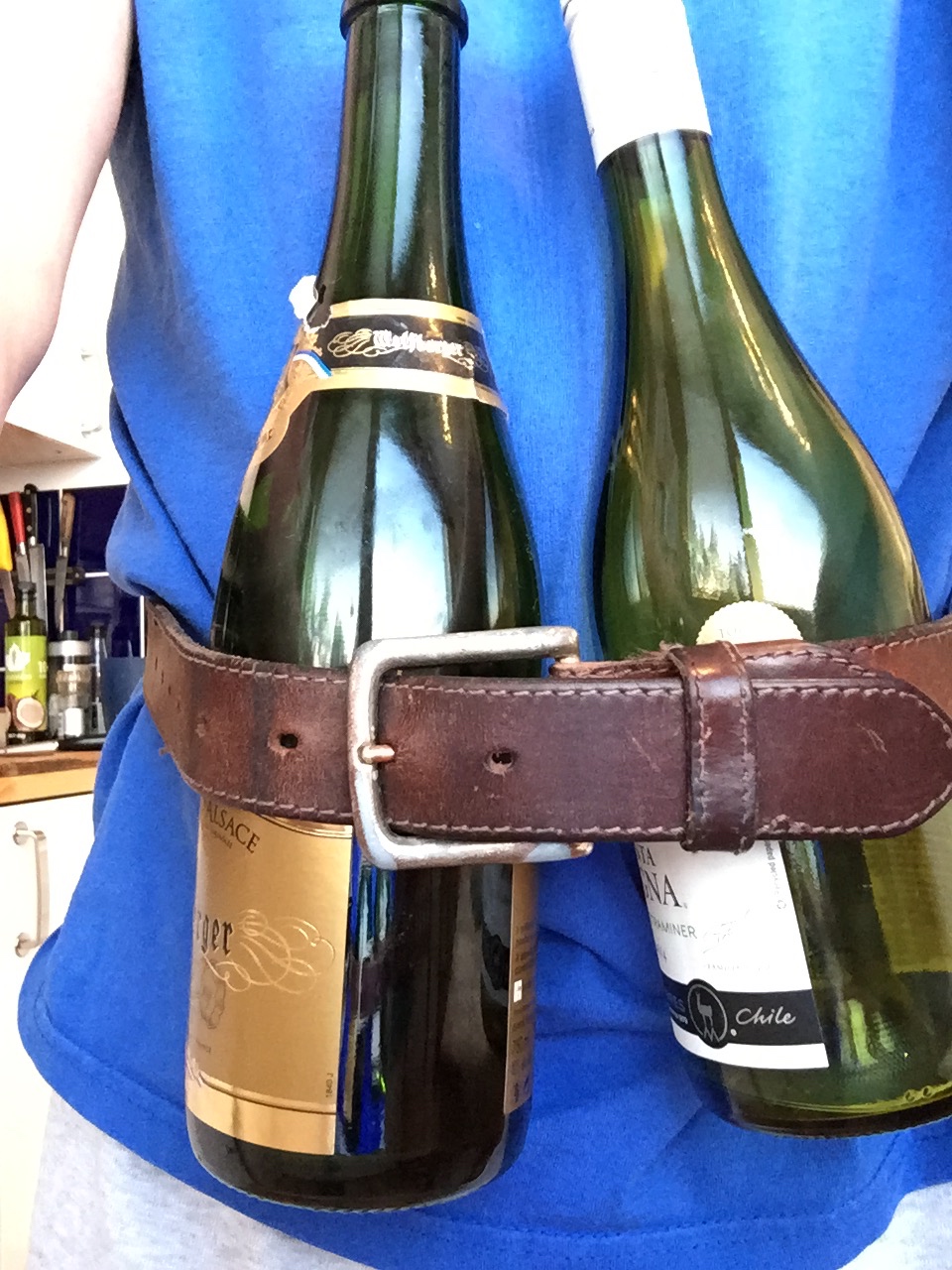
I am currently about 73kg, stronger than I was in April 2014, and my belt is wearing a new groove at notch 5. If I fasten it at the deeply-worn second notch, there is enough room under my belt now for two bottles of wine.

current notchwine carrying

Further thoughts on fasting:

1) I got all of my weight-loss done without fasting. It’s not necessary for that purpose, but there is a ton of evidence to suggest that it is good for you to fast occasionally. Here are a couple of articles on it: one very pro: Mercola  and one from the UK National Health Service, specifically about 5:2 intermittent fasting, which I don't do, which is more measured: NHS.)Whether the benefits come from being in ketosis (which can be achieved without fasting), or from the short-term calorie restriction, or some other mechanism, is not clear yet. But it is abundantly clear that throughout human history, we have had to be able to function for short periods without food, and indeed many traditional cultures (including Christianity’s Lent and Islam’s Ramadan) incorporate longer fasts into their yearly calendar.

2) There is nothing inherently virtuous in not eating. It’s just a training tool, like push-ups and meditation. Do it because it generates specific benefits.

3) Don’t overdo it. Fasting gets much easier with practice. These days, I routinely fast for 24 hours with no preparation, about once a week. It does wonders for re-setting my metabolism. After Christmas I was so full I didn’t eat for 48 hours. No biggy. I’m planning a 5 day fast for later in the year; it takes planning because eating meals with the children is a big part of family life. If you don’t have kids, then it’s probably much easier.

5) For me, the point of fasting is to reap the metabolic benefits and to test that my diet allows me to be free of the need to eat for 24 hours or so. I never feel deprived when fasting, so I don’t feel any need to ‘make up for it’ with a stupid blow-out. I do stupid blow-outs every now and then just because I like them, and because my habits seem to be good, I can get away with the occasional splurge.

6) I think that as a martial artist I just jolly well ought to be able to work fine without food for a short time. Not eat for a day or two, and still fight. In feels simply unmartial to me to be slavishly dependent on a totally reliable food source for my effectiveness. An army marches on its stomach, yes. But I don't think there has ever been an army in combat that didn't go hungry at least occasionally.

Some further thoughts:
If you are trying to control your weight, try changing one thing a time. The first big thing I would is add vegetables. A decent serving of green vegetables at every meal will do wonders all by itself to make up for any dietary deficiencies, and fill you up a bit, which will reduce the amount of other stuff you eat. Also, the fibre in the vegetables will slow down sugar absorption, at least up to a point.

Then, the next thing to try is to cut out fast carbs. Cheat once a week if you must, but make sure you are always eating lots and lots of vegetables, and some decent high-quality fat. So fry your vegetables in organic butter 🙂 If this is too hard, then do it for just one meal a day, ideally breakfast.

The scales are a very blunt instrument. You might drop a bunch of weight, and actually be getting fatter, if you are losing muscle mass instead of the lard. I would take waist measurement over weight as an indicator of progress (see that belt?). I would also take all measurements at the same time of day, on the same day, once a week and not more often. This is much more reliable and less depressing than watching your weight fluctuate from morning to night (as it invariably does).

Systems are better than goals (as Scott Adams says in his interesting How to Fail at Almost Everything and Still Win Big). If you are trying to get your weight down to a certain point, every day that you are not at your target weight, you are a failure. This is not good. Better to try a different system (such as replacing your starch intake with extra vegetables) and just see what happens. Systems are sustainable. Goals are less so, because when you reach them, then what?

So, that’s how I lost 10kg without really trying. Will it work for you? I’ve no idea. But you can try it without risk, because all it requires you to do is eat lots of vegetables and cut out one type of food that you don’t really need: fast carbs.

You might also like this post: Eat Right for Fight Night

And let me reiterate: I'm not your doctor. I believe in trying things out sensibly, and building healthy habits. This worked for me; we have a lot of DNA in common, so it's probably at least worth trying for you. I wouldn't put it more strongly than that.

Incidentally, this post appears as part of the “Nutrition” section of my new book, The Theory and Practice of Historical Martial Arts.

Search

Recent Posts

Categories

Categories

Tags