Guy's Blog

Guy frequently keeps this blog updated with thoughts, challenges, interviews and more!

Category: Writing, Teaching & Methodology

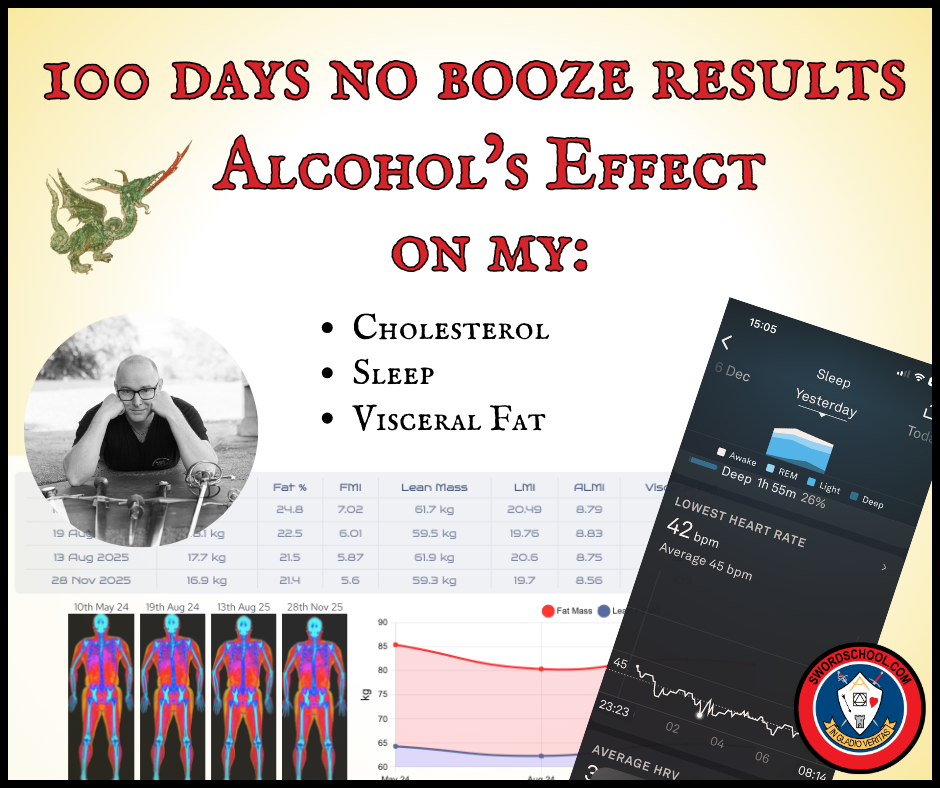
100 days no booze banner image with Guy Windsor, dexa results, oura ring results

I stopped drinking alcohol on August 19th, aiming for 100 days. In the end, I reached 103 days without booze, and without much effort. This post unpacks my 100 days no booze results, including cholesterol, visceral fat, sleep, heart rate, and the strange mysteries of my DEXA scans.

If you want the background and the halfway-point update, you can read that here — but let’s jump into the results.

Weight and Waist: The Simple Home Measurements

So what happened?The only measurements I can reasonably make at home are overall weight and waist circumference. Those have both improved.

  • Weight: 81.2kg 78.7kg
  • Waist: 91cm 88cm

Not bad results, but not stellar. I did once lose 10kg in three weeks

Two noticeable effects:

•Reflux definitely improved

•Sleep did not noticeably improve

But the most important finding wasn’t from any measurement device:

My wife and daughters all agreed I was much less irritable when not drinking.

That’s definitive.

The two main metrics I was trying to improve were cholesterol levels, and visceral fat. I was hoping for improved sleep and thus more creative juice too.

Cholesterol and Triglycerides

Let’s start with cholesterol. Here are the results over the last year:
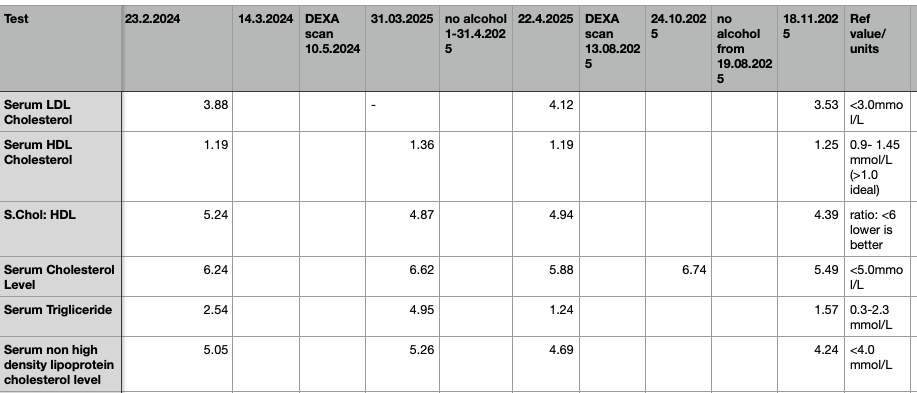
spreadsheet with my cholesterol test results as affected by booze intake

Back on 31 March, my triglycerides were so high the lab couldn’t even calculate LDL. After just three weeks without alcohol, everything had improved dramatically by 22 April.

The 100 Days No Booze Results

After the full 100 days:

•LDL: down from 4.12 3.53

•Triglycerides: up slightly from 1.24 1.57, but still well within reference range

These numbers fluctuate, and any single blood test is just a snapshot — like a photo of a busy street rather than a full documentary. But overall:

The trend is clear: not drinking alcohol helps my cholesterol and triglycerides.

These things are not an exact science: there are too many variables affecting cholesterol levels on any given day. Any blood test is a snapshot of a moment in time, like a photograph of a busy street. But the trend seems positive. From a cholesterol and triglycerides perspective, it’s clear that cutting out alcohol helps me a lot.

A Coffee Cholesterol Surprise

Two weeks before the final blood test, I learned that diterpenes in unfiltered coffee can raise cholesterol. Since then I’ve switched to paper-filtered coffee. This may have helped too.

Visceral Fat: The Most Interesting (and Confusing) Results
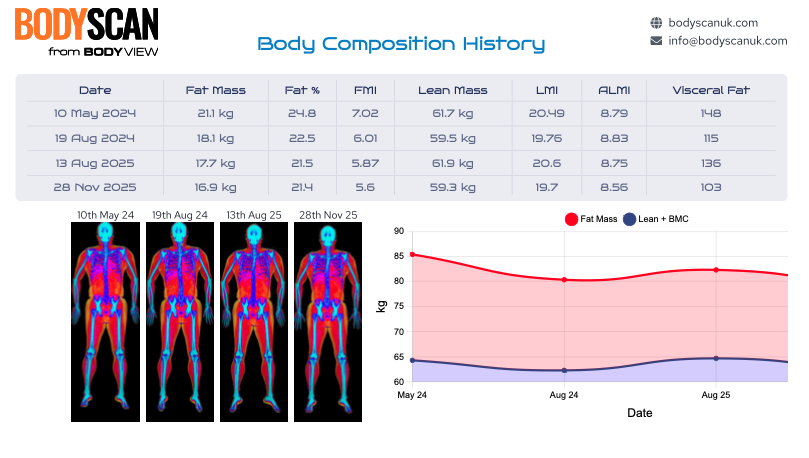
page from my DEXA scan results

Now the visceral fat. It was baffling to me that at my previous DEXA scan in August, my overall body fat was down quite a bit, but my visceral fat had jumped back up from 115 to 136. This latest scan, on November 28th, was even weirder. According to the weighing scales at the DEXA clinic, I’d lost a total of 1.8kg exactly.

My visceral fat is down to 103 cm2. (Visceral fat is measure in cm2 because it’s a calculation of the area of the cross-section of your torso at the navel. So if you cut me in half with a very sharp sword at my navel and measured the total area of fat, it would be 103cm2 out of a total of about 730)

Here's the pdf of the entire scan results: Guy_Windsor_2025-11-28-report

This is excellent, and what I was hoping. But here’s the thing. A bottle of wine is about 700 calories. I was averaging a bottle a day. So over 100 days, my overall calorific intake was down by about 70,000 calories (not counting the extra food I would have also eaten, because drinking with food tends to increase how much you eat). Fat stores about 9000 calories per kilo, so that’s about 7.8kg of fat.

But I’d lost a total of 785g. What the actual? That’s maybe 10% of what one might reasonably expect.

The rest of my weight loss came from “lean tissue”, mostly in the torso. 1.929kg from my trunk to be exact. That’s obviously not muscle (or at least mostly not muscle). There simply isn’t that much muscle to lose- and I’m stronger now than I was in August, including in my so-called “core”. So that’s either fluid, or organ mass, with perhaps some of it being gut contents (though my bowels were fine both that day and for the previous scan).

I also don’t understand how I can be 1.8kg lighter, having lost 2.631kg of lean mass and 785g of fat. That’s a total of 3.416kg… so where’s the extra 1.616kg? I certainly haven’t added that much to my bones! And I wasn’t bloated during the previous scan.

This was baffling enough that I contacted the company, and after a bit of email back and forth got on a call with one of their technicians. He pointed out that in my previous scans the DEXA total mass measurement agreed quite closely with the impedance scale measurement, except for my August 2025 scan, where it disagrees by just over 2kg. The simplest explanation is that the technician on the day recorded my weight wrong: he put 80.6kg in when it should have been closer to 82 (the DEXA recorded it at 82.298).

It’s normal for the DEXA scan to calculate total body mass about 2-400 grammes higher than the scale weight. But not 1.7kg high. And that 1.7kg is very close to the 1.6kg discrepancy in these figures. So if we correct that weight measurement, the numbers basically add up.

Here’s another mystery. According to the scan, I’ve gained 98g of lean mass (probably muscle) in my right leg… but lost 718g from my left leg! Without any noticeable change in relative strength (and yes, I am right handed and footed, but I do all my training on both sides, and in August, they were basically equal).

So, getting back to the actual point of the scan: it does seem that cutting alcohol cuts my visceral fat, but does nothing at all for my other fat. And it’s somehow fucked my left leg, even though it feels fine.

That was Friday, day 102 of my 100 days. So I had a small glass of wine that evening, and a few more on Saturday (my wife’s birthday), and a lot more on Sunday (my birthday). My reflux did not approve, but it was worth it.

Alcohol vs. Heart Rate: Oura Ring Data

Leaping down off the wagon like that gave me an opportunity to double check alcohol’s effect on sleep, so just for fun I put on my Oura ring and measured my heart rate. If you’re familiar with my Oura woes, I don’t take anything it measures seriously except heart rate, temperature, and HRV. It certainly can’t tell the difference between me lying in bed trying to sleep and me actually sleeping. But I do think it measures heart rate pretty well.

Here’s what the graphs look like. In each case I went to bed sober, and stopped drinking by 7pm, four hours before lights out.
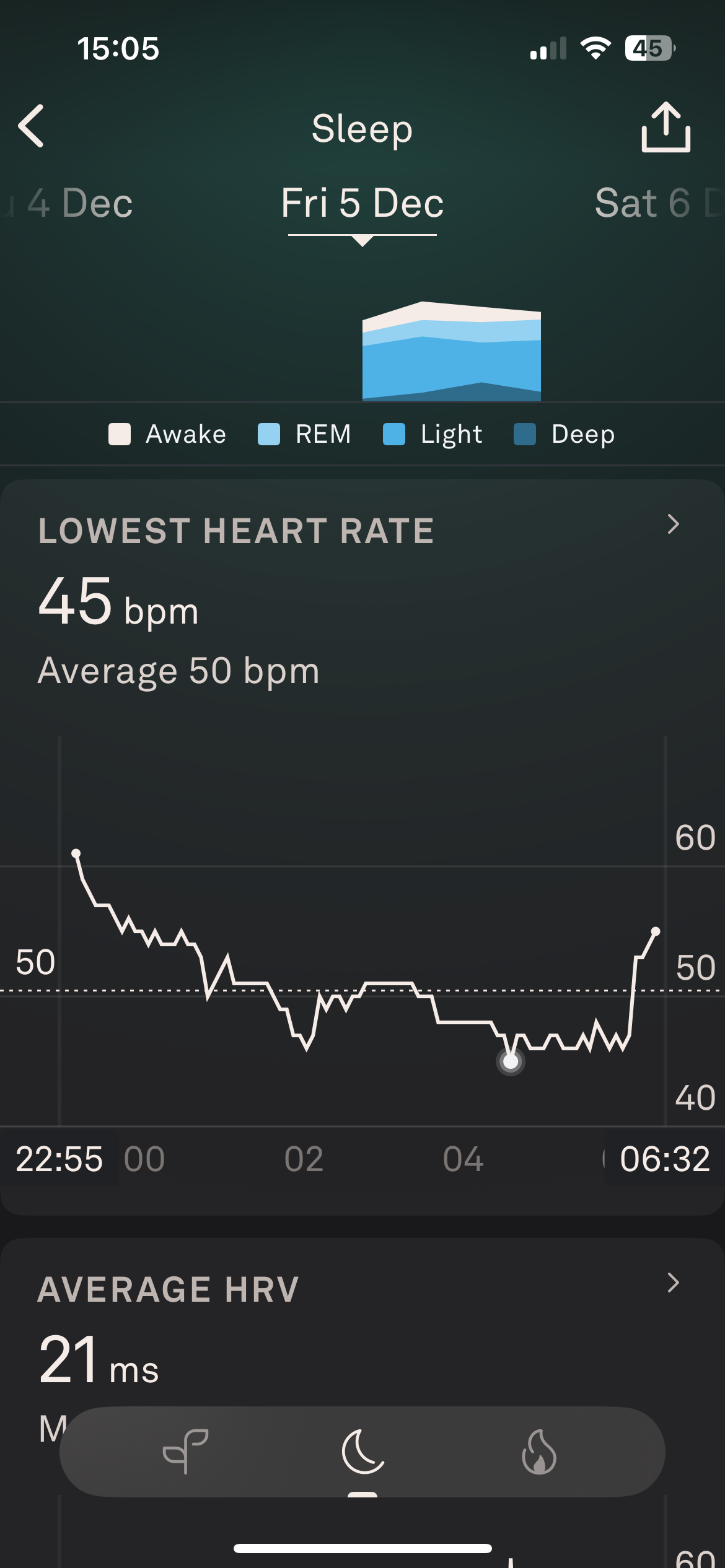
Friday:
Friday night with a little booze: hr lowest 45 average 50

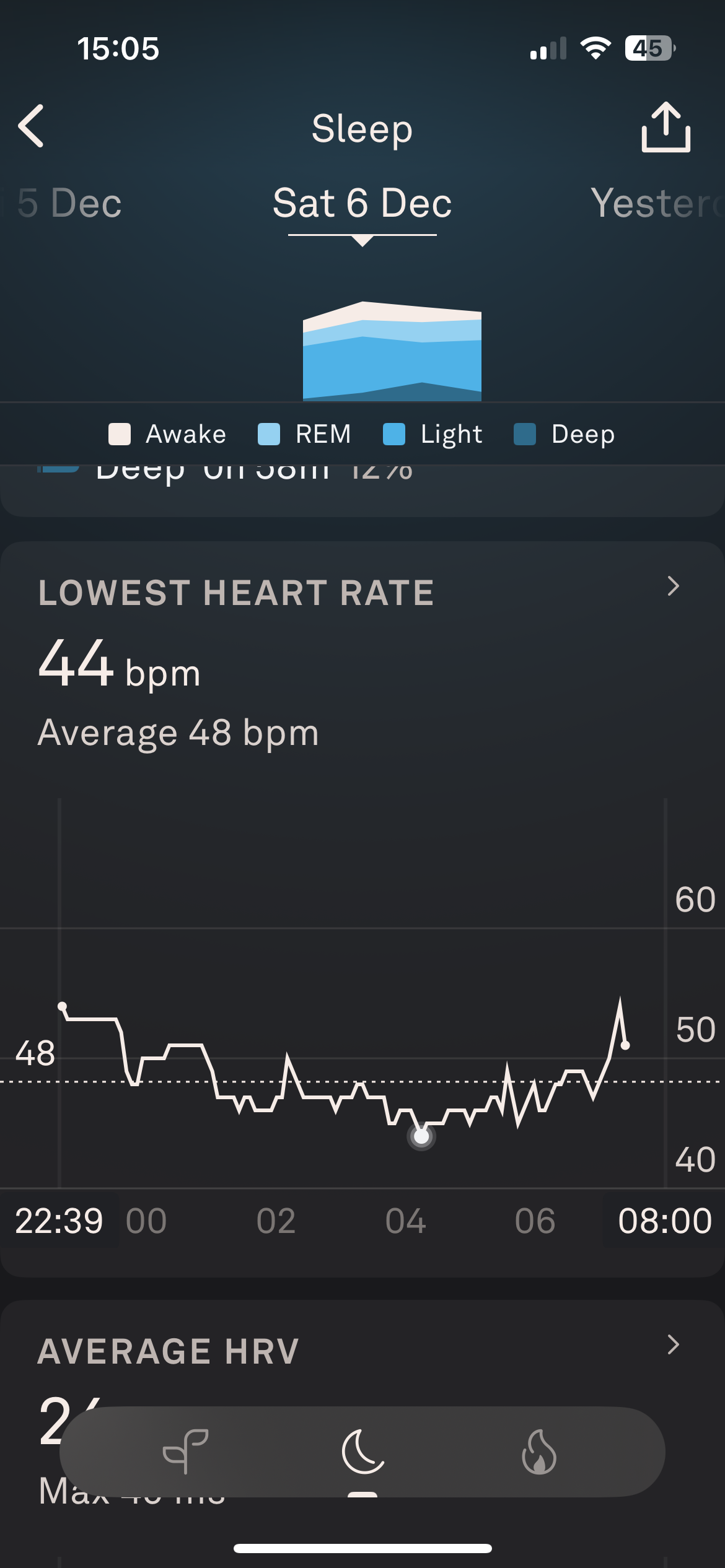
Saturday:Effect on HR with some alcohol on the Saturday: hr lowest 44, average 48.

Sunday:

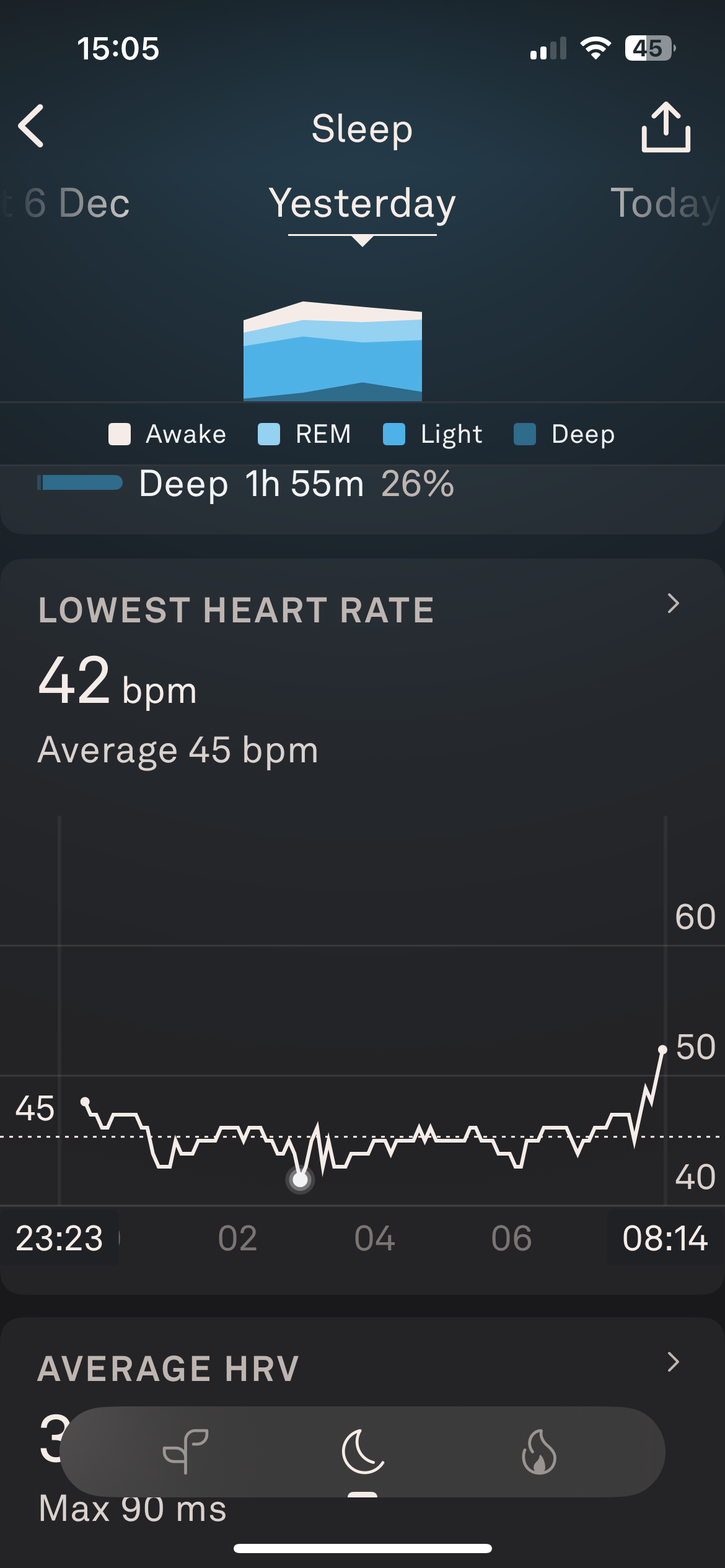
Sunday no alcohol, so HR average 45, lowest 42.

So whether I actually feel better or not, it’s really obvious that my heart prefers me to not drink at all. I mean, average HR 45, lowest 42, that’s pretty decent. Generally speaking, any night when I haven’t drunk any alcohol, it’ll average something below 50, and get down to 45 or below.

Just for fun: here’s what it looked like after I got accidentally shitfaced at my friend’s party. Last booze in about 4pm, I think.
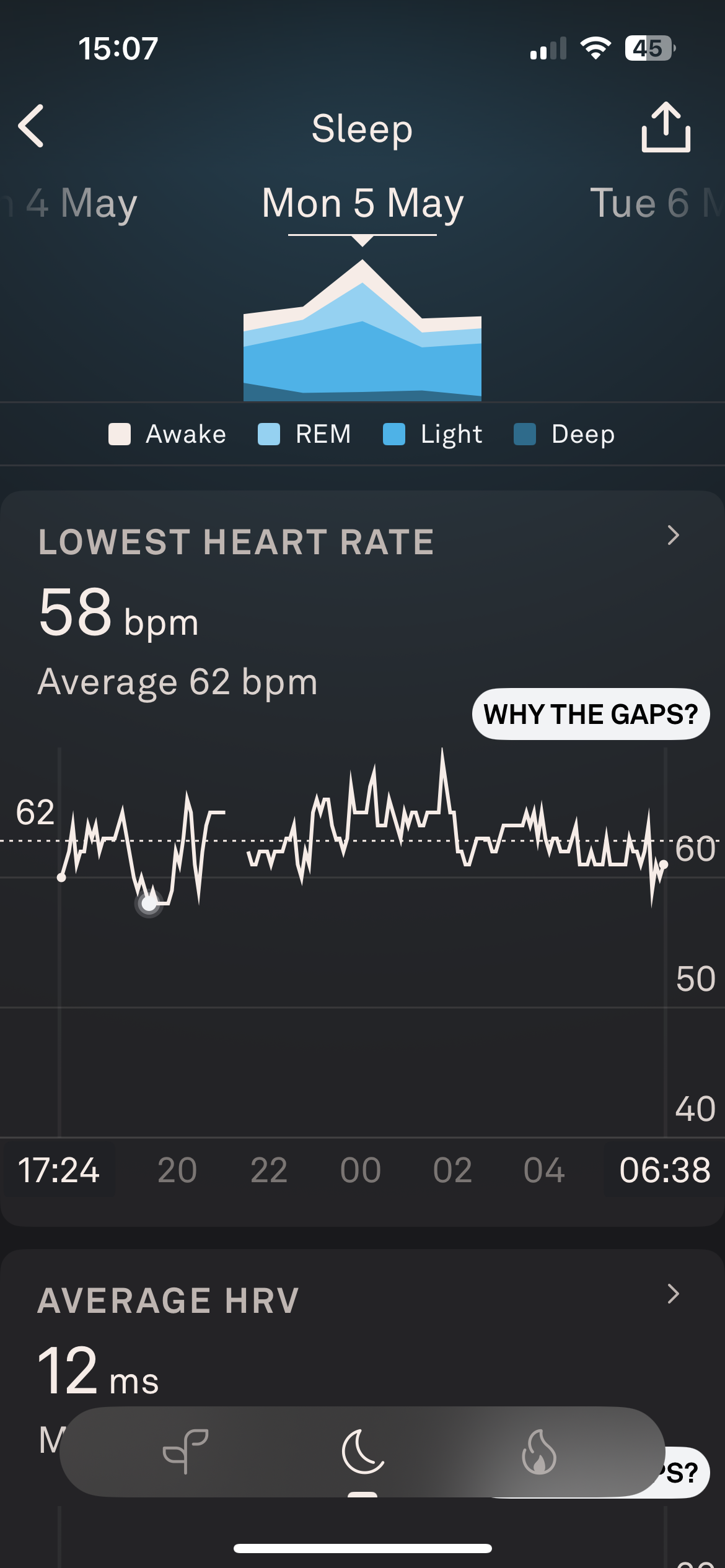
party time: average HR 62!


What 100 Days Without Alcohol Really Changed

Putting aside the data inconsistencies, the genuine results are:

Positive effects

  • Major improvement in visceral fat
  • Lower LDL cholesterol
  • Overall waist reduction
  • Less irritability (confirmed by independent household authorities)
  • Significantly lower resting heart rate on sober nights

Little or no effect

  • Sleep quality (subjective)
  • Subcutaneous fat

Negative effects:

  • None.

So what am I going to actually do now?

I’d like to get my body fat percentage below 18. Here’s how I’ll approximate that:

1. Waist measurement down from 88 to 86cm.

2. Weight down from ~79kg to ~76kg.

Approach:

1. Restrict booze. Generally speaking, no drinking unless it’s a special occasion. Tuesday is not a special occasion.

2. Go slow-carb. It worked very well for me before, let’s try it again. Being careful to maintain protein intake, and continue with weight training, to preserve muscle mass.

3. Cycle on and off, cutting weight (which gets rid of fat and a bit of muscle), and bulking up (which adds muscle and a bit of fat).

4. Fast occasionally. I normally have about 15 hours between last calorie in at night and first in the morning anyway (just because it’s more comfortable for me). Increasing the fasting time to 18 hours is not hard, so I’ll think about doing that more often, with an occasional 24 hour fast, or even longer. I train too much to want to fast too often- I’m concerned about losing muscle mass.

4. Track weight, waist, and strength. If my waist is down and my strength is up, I’ll call that a success, whatever the scales or DEXA says.

December is not the month for this, so I’ll play around with various things as convenient, and get consistent and serious about it on January 2nd. Another 100 days no booze, with a strict slow-carb diet (no starch, no sugar, lots of veg and protein), will take us to April 12th. I will probably make exceptions to the no-booze thing, but only for very special occasions. There is a world of difference between two glasses of wine in a fancy restaurant every couple of months, and two glasses of wine before dinner every evening.

Final Thoughts on 100 Days No Booze Results

The headline takeaway is simple: Alcohol has a strong negative effect on my visceral fat, cholesterol, irritability, and sleeping heart rate.

It doesn’t magically melt fat off me, but it clearly improves a bunch of meaningful health indicators.

The basic idea behind all of my training and health related activities is this:

Find out what works for you, then do that.

Both of those components are hard. Healthcare professionals can tell you what the current-ish state of the science suggests should work for most people most of the time, but they aren't much good at targeting what works for you specifically. The only way to know what works for you is to try it, and track the results.

Then, having discovered that doughnuts make you fat, or alcohol is bad for you, or whatever it is, you have to figure out how to incorporate that insight into your daily life. That can be simple and easy, or it can be really hard, especially when it involves going against mainstream cultural expectations. Even if the intervention is simple, it may not be easy. I'm lucky in that this one was both simple and quite easy, but many others I've tried are a lot harder.

My book The Principles and Practices of Solo Training covers this approach in depth and detail. If you've enjoyed these alcohol posts, you'll probably enjoy that book. And we have a sale on until the end of the year: use the code GUYSBIRTHDAY25 for 25% off any digital product, and BIRTHDAYPRINT10 for 10% off any print product, at swordschool.shop.

I share this kind of thing on my newsletter quite often, so sign up below to stay informed.

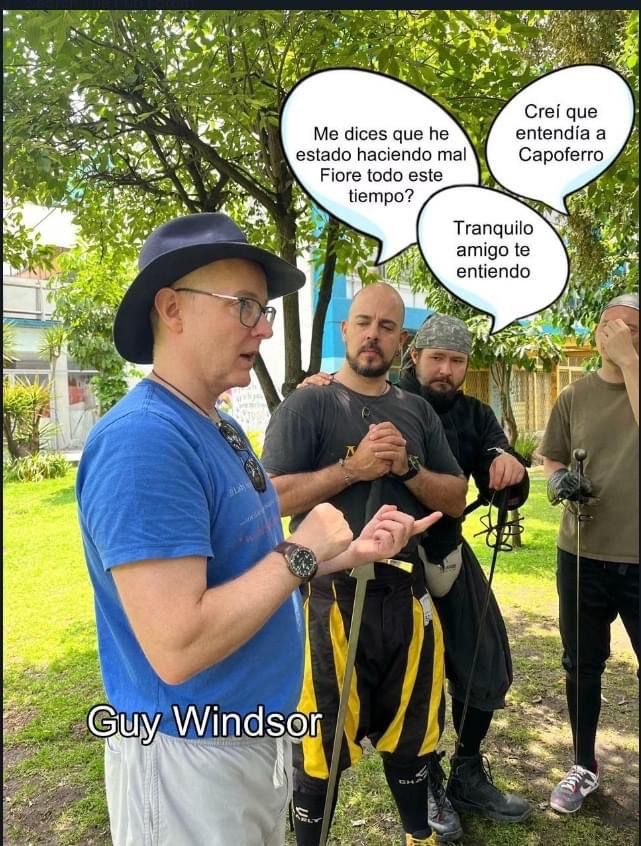
Guy with three Mexican students, all with thought bubbles. Mexico City 2024

7 Countries. 4 Continents. 6 books. Two online courses. And one really good idea (I think).

It’s kind of absurd to summarise an entire year in a single blog post, especially such a busy and yet somehow still productive year as the last 12 months have been, but I need to get a handle on what my actual choices were. It’s all very well to say you prioritise x or emphasise y, but looking back you may well find that you actually prioritised z.

It seems that this year I’ve prioritised pushing books out the door (sometimes faster than they should be), and travelling as much as I can handle. Leaving aside family travel (such as starting the year on holiday in Italy with my wife and kids, taking my wife to Porto for a weekend, and the whole family to Spain for a summer holiday, and visiting my mum in Scotland (which is a whole other country)), in 2024 I went to:

  • Helsinki, in February and again in May, teaching seminars for the Gladiolus School of Arms (which I’ll be doing again in mid-January 2025)
  • Singapore in April, to teach seminars for PHEMAS
  • Wellington, New Zealand, in April, to teach a seminar for a friend’s club (I segued through Melbourne on my way home to catch up with friends)
  • The USA: Lawrence, Kansas to shoot video with Jessica Finley, Madison Wisconsin to teach a couple of seminars, and Minneapolis likewise
  • Potsdam, Germany, for Swords of the Renaissance
  • Mexico City for the Panoplia Iberica, and then Queretaro for a smaller event.

That’s a total of 73 nights away from home for work trips. Damn. I’ve loved it, and will be doing some travelling in 2025, but both my daughters have major exams coming up in June (A-levels for one, GCSEs for the other), so I need to be home for much of at least the first half of the year.

Publishing

In January 2024 I published From Your Head to Their Hands: how to write, publish, and market training manuals for historical martial artists. Perhaps the nichiest book I’ve ever written, but it was there in my head in between editing drafts of the wrestling book (see below), so I got it out of my head and into your hands. See what I did there?

In March I published the long-awaited and technically “first” volume in the From Medieval Manuscript to Modern Practice series: The Wrestling Techniques of Fiore dei Liberi. Only 4 years after what will become the third volume (The Longsword Techniques of Fiore dei Liberi). It took me that long because the pandemic stopped me from going to Kansas to shoot the supporting video material with Jessica Finley. Well, that’s my excuse and I’m sticking to it. It was also just bloody hard to write.

The second volume (on the Dagger Techniques of Fiore dei Liberi) should be out in early 2025, and at that point I’ll re-cover the Wrestling and Longsword volumes and make them look and behave more like a book series.

Proof if ever you needed it that there’s no need to do things in order.

In August I published Get Them Moving: How to Teach Historical Martial Arts. This is another super-nichey book. I’m not aiming at the mass market here, just clearing things out of my head so I can get on with other things. Books do that: they simply insist on being written and published, and won’t let me alone until I’ve got them out the door.

I also managed to edit all the new material for my Medieval Dagger Course, which I had shot in Kansas. I also have a bunch of longsword material to publish, and an entire course on German Medieval Wrestling (Jessica Finley’s work).

In September I published the celebratory 20th Anniversary edition of my first book, The Swordsman’s Companion, and I’ve made the ebook free on all platforms. The book is hopelessly out of date as regards interpretation, but it’s an interesting window into the state of the art as it was in 2004. And it got a lot of people into historical martial arts.

In November we published the magnificent facsimile of the Getty manuscript, with my complete translation. Unfortunately that ran into some bizarre technical problems after the first 50 or so orders had come through, so at the time of writing we are fixing the problem and reprinting the books. I also created a companion volume which includes the complete transcription as well; it’s not intended as a standalone, but it is finished and has been sent out to all the buyers of the facsimile, so I guess that counts as two more books, taking the year’s total to a somewhat absurd 6. If you consider that my first book came out 20 years ago, and in that time I’ve written and published about 18 books: a full third of them in this year alone.

Of course, publishing comes after writing, and a lot of this year’s output were mostly or at least partly written over the last few years; they just happened to be ready all at once.

My podcast The Sword Guy hit 200 episodes in December 2024, and I’ve decided to pause a while to think about what I want to do for the next 20, 50, or 100 episodes.

Business stuff

I had two main goals for 2024: to figure out how to open up my platform to other instructors, and to create partnerships with other businesses serving the HMA community. I’ve made progress on both those fronts.

Esko Ronimus’s course “Introduction to Bolognese Swordsmanship” went live on courses.swordschool.com in October this year. This is different to the collaborations I’ve done before (such as Jessica Finley’s Medieval Wrestling course) because I was not directly involved in creating it. I didn’t direct the shoot, edit the video, or take part in the production in any way. I just provided a platform to host it on, and some advice on structuring the course and marketing it. So far both Esko and I are happy with the results, and I’m open to requests from other instructors…

If you’ve bought a sword from Malleus Martialis in the past year you may well have got a discount code for one or other of my online courses, or a code to get one of my ebooks for free. This kind of thing is good for Malleus (they can offer more to their customers at no cost to themselves, and make an affiliate fee on any course sales), good for the customer (they get free or discounted stuff they are likely to be interested in), and me (I get some of the course sales money, and someone who may not know my work becomes familiar with it, and may go and buy a bunch more of my books). So if you’re in the business, and want to set something up, let me know.

Research stuff

This year there has been one significant change to my interpretation of Fiore’s Armizare: the three turns of the sword. This doesn’t change much about how we actually do things, but it affects the underlying theory behind the art, and solves a mystery that has been plaguing us for decades. Full credit to Dario Alberto Magnani. You can listen to the entire conversation here.

It also meant updating my translation of the Flower of Battle: I deleted one word. A very critical word. “Also”. Yes, it makes a difference.

Plans for 2025

I came back from Mexico with one clear vision of a problem to solve. Namely, I travel about a lot giving seminars, and so I get to see a lot of students, but only every now and then, and many of them I’ll never see again. This is unsatisfying. I don’t get to see the long-term effects of the things they have learned from me. I don’t get to see them develop over time. Of course there is some continuity, especially when I go back to teach at clubs regularly, but it’s not ideal for either me or the students.

So what to do about it? The thing that blows the students’ minds most consistently are insights into swordsmanship mechanics. Ask Leon in Mexico or Rigel in Singapore about the rapier guard quarta, and how stringering works. The look of utter startlement on students’ faces when they get it is the absolute best thing. I’m thinking about creating an online course that goes into the absolute fundamentals (ie the most important but least flashy) of how sword mechanics work, and making it free: but required for anyone signing up to one of my seminars when I travel. This will let me cover a lot more stuff in the class itself, and prepare them better to actually make use of the insights. And it will hopefully bring them more into my orbit, make them more likely to show up on swordpeople.com with good questions, more likely to come to the next seminar, etc.

I also want to create an online course on Vadi’s longsword (might as well shoot my interpretation of the entire manuscript while we’re at it) [Update: we did! We created the Vadi longsword course, the Vadi dagger course, and filmed my interpretation of every play, which you can find on the Syllabus Wiki when it's properly updated, hopefully by Feb 2026], publish the dagger volume of From Medieval Manuscript to Modern Practice [Update: we did! you can find it here], maybe shoot the video for the armoured combat and/or mounted combat volumes, and finish The Armizare Workbook Part Two (which has been more than half written for over a year… but is still stuck in hard-drive purgatory). Part One came out in 2022, and I meant to get Part Two out in mid ’23. Oh well. [Update: we did not get round to shooting the armoured or mounted plays, or publish part 2 of the workbook. Sorry.]

I’m planning to make all of the supporting video for From Medieval Manuscript to Modern Practice (so, clips of every play from Folio 1 to Folio 31v of the Getty ms) free online. They are currently only visible through the links in the books. But making them open to all should help my fellow scholars, and also provide advertising for the books. Another win-win. [Update: Which indeed we won! They are all up on our vimeo account, and will be built into the wiki asap.]

The key thing to remember here is that planning is vital but plans are useless. There is no way to predict the future, and all sorts of things might get in the way of any or all of my intentions for the year. But having a think about what I want to accomplish, and why, makes it much more likely that I’ll be able to look back on 2025 with some degree of satisfaction. Let’s see what actually happens…

My parents watch the 10 o’clock news every night. While I was staying with them recently I took that as my cue to wander upstairs and do my evening stretching and breathing routines, and read before bed. I just don’t need to see interviews with people complaining about lockdown restrictions, or the latest speculation about a vaccine, or what happened on a sports field somewhere. This got me thinking about what information I do allow in, and why. It seems that I categorise any piece of information as belonging in one or more of these five categories, listed here in order of importance:

1. Connection. Finding out a friend has had a baby, or chatting with another friend about books we’ve read, or catching up with my family. This is the most important category because it is the one that most directly leads to good mental health outcomes. Without connections, we go mad. Or at least, I do. Sure, catching up in person is better- tribe are the people you eat with, generally speaking. But many of my friends live on other continents, and one of the silver linings of lockdown has been that the number of distant friends I have regular online catch-ups with has gone from one to four. This doesn’t include friends who are also sword colleagues, so the real number is actually higher. Social media scrolling absolutely does not constitute connection. It has to be real-time interaction with a single human being or a small group. This category is usually very positive, but does also include being in the loop when a friend or family member is ill, has died, or some other bad thing has happened to them. That would make it also fit into the next category, action, because it would normally trigger some kind of response: sending a card, going to a funeral, sending a message of support, or somesuch.

2. Action. Am I going to act on this data? This is the broadest category, and can include everything from a weather forecast (what do I wear? Do we go to the beach?), to my swordsmanship research (how should I parry that?), to that youtube video I watched the other day when I had to change a headlight bulb on my car and didn’t know how. If knowing this thing means I may change what I’m doing, it counts. I check the NHS corona virus data every now and then, to establish the current risk level for myself. I act on that information. So this category is stricter and narrower than the next, positive curiosity, and is the one most likely to include sad, difficult, or frightening information. These first two categories are the only ones in which negative, unpleasant, information is ok. I want to know if something has gone badly for someone I personally care about, or regarding an issue I’m actually going to act on in some meaningful way. But I do not need to expose myself to reams of bad news just to feel like I’m staying “informed”. “Informed” about what? There is only so much data you can take in at any one time- might as well make sure it’s important, useful, or interesting.

3. Positive curiosity. Am I interested, and do I care? I first wrote just ‘curiosity’, but then realised that doom-scrolling could be counted in there, and it absolutely isn’t. It only includes the things you want to know. Curiosity is related to the next category, ‘Entertainment’, because it’s fun to find stuff out for its own sake. For instance, did you know that book sizing is based on calves and goats? Originally a single piece of vellum (thin rawhide from said calf or goat), folded in half once and trimmed, would be a folio (i.e. a folded piece). That’s a really big book. Fold a folio in half, and you get a quarto (a quarter), which is about A4 or US letter size. So one piece of vellum (or more commonly paper these days) has eight individual page sides written or printed on it. Fold a quarto in half and you get an octavo (eighth). That’s about the size of a modern paperback. Of course there was (and still is) no real standardisation, and most modern books aren’t built of stitched-together quires (groups of folded paper or vellum) any more, and with modern paper sizes you can literally have any size you want. But if you’ve ever wondered why a big book is about 11 inches tall, and a normal book about 11 inches wide when open, that’s why. I’m guessing a lot of my readers knew that already, because we’re not just sword nerds, a lot of us are book nerds too. Bookbinding is a rabbit hole I can dive happily down for hours at a time.
My current blood-sugar experiments counts as both Action and Curiosity- I am changing some things about what I eat (action) but I’m also simply curious to find out what is really happening when ice-cream hits blood stream.

4. Entertainment. The category also includes tv shows, movies, etc. It’s the least important category by a mile, though it can overlap with curiosity. Uri Tuchman’s YouTube channel is my current go-to curious entertainment. He’s very funny, and absurdly skilled, yet oddly klutzy at times. Most importantly, he seems like a very nice man to spend time with.

Have a look at this, for one glorious example:

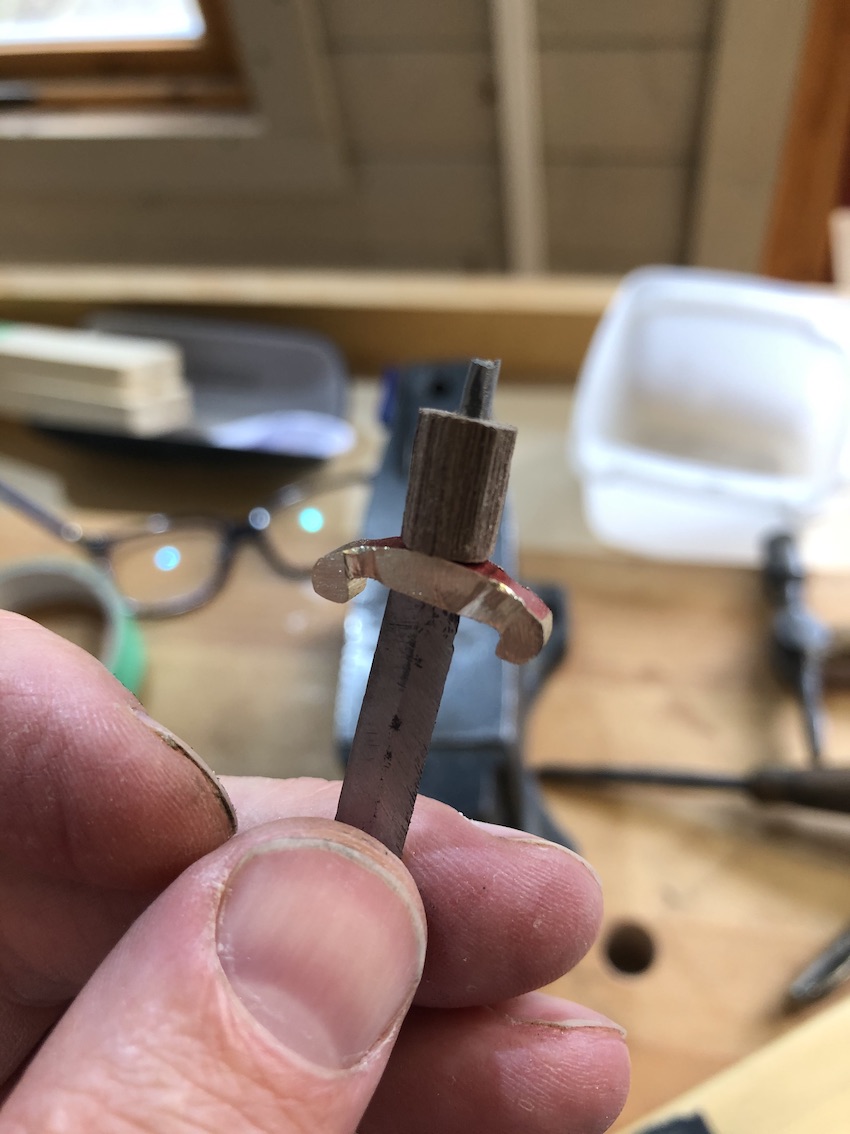
And thanks to watching his videos I’ve started adding much more metal work to my craft repertoire. Including making this little sword, hot-forged from a nail, and furnished with brass and walnut (photo is of an early stage). So some entertainment also leads to action.


The question is always: does knowing this thing make me more connected to people I care about? Or am I going to act on it? Or am I actually curious? Or is it entertaining? If it is no to all of those, I just don’t want it to impinge on my consciousness. It fits in the final category:
5. Everything else. Everything in this category can be safely ignored. There is absolutely no need to watch the news to find out that there’s something major happening: you always find out eventually, and it is practically never time-critical: if it were, the news is probably too late. Just ask any investor- if you’re making your investment decisions based on the news, you’re already way too late. If you’re contemplating a course of action, by all means do some research- data that was irrelevant before is now in the ‘action’ category.
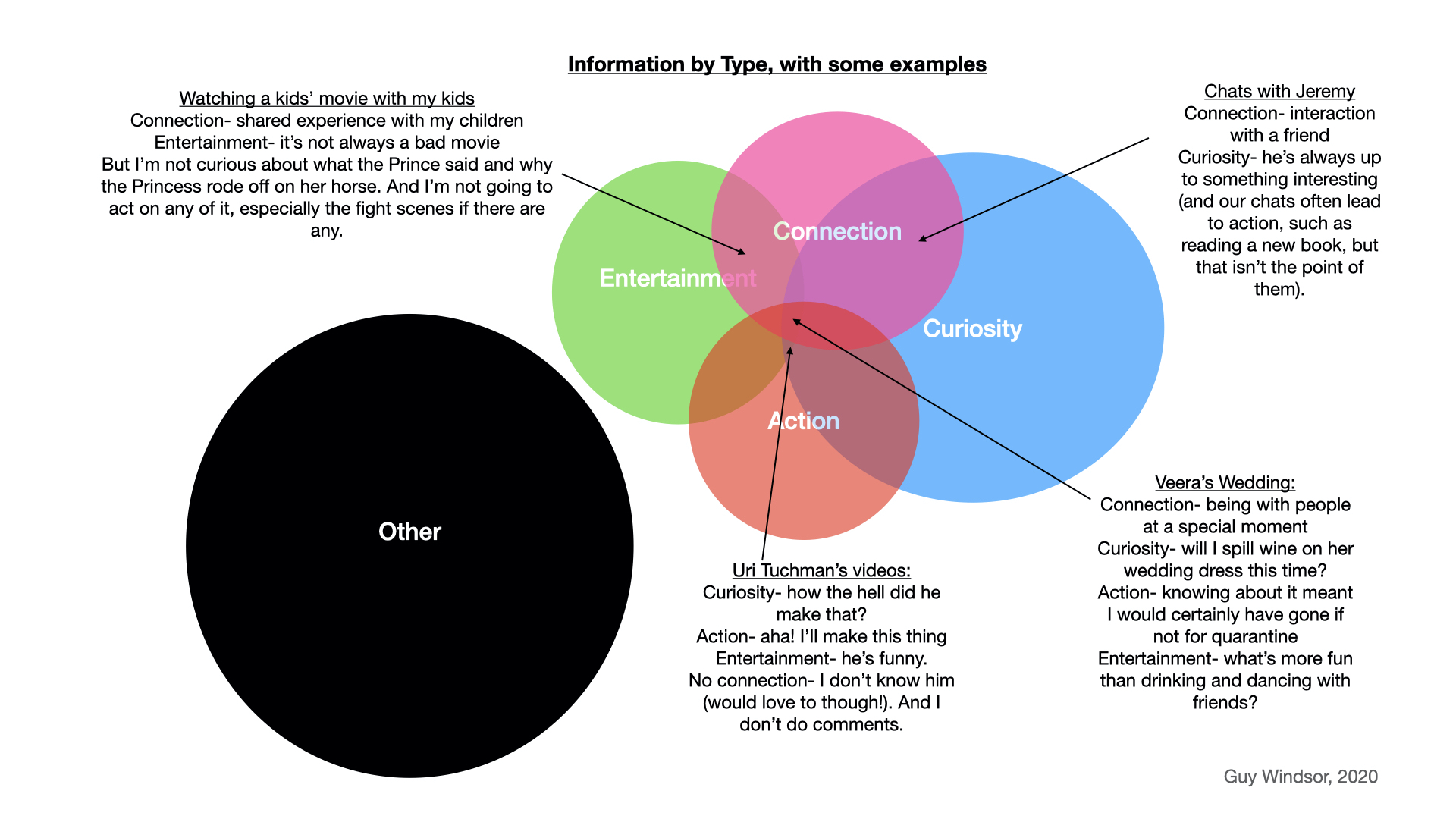
There is no need to fear missing out on something good. You almost always find out anyway, whether you want to or not, because we live in an age where we are simply bombarded by information all the time. Filtering out the stuff that is just unnecessary stress does mean that you may occasionally miss a particularly funny cat video- but should you ever feel the need for a funny cat video, you can just go look for them. I apply this information filter everywhere- especially in my email inbox. If I’m getting emails I’m not interested in, or am not planning to act on, or do not lead to connection, or are not entertaining, then I unsubscribe (feel free to do the same if you’re on my list and my emails have fallen out of the four useful categories), or just delete. Here’s a Venn diagram that may be helpful:

All of this is yet another way of keeping a healthy focus on my area of control, and a weather eye on my area of interest.


If you’ve found this useful, please share it, and feel free to leave a comment. If not, please let me know why in the comments here: I don't usually see anything on social media platforms- having read this post, you probably know why!

Hi

today's questions are:

Joe Propati's series of questions continue….

  1. Since Knights trained their whole life to become masters of the sword, were there any individuals who stood out as the Grand masters of the sword above everyone else in the world and who were they?
  2. Did Squires and Knights learn sword play by physical lessons alone or did they also learn through manuscript?
  3. Were there instructors during the time period that were Grand masters or individuals that were sought out do to their fame or standing?  Did Knights and Squires traveled to these individuals for special sword training?
  4. How long did it take a Knight to become a master or proficient at the long sword?
  5. Were Knights taught lethal and non-lethal tactics with the sword or just lethal tactics?
  6. If a Knight learned to use a Katana instead of a long sword, how different would the tactics of battle be with two Knights in armor?

Then we have:

What are your thoughts on other historically inspired fighting, eg SCA heavy, rapier, hmb or nvg,

-Nikephoros from lochac

Then Luke from Cyprus asks,

what's the most common situation for a soldier to use a hand and a half sword?

By that I mean, sword and shield was a common deployed combo at one point, but mostly sword were sidearms, right? Would they be carried to war with their spears? If so how?

And a couple of questions regarding my pattern-welded longsword:

What makes your sword with the pattern welded blade cut really well, and can you show some close up images of it?

Thank you,

Brijn, Colorado

And Douglas asks:

I have a question. On your recently published Q&A related to the horse sized duck, you mentioned your pattern welded long sword as being the tool (asides from a light sabre) that you would use. My question is, are pattern welded swords genuinely sharper and more hard wearing than a “normal” modern forged high carbon steel blade? I am looking to buy my first sharp and would like it to be the best and loveliest that I can currently afford / justify and whether to go for a pattern welded blade or not is definitely a factor I am considering.

And finally Robin asks:

1) Obviously you've written and published quite a lot of material on historical martial arts. Have you considered, or *would* you consider, doing something about more fantastic fighting? “A Dungeons and Dragon's Guide to Combat” or something like that? Whether it be purely speculative or aimed at cosplayers/fantasy recreationists/whatever. And yes, this question is inspired by the duck horse question from last time.

2) Do you have a coat of arms, and would you be willing to show it on the video?

3) I didn't realize that you – as you put it – came from an antiques restoration career. Do you still restore old weapons (or old furniture) in your free time?

Here's the video:

https://youtu.be/i4RS3AGSggw

Shownotes:

Updated: Solo Training Course, only $20 during the Corona crisis https://swordschool.teachable.com/p/solo-training/

The Unconquered Knight: A Chronicle of the Deeds of Don Pero Niño, Count of Buelna: https://amzn.to/31FltU6

Christian Cameron’s the Ill-Made Knight series. https://amzn.to/2J9nqzo

Training with sharps AMA video: https://youtu.be/boOVVT9qUxY

Training with Sharp Swords: article on the CFAA blog: https://chivalricfighting.wordpress.com/2014/02/18/why-you-should-train-with-sharp-swords-and-how-to-go-about-it-without-killing-anyone/

My craft blog: http://shinysharpthings.blogspot.com


A week after moving house I jetted off to Helsinki for the photo shoot for the German edition of The Duellist’s Companion, which is being published by Wieland (as was The Swordsman’s Companion, and The Medieval Longsword.) Somewhere in the mists of time the original photos for The Duellist’s Companion got lost, and as you can tell from their work on my other books, Wieland have a very high standard for visuals, so the lower resolution versions I could find just didn’t cut it.

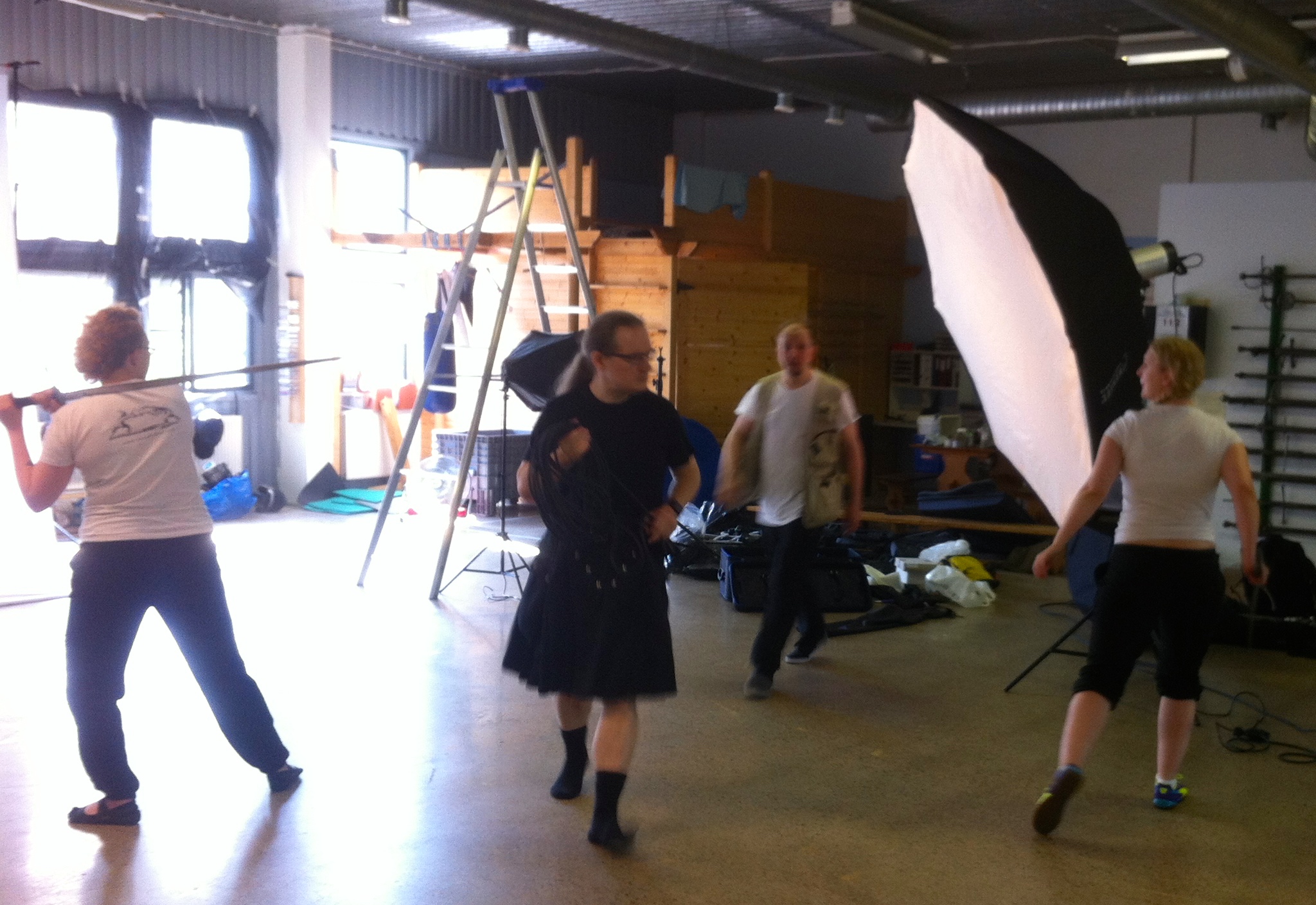
The outstanding Jari Juslin showed up with a mountain of gear, we spent three hours setting up, and then took about 800 photos in the next seven hours. It was a long day, but a happy one, and much thanks go to Jari, of course, and also Maaret Sirkkala, Janne Högdahl (both of whom starred in the original The Duellist’s Companion 13 years ago!), Henry Vesala, and Elizabeth Hohtar. It takes great patience to be a model on one of my shoots, and they all rose to the occasion with sprezzatura.

The original images are enormous- about 40mb each, and over 120 when converted to tiff files as printers prefer. But you can get the idea from the pics in this post. Please note Jari has not tweaked the photos. These are the raw material, not the final version.

In the process of preparing for the shoot I had to go through The Duellist’s Companion with a fine tooth comb, and try to figure out what the hell was I thinking in several places. I think a second edition is long overdue. And with Tom Leoni’s new translation and transcription of the extraordinary Vienna manuscript (MS 381 in the Fürstliche Sammlung des Palais Liechtenstein (Vienna)) clutched in my sweaty palm, shedding new light on some of Capoferro’s more obscure remarks, a second edition taking the Vienna into account would be awesome.

That’s on top of the Fiore Translation Project, the Rapier Workbook Series, and a pretty full travel schedule.

Speaking of which, oh rapier fans of an American disposition: I’ll be in Baltimore in July for Lord Baltimore’s Challenge, helping to run the tournament and teaching a class on the following day. I hope to see many of you there! Follow the link for registration etc.

Ok, now back to work… organising those 800 photos into their proper places in the book. Where should this one go?

I am face-down in the first draft of the third instalment of my new Rapier Workbook series. Part Two, Completing the Basics is back from the proof reader and I sent it off to layout this morning. Huzzah!

Part Three, Developing Your Skills is proving to be a bit of a beast. It's about how to train, how to develop skills, how to add depth to your art. I have it all clear in my head as one solid unit, but breaking down that massive and complex network of interrelated concepts into the linear framework that books demand is proving quite hard.

I almost never moan about such things on Facebook, but did, on Friday, and got a lot of useful ideas and moral support. My friend Jaakko Tahkokallio posted a link to the blog “Inframethodology”. It's flipping awesome. I especially like this article: On Telling People  What To Do. If you write, especially non-fiction, you should check it out.

I cracked the problem this morning. Instead of trying to establish the structure in advance, and put it neatly in the introduction, I'm just writing out the lessons as I would teach them in class. I'll identify the structure (and tweak as necessary) *after the fact*. This is going so well that I've got time to write this! It's lunchtime and I haven't had time to get dressed yet, but who cares? When the words are flowing, don't stop for trivia.

I'm currently in Helsinki sitting at the dining table in my friend Tina's apartment, and it's a very good day, on several counts:

  1. I spent the weekend at my salle teaching my students. We covered breathing exercises on Friday evening, spent all day Saturday torturing ourselves with rapier footwork, and all day Sunday working on Longsword. I don't miss teaching every evening and most weekends; it's nice to have a normal social life. But teaching seminars is what I'm built to do, I think.
  2. While here I've spent literally every lunch and every dinner catching up with old friends. It's 10 am here and I'll be having sushi for lunch with my godson and his family. I haven't got to see everyone, of course- after 15 years here I have far too many friends to be able to see all of them in a single week. But what a lovely problem to have.
  3. While I've been here I've also managed to shoot a ton of new training video footage, for my various courses and other projects.
  4. I just this minute sent the final print files of my new Rapier Workbook to the printers. I expect to see a jolly fine printed proof *very soon*.

I'm off home tomorrow afternoon… and leaving again on Friday to go to up to London, prior to flying off to Michigan for the Hero Round Table. I have to give a 12 minute speech there, something I've never done before. An hour? easy. Two hours? no problem. Twelve minutes? Dear god, I've got no idea.

So I'm practising…

My basic idea is that heroic behaviour (i.e. doing the right thing despite reasonable fear of the consequences) can be trained for, and the historical duelling arts offer a particularly useful way of doing that.

It will be an excellent opportunity to practise doing the scary thing.

Fortunately I'm also doing two short intro-to-Longsword classes at the event too, which will be much more comfortable.

A load of unarmed people sitting down and listening? Very scary.

A load of armed people standing up and swinging swords? Not scary at all.

I recently got my latest book, The Theory and Practice of Historical European Martial Arts, back from the editor, and am working through it. There are always last-minute changes to make, but they are usually minor additions or rephrasings. This time, there is one major change: I have decided to stop using the term HEMA altogether. It stands for Historical European Martial Arts, and a sad and disgusting number of white supremacists, nazis, and other scum have latched on to the “European” bit (at the expense of the historical, the martial, and the artistry) and are bringing the term into appalling disrepute. I will not share examples of this behaviour because I see no good reason to spread poison, but trust me, it’s out there.

The Nazis in Germany in the 30s did the same thing to all sorts of elements of European culture, from co-opting Norse mythology, to taking a perfectly innocuous symbol (the swastika, which you will see on monuments and book covers before the 1930s) and making it forevermore associated with evil incarnate.

The principles and practices I cover in the book are by no means only applicable to European styles and sources. They could be used for any art— indeed, my friend and colleague Dr. Manouchehr Moshtagh Khorasani is using the same sort of approach in his reconstruction of historical Persian martial arts. So the “European” bit is entirely unnecessary, and seems to promote division rather than unity. I don’t practice the arts I do just because they are European.

It’s not as if there was any such thing as a general European martial art anyway, other than perhaps gunnery; I teach Italian rapier, Italian medieval knightly combat, French smallsword, German sword and buckler, and so on. Every source comes from a specific time, place and culture; to call them European would be uselessly general.

So fuck them. They can have the HEMA label. The E is redundant. We could call what we do Historical Swordsmanship, but that would exclude the boxers, knife fighters, WWII combative practitioners (the only style I can think of that definitely killed Nazis!), wrestlers, jousters and all the rest that don’t use swords. We could call it Western Martial Arts, though the “Western” is perhaps misleading too; Polish sabre is Eastern European; to me it would feel odd to call it “Western”, though it is when considered in relation to Asian martial arts.

In the interests of specifying the historicity of what I do, its martial nature and its artistic beauty, I’m calling my book The Theory and Practice of Historical Martial Arts, and dropping all references that would seem to imply these arts are valuable because they are European.

In the global fight against fascism that faces us today, it is probably the tiniest, feeblest, blow. But we have to start somewhere. I don’t think we can reclaim the term HEMA any more than we can reclaim the swastika, but it’s just a four letter acronym. It’s what we do that counts, not what we call it.

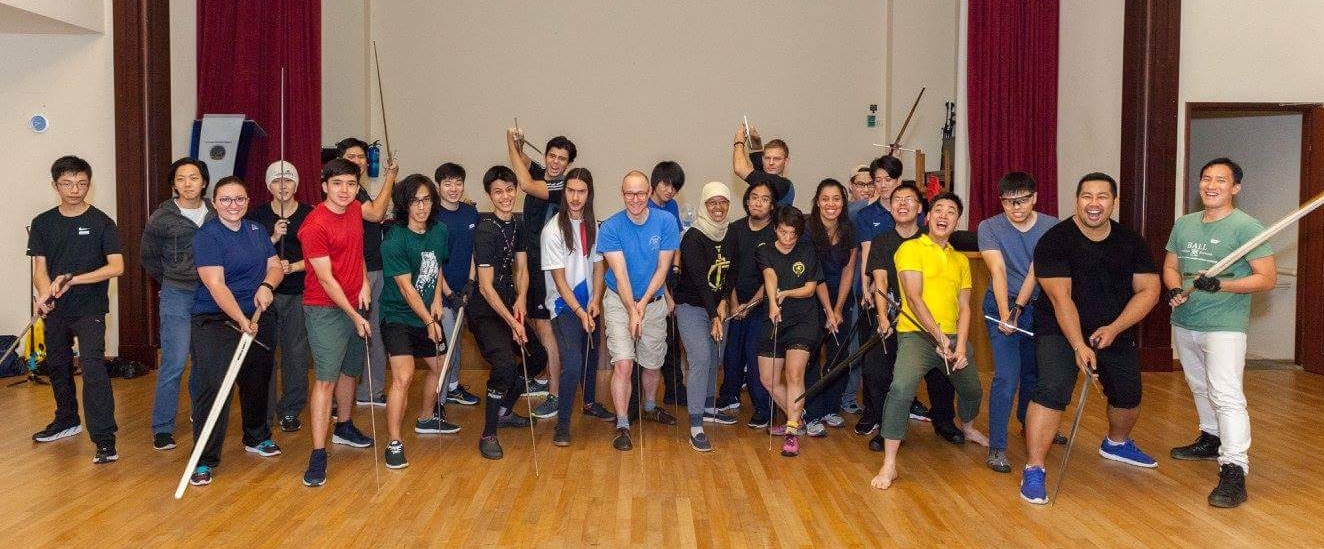
In case there were any doubt about my stance on this, here’s a photo of a class I taught recently. Race, sex, religion, country of origin? Irrelevant. Community fostered by a shared joy in the Art? Priceless.

UPDATE: There has been a ton of commentary on this on various social media platforms, which can be distilled down to the following stances:

  1. Yay! Glad Guy said that.
  2. Okaay, but we must FIGHT to keep the term HEMA and not yield the E to the fascists
  3. Fascists are bad, but this is not helping at all
  4. There are fascists in HEMA? Where?
  5. Are you calling ME a fascist? (for the record, I'm very carefully not naming anyone)
  6. Guy is a dick.

Let me point out that the only action I am taking is re-naming my book, and adjusting the content to reflect the fact that historical martial arts are not all European. I take the point that my proposed course of action may not be effective (time will tell); and I also understand that many decent people are very invested in the term HEMA. Personally, I'm not and have never been; when I started out we called what we did Historical Swordsmanship, or Western Martial Arts. I think my point stands that HEMA is not a very good descriptor for the Art, and I'm sympathetic to the “don't give the fascists an inch” standpoint. But nothing I've seen so far has lead me to want to change my mind (and undo the last few hours of edits!).

Regarding the last point, I'd rather be hated for who I am than respected for who I'm not. If trying to do something to counteract the far right loses me the respect of some people, then I'd rather not have their good opinion. If you approve of the sentiment but not the tactics, then by all means, let's talk tactics.

AL-front-cover

I get asked a lot about crowdfunding campaigns, especially for writers, so I thought I would do a complete breakdown of exactly where all the money came from and went to in my last campaign, which raised 12,093 euros in 30 days. Be warned, this post will make the accountants among you happy, but has nothing whatever to do with actual swords, writing, or anything other than the business side of running a crowdfunding campaign. For more general advice on crowdfunding, go here.

First, some background:

I wasn’t sure whether I should even do a campaign for this book. I had sufficient funds to pay for layout and editing without it, and as a non-fiction sequel, the already tight niche is even smaller. I asked my wife, and she said to do it so I did.* Four hours later I had shot and cut the video (with a very sore throat, hence the growl), worked out the goal and perks, and written the story text. I sent a link to the draft of the campaign to my mailing list, and was rewarded by some very useful feedback over the next few days. Another hour of work, and all the corrections that I could make in a reasonable time were done. Several folk suggested re-shooting the video, but I was too sick and it would have taken too long; because I hadn’t really planned this, we were only about 30 days out from Christmas.

The Campaign

I launched the campaign on November 23rd, and it hit its realistic target of 2,500e in about 9 hours. Realistic in that it would be enough money to pay my freelancers, and realistic in that I could reasonably expect my current readership to buy enough copies of the new book to meet that target. This was largely due to my mailing list; the people on it do tend to want to read my books and generally support my work. Keeping them informed, and perhaps more importantly asking them to get involved, really helped.

When working out your goals and perks, it is very important to bear in mind the difference between fixed and variable costs. In brief, the fixed costs are what it takes to produce the first copy: paying the freelancers, uploading the book to the printers, my time to get it to that point. The variable costs are what it costs to produce each copy after that: in this case printing and shipping, indiegogo and paypal fees, sales tax, and so on.  A common pitfall of crowdfunding campaigns is to underestimate, or simply forget, the variable costs. You might raise all your fixed costs and still end up losing money to actually fulfil your orders if you're not careful.

The campaign then followed the typical pattern; a slump in the middle, followed by a rise at the end. Starting strong certainly helps to get the word out; the day I launched, it did so well so fast it made it onto the Indiegogo homepage. According to the stats, 1,444e of contributions came direct from Indiegogo, which suggests that people found the campaign from outside my usual channels.

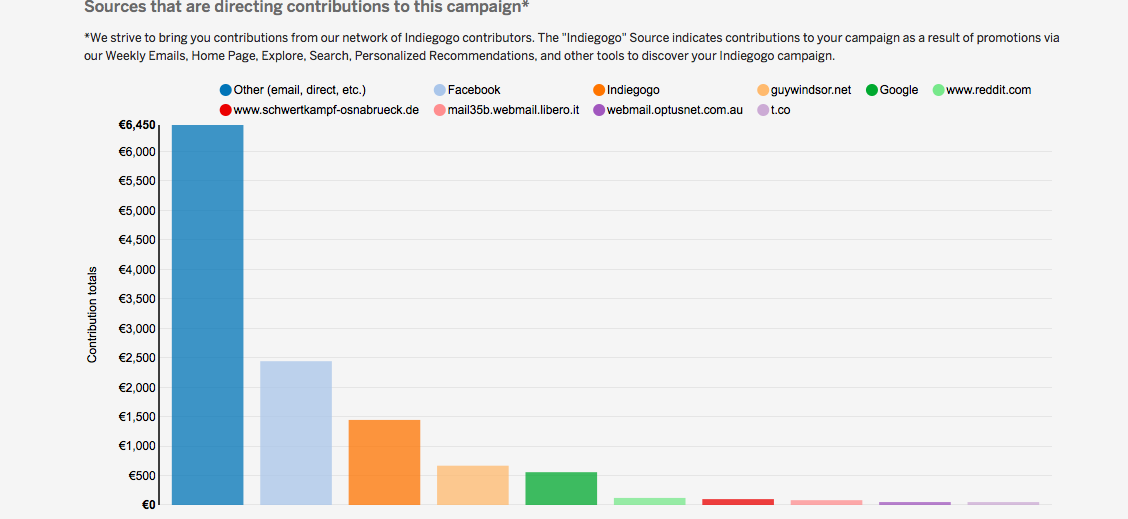
Where on the net are people coming from?

Most of my marketing was done through my email list, and through Facebook. According to the stats, 6,450 came from “direct traffic, email etc.”, and only 2,441 through Facebook. Twitter brought in a princely 50e. My own website, guywindsor.net/, brought in 667. This is a pretty convincing argument in favour of direct marketing, I think!

Referrals

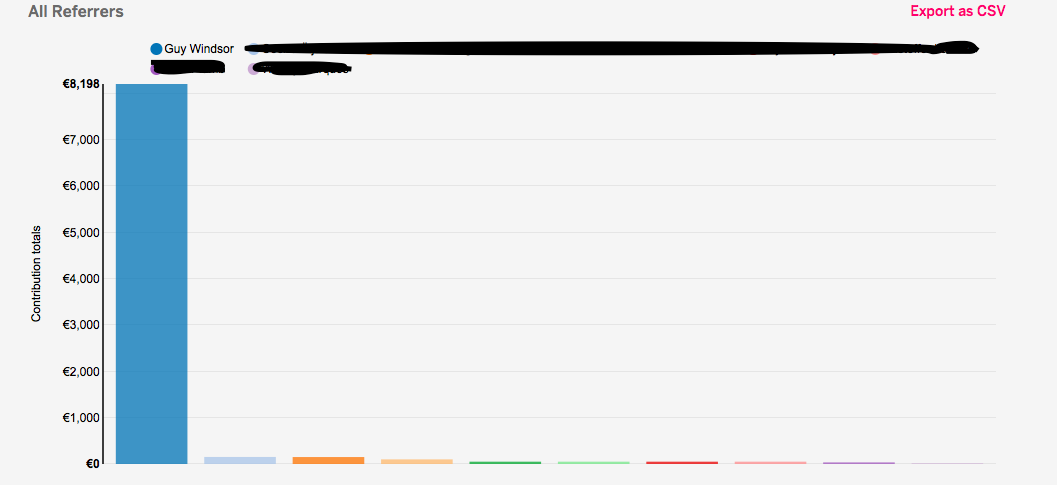
You can see from this graph below that almost all of the trackable referrals were done using the link associated with me: 8,198 e.


I have edited out the names of the top referrers, because several of them backed the campaign anonymously.

Again this is not a surprise, and does not diminish the excellent and helpful efforts of many kind people. It’s just a fact that nobody does as much publicity as the ones who benefit most directly! My link generated 207 contributions in total from 1855 referrals; 8.96 referrals for every contribution; 4.419e/ referral, average contribution 39.60.

I also ran a referrals competition. There were two categories: eyeballs and sales:

Eyeballs: Whoever sends the most people to see the campaign will get two free copies of the book in hardback, sent wherever you want.

Sales: The person whose referrals generate the highest sales will also get two hardbacks, and can commission an instalment of The Swordsman’s Quick Guide, on any topic you like. I will write the booklet for you and publish it (at my discretion; if your request is vastly off-topic I might choose to simply send you the finished booklet for you to do with what you like).

If the same person wins both categories, I  add a runner-up prize; whoever comes second in the sales category gets a free hardback, signed and sent wherever you like.

How do you take part?

You need to log in to Indiegogo, which generates your own specific url for the campaign, which will look like http://igg.me/at/longsword2/x/00000 where the last set of numbers is your unique identifier. Then share this link as best you can, and Indiegogo will track the link for you.

(source)

The winners of the competition were:

Cecilia Äijälä 152e from 4 contributions and 334 referrals

Nico Moeller: 150e from 3 contributions and 20 referrals

Gindi Wauchope: 100e from 2 contributions and 53 referrals

Cecilia, the winner, generated four quite large contributions totalling 152e from 337 referrals. That’s 2.217 e/referral, but average contribution 38e.

Referrals are tricky; some kind souls managed to send 40+ people my way, and I failed to sell them a single book. The lesson here of course is that not all traffic is created equal.

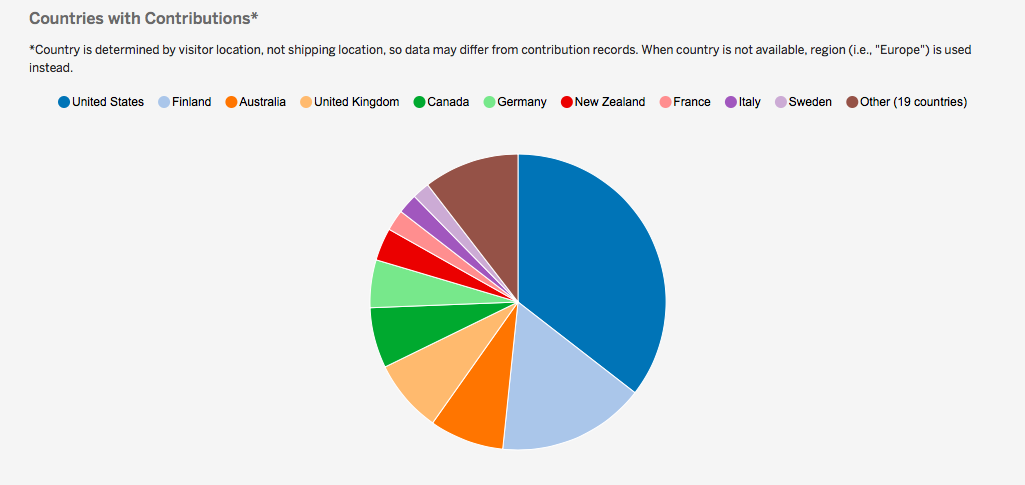
Where in the world are people coming from?

It’s also interesting (to me at least) that the contributions by country are quite different to my usual pattern of book sales. In both cases the USA is the biggest market, but here Finland is the next biggest, and by quite some margin. This makes sense given that I introduced historical swordsmanship to the country and have been largely responsible for its spread here, but through normal channels, as far as I can tell, my books don’t do very well here at all! I guess folk are used to being able to ask me in person.

The Perks:

Controversially, I didn’t bother with any perk below 15e for the ebook. This was deliberate. It has been my experience that backers at the lower perk levels are just as, if not more, demanding of my time and attention as those throwing much larger sums at me. The cost:benefit ratio does not work out. I also figured that this was as low as I wanted to go price-wise to sell the book, so what, really, was I going to offer readers who can’t afford my book? I have a ton of free stuff online already, so it’s not as if poorer or less committed people can’t have a fair crack at my work.

This time, nobody went for the “Patron” perk at 1,500e; this was actually a relief, as I wanted to dedicate this book to two friends of mine, but I also couldn’t afford to pass up that kind of money if it was offered. Our glorious Patron Teemu Kari put 25,000e down to become the patron of Audatia, and the excellent Christian Cameron gave 750 dollars to be the patron of Veni Vadi Vici, so it’s worth having these more expensive perks, just don’t rely on them.

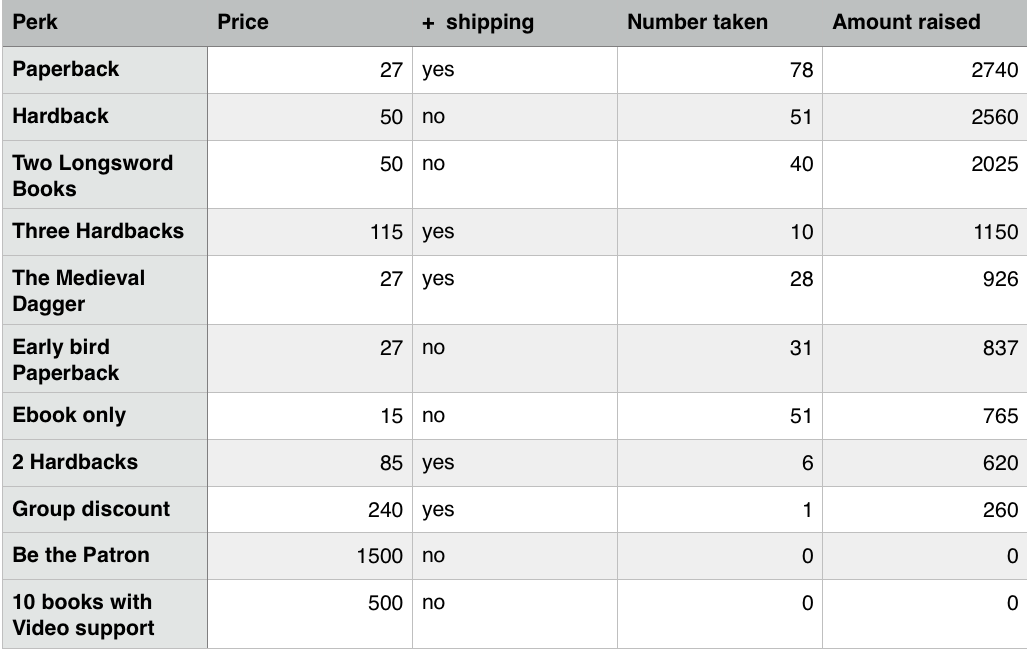
These are the perks, and how they performed. I can't get tables to work in WordPress, hence the screenshot from Pages:

The Stretch Goals

Remember, I was sick, and it was the run-up to Christmas. I couldn’t face the idea of creating a bunch of exciting stretch goals that would then commit me to a bunch of work I might not have the energy for. So the first stretch goal was, if we reached 5k, I would bundle two print and play Audatia decks into every perk. I never got round to creating another stretch goal. I felt that the value was there already; backers at even the 15e perk would get The Medieval Longsword in ebook form, Advanced Longsword: Form and Function in ebook form, and the two decks, a total value of about 40e if you bought them all separately.

In sum, the campaign generated 12,093e from 303 contributions from 273 backers.

Think like a writer

If you're a writer, thinking about doing this for your own book, take a moment to observe that most ebooks sell for under 10 euros, and most paperbacks for under 20. Yet in this campaign, the 303 total contributions cost an average of 39.91 euros. In other words, the price anchor that is in force with books, is clearly not present in the same way here, though all  I am doing is selling books. The value added, for the reader, is of course the feeling that they are directly contributing to the production of work they value. And they are. I cannot stress this enough: this is not in any way taking advantage of the backers; it's giving them the opportunity to do something they want to do, namely get involved.

So that’s where the money came from: where did it go?

Twelve thousand euros looks and feels like a big pile of cash, at least it does to me. But it is really important for you to see where it all goes, and at the end of the day, how much of it is actually income? It turns out that about 31% of the total raised is income.

Note: The Medieval Dagger order: As you can see, this perk cost me 719.75e to fulfil, and brought in 926e. Of that 926, after Indiegogo's cut, Paypal's cut, and sales tax are taken off, we have, hmmmm: 747 euros, more or less. So that perk made me no money, but, and it's a big BUT: it made a lot of backers very happy

Note: Advertising:

For the first time, I used paid Facebook ads, to see what kind of traction I’d get. I boosted 3 posts, which generated

The Medieval Dagger perk update: 510 reach and 25 clicks for 5e

Something useful from the blog (re meditation) 1867 reach and 91 clicks for 14e

Ad re referrals competition: 672 reach for 23 clicks for 8e

Ad re stretch goal: 460 reach 14 clicks, 5.57

Total spent: 32,57 for a total of 153  clicks.

1841 clicks got 207 referrals and 8198e.

So: average: 4.453e per referral. 153/4.453= 34.36

So, the FB ads probably made a tiny profit, but not when you factor in IGG’s cut, Paypal, printing, shipping, etc. But if these were new readers, from outside my current sphere of direct influence, then that is disproportionately useful, as, if they like these books, they may buy the ones that came before and will come after.

Printing and shipping costs breakdown:

Total books to print:

Paperbacks: 202

Hardbacks: 93

Costs:

Paperbacks: printing: 202x 3.74 = 755.48

Hardbacks, printing: 93 x 8.34 = 775.62

setup fees: approx 100 e

transaction fees: 1.95/order = 273 orders total, minus 51 ebook only orders= 222 transactions to process, = 432.90

Total before shipping: 2064

Shipping approx: 1200e

Costs of printing and shipping total estimated: 3264e

Actual total according to my credit card receipt: 3235.99e. Looks like my maths ain't so bad!

And my time?

Let's also take my time into account. Direct work on the campaign itself ran about 8 hours, spread over the month. Time spent manually inserting 250 or so orders into Lightning Source, about 10 hours. Plus probably another 8 hours or so of work that I wouldn't have had to do without the campaign. Figure 26 hours or so. For an income of 3790.19, that's nearly 145e/hour which is much better than what I normally make writing!

What would the book have raised without the campaign?

A paperback of Advanced Longsword: Form and Function sold through the usual channels nets me 12.96e per copy. Multiply that by 202 (the total number of books sold), and we get 2617.97e

And the hardbacks would net me about 25.50 each, times 93  is 2371.50. Together that's 4989.47

But one thing is for sure; in the wild, my hardbacks don’t sell at 50% of the numbers of my paperbacks; a ratio of almost 2:1. more like 140:22 (The Swordsman's Companion sales so far this year, paperback v hardback), or 6.4:1. At that proportion, 295 book sales would be 46 hardbacks, 249 paperbacks, which would net me about 3227+1173=4400, so nearly 600 euros less. Plus, that income would be spread out over several months, maybe a year, and so it would be that much harder to pay for the editing and layout (which are the fixed costs).

So the campaign clearly generated significantly more income than the likely sales through normal channels would have, and more importantly, brought a significant number of new readers.

Summary

I wrote this post primarily so that the backer of the campaign could see exactly where the money went. Transparency is key in crowdfunding. But I hope it's also useful to other authors thinking about running their own campaign; seeing how the costs break down, and being able to estimate how much of the money you raise is income should be very helpful. I am very pleased with how this campaign went, and very grateful to my excellent readership who support the work I'm trying to do.

If you have any questions, comments or suggestions, let me know in the comments below; and if you know anyone who is thinking about running a campaign, please share this with them.

*top tip for married men: your wife is always right.

I've been a tad busy of late (not that that is anything unusual). But the last couple of weeks have been especially interesting.

First up, PC Gamer magazine have published an article based on an interview I gave to the journalist Rick Lane; it's all about trying to make games that involve sword fights more realistic. You can read the article here.

I was also interviewed by Joanna Penn, of The Creative Penn. Joanna is a thriller writer, but more importantly from my perspective she also writes really useful books about how to make a living as an author. She is pretty damn successful at it, and her podcast is listened to by many thousands of people. You might wonder how I got onto her show; well, I followed her own instructions from How to Market a Book regarding making contact with people you admire in your field, and within a few months she had seen this blog, and invited me onto her show. Her stuff works! You can find my episode here, as podcast, video, and  transcription. I was very nervous! This was only my second ever podcast interview (the first being for Chivalry Today earlier this year), but I hope it went ok. What do you think?

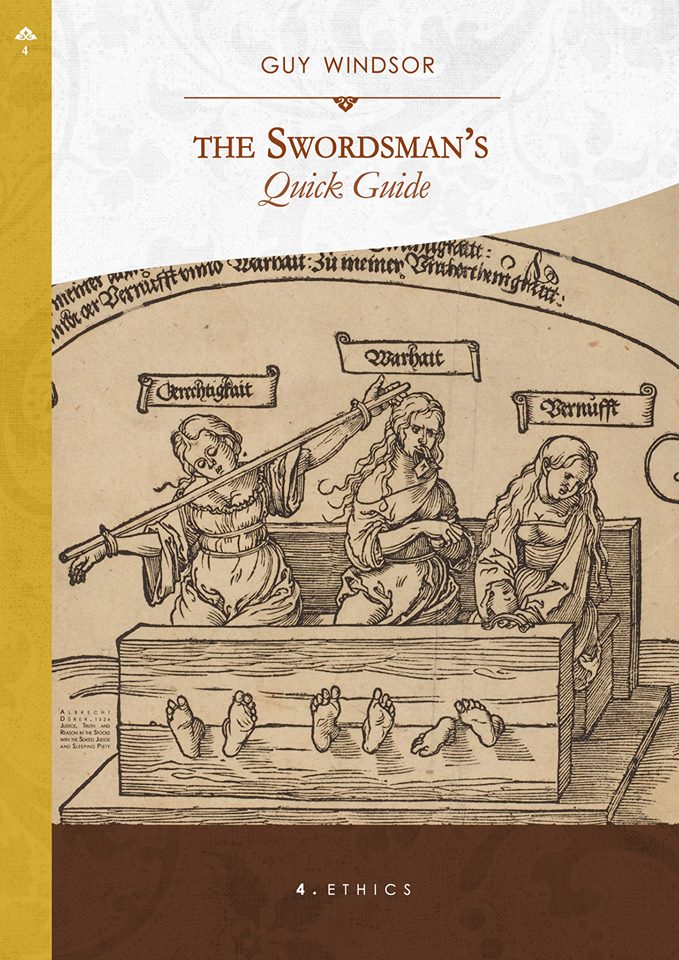
Regarding books: I am late getting episode four of The Swordsman's Quick Guide out; this is due to my being not 100% satisfied with it, and not sure how to improve it. I think I've got a handle on that now, so with any luck it should be out this week… or next… In the meantime, here's a preview of the cover; once again by the most excellent Eleonora Rebecchi.

Cover for part 4 of The Swordsman's Quick Guide

We had the photo shoot for my next Longsword training manual last week; I have been going through the images this morning to pick the ones that will go into the final product. It looks like this book will have about 250 images in it, so there is much to do! Jari Juslin is the photographer (the same chap who did The Medieval Longsword and The Medieval Dagger; this time he was ably assisted by Petteri Kihlberg, who provided a ton of high-quality equipment; lights like you wouldn't believe:

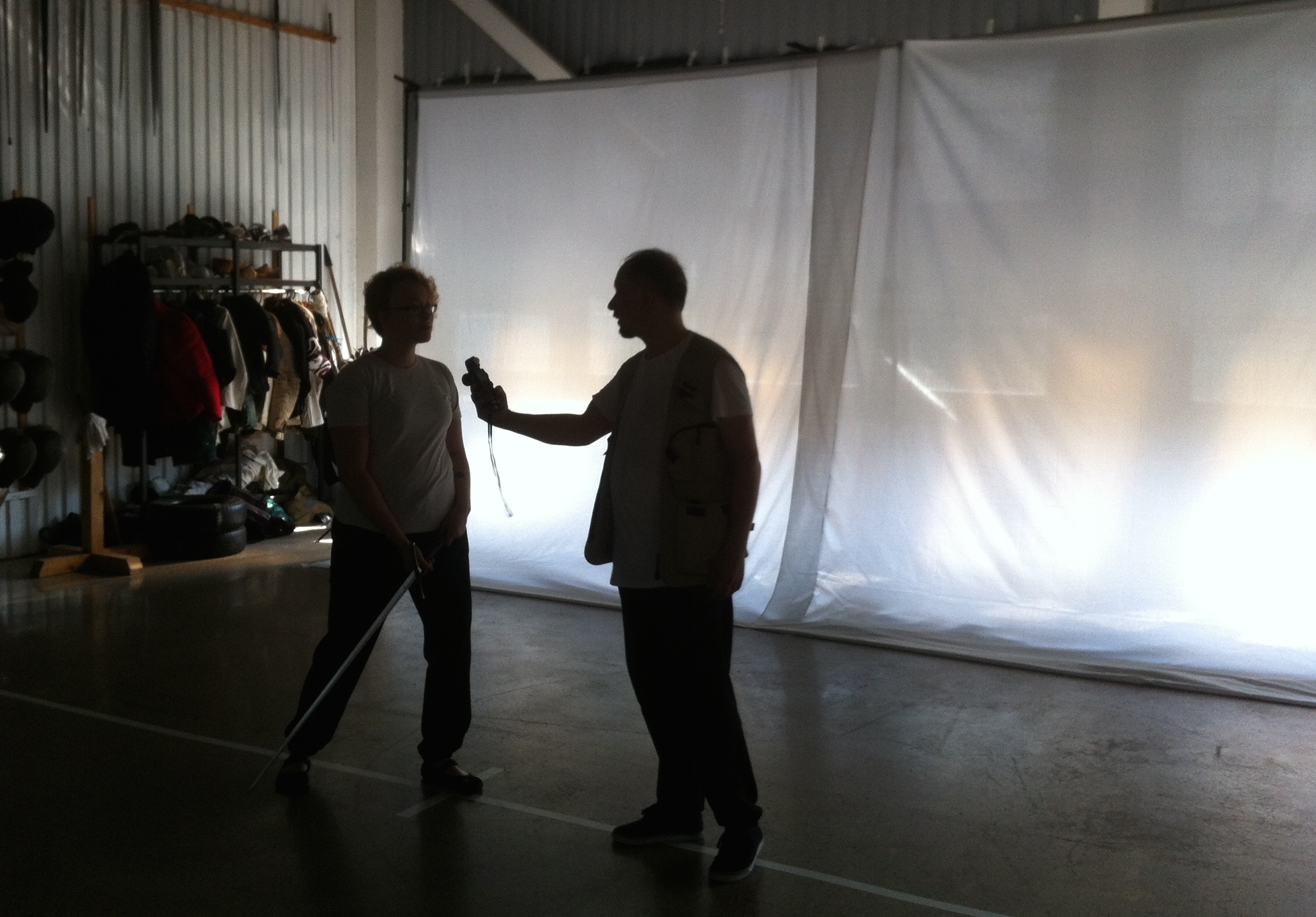
It's dark in here! Petteri checking the light, with Noora.

Jari in charge…

Noora, Jari, Petteri, Satu, preparing the shoot.

This book is on schedule for release before Christmas this year. And as I was going through them, I found this one that I had to share:

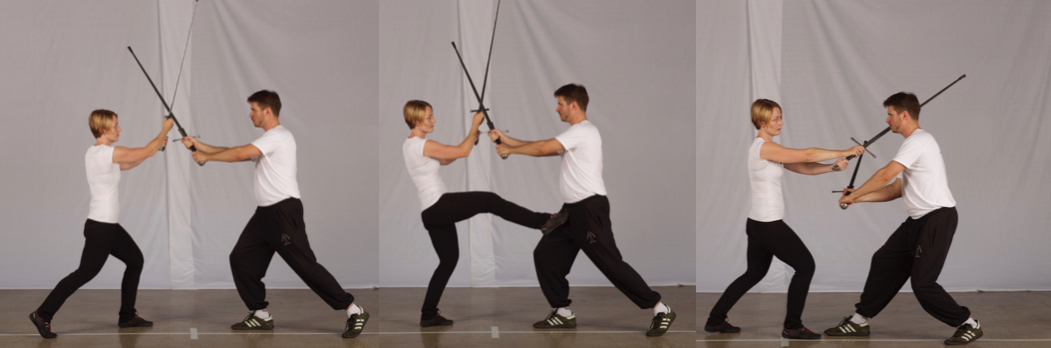
Zoë is well known in our school for her ability to target the more vulnerable spots…

I've said it before and I'll say it again; if you can't kick them in the nuts, it ain't a martial art!

Search

Recent Posts

Categories

Categories

Tags