Guy's Blog

Guy frequently keeps this blog updated with thoughts, challenges, interviews and more!

Category: Community, Events & Announcements

guy's birthday sale banner with discount codes guysbirthday25 and birthdayprint10

I’ll be turning 52 on Sunday, and we’re celebrating in the usual way with a 25% discount on all digital products, with the code GUYSBIRTHDAY25. This works for all products (courses, subscriptions etc.) at courses.swordschool.com, and also for all digital products (ebooks, audiobooks, print-at-home decks etc.) at swordschool.shop

Digital products are great because they have negligible fixed costs- it doesn’t cost me money every time someone buys one. Print does, so I have to be careful about giving out too chunky discounts on print books. But: You can also get 10% off any print book (including the brand-new dagger book) with the code birthdayprint10 at swordschool.shop.

Also, Christmas is coming up, which is a lovely time for many, and a miserable time for some. And a total non-event for billions of people around the world. It falls on a Thursday this year, which is very convenient. I’ll be running my usual morning trainalongs on Wednesday 24th and Friday 26th, which you can find in the “support sword people” area of the swordpeople.com. That is behind a very small paywall. If you’d like to join us but don’t want to create a swordpeople account, or are short of cash, just email me and I’ll send you the zoom link (no need to justify your request in the email, just ask for the link).

The sessions are at 8.30am UK time. The session opens at 8.25, and we run for an hour, with a bit of time at the end for chat etc. It’s not a formal class, just an opportunity to do some good-for-you physical training. Some folk follow along with what I’m doing, some just do their own thing but in company, and others mix and match. Join us if you dare!

Here's a sample trainalong session. I've been doing these since lockdown, but am very slack about recording them, so this dates back a loooong time:

Such fun!
Newsletter subscribers have had access to these discounts for a week already, so if you want to stay in the loop and aren't already signed up, join us with the form below.

And stay tuned for a 100 days no booze update, expected end of next week.

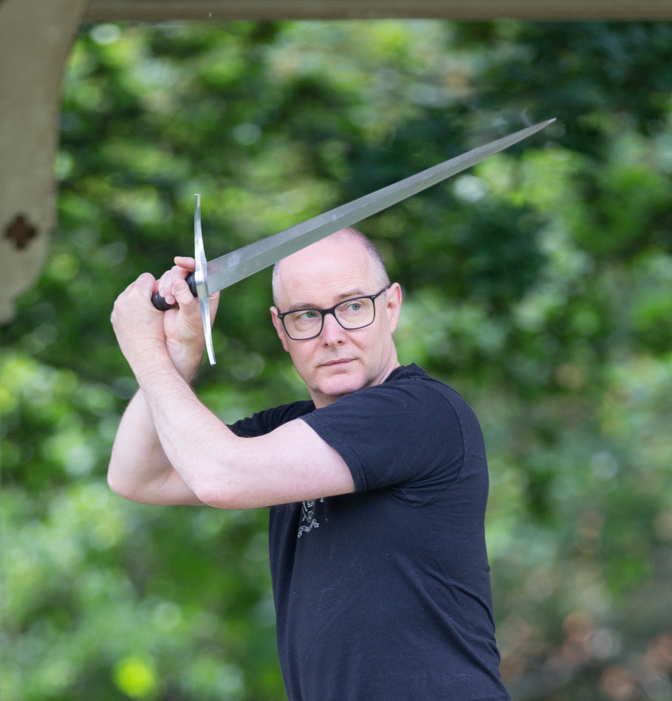
Guy holding a sharp longsword with decent mechanics

I'm teaching a seminar here in Suffolk for my friends at Suffolk HEMA on Saturday October 18th. If you'd like to learn to move better, and to analyse any guard position or movement from a structural perspective, you should come!

Move Like Fiore

Improve your structure, flow, and control in Fiore’s art of arms
Good movement is the foundation of great fencing. It keeps you safe from injury, helps you control your level of force, protects your training partners, and lets you fight harder and longer without fatigue.
In this full-day seminar, you’ll develop practical skills to make your fencing smoother, stronger, and more efficient. Together we will cover:
1. Analysing and improving the structural qualities of Fiore’s guard positions
2. Refining transitions between the guards
3. Different ways to hold the sword for specific purposes
4. Centres of rotation and how they affect different plays
5. How to strike with speed, power, and control
6. Applying these mechanics to wrestling, dagger, and longsword plays

Event Details

When: Saturday, October 18 · 11am–5pm (with a lunch break)
Where: The Coddenham Centre, Mary Day Cl, Coddenham, Ipswich IP6 9PS
Cost: £50
Bring: Longsword, fencing mask, dagger (if you have one), water, lunch. Freeplay kit is optional, but bring it if you like.
Sign up with this paypal link.
I would highly recommend having a look at my free Fundamentals: Body Mechanics course to prepare (or in case you can't make it over here from New Zealand). It will familiarise you with my approach, and the more people who know the basics of this method, the more stuff we'll be able to cover on the day.

I flew to Belgrade last week to attend the Sword and Balkan event. I arrived on Thursday evening and spent Friday exploring downtown Belgrade to get a sense of Serbian culture. I’ll write that up properly next, but in the meantime: if you’re visiting Serbia, do not skip the National Museum on Republic Square…

The event began on Saturday morning, and right from the start it felt different. We were all invited to break off a piece of bread, dip it in salt, and eat it (I just had the salt, being allergic to wheat). This symbolic act made us part of the family—and that sense of familial warmth and camaraderie set the tone for the whole weekend. Literally everyone I interacted with was relaxed, friendly, and there to enjoy some good swordy fun. It was especially nice to catch up with Francesco Lodà after more than 20 years!

The event’s principal organiser, Željko Glumac, was a game designer before devoting himself fully to swords—and I’ve never encountered a more gamified (in the best possible way) fencing event. There was a creative and intricate token system: participants earned tokens through various activities and could use them to bid for spots in the final tournament, choosing weapons like rapier, smallsword, and so on. You could win tokens from fellow fencers in challenges—unless, when revealing your secret team card (Fiore, Hutton, etc.), it turned out you were on the same team! When challenging instructors, they would award you 1–3 tokens based on the quality of your fencing (regardless of the score).

No wonder the reception table looked like this:

The reception table with bread, salt, and a lot of gaming tokens

That’s Željko on the left.

I knew Željko is a Capoferro man, but I also knew he’d be swamped with organisational duties, so I kidnapped him early Saturday for a quick fencing match. It was a joy. Sometimes fencing feels like an argument between people who don’t speak the same language—but this was a vigorous and friendly conversation between two native speakers of the same dialect.

My class that morning was Skill Development with the Longsword. About 26 students attended, with a wide range of experience levels. They were all a pleasure to teach, and I think everyone got something useful from it.

Guy Windsor with longsword students at Sword and Balkan in Belgrade 2025

I’d twisted my right knee on Wednesday morning, so I was being careful—short lunges, no unnecessary pressure—but still managed to get in two bouts after lunch. First, with Thomas Tassie on smallsword (a quick fencer with a lovely circular parry in quarte), and then with Branislav Petrović, another Capoferro fencer. He hit me with Capoferro’s scanso della vita—a rare thing to see in freeplay! But a little later I got him back with the same technique, which may have been my personal fencing highlight of the weekend.

By evening I was fairly worn out, but I really enjoyed chatting with Viktor, Veronika, and Elay. Fortunately, V and V are early-to-bed types like me, so they gave me a lift back to the hotel and we turned in around 11:15. But I must say—those Serbs understand carnivory at a high level.

On Sunday morning, I did a thorough physio session to keep the knee and neck issues at bay, and then fenced with Karl Rapp from Vienna. We hit each other quite a bit—but he managed to catch me twice with the same move: a thrust to the flank after covering my blade with his left hand. Son of a bitch! (In the best possible way.) It was a delightful bout, swiftly followed by another with Viktor Kachovski—good thing we both got to bed at a decent hour!

That day I taught a smaller class, Skill Development with the Rapier, which meant we could go deeper into the subject. Again, the group included both beginners and veterans with over a decade of experience, and again, everyone was a joy to teach. Special thanks to Pavle Ilijašević (in the red and black poofy pants) for demonstrating with me—with sharps!

Guy Windsor with rapier students, sword and balkan 2025

After lunch (and a bit of tech wrestling with the projector), I gave an hour-long lecture on syllabus design. I think it went well—when I formally ended the session, the room stayed for another 45-minute Q&A, mostly on pedagogy. I sometimes ask the audience to vote on the best question of the session. This time, Daniel won the prize (a Swordschool patch) for getting me going on teaching mixed-level classes.

You may have noticed the total lack of photos or videos of me fencing. That’s because I was having too much fun to remember I even own a phone.

The event wrapped up with the challenge tournament. I was absolutely knackered by this point, but it was clearly enormous fun for everyone involved—team members cheering each other on and nobody taking it too seriously.

All in all, a thoroughly delightful event. Željko and his team got the tone exactly right—and everything else flowed from there.

This is supposed to be a review of the Panoplía Iberoamericana, which I attended over the weekend, teaching several workshops. The event was excellent, a complete delight to attend and teach at. But my hosts here have gone the extra thousand miles to show me the best of their city and culture, and the only way I can think to keep things straight is to just take it in order.

I’ll skip over the food entirely, because it deserves and will get its own separate post. Let me just say that Mexican food outside Mexico can be fabulous, but the sheer breadth of dishes that I’d never even heard of but which blew me away makes me think that I don’t know Mexican food at all. Pozole. Chile en Nogado. Tetelas de Chapolines. And on and on.

I’m writing this in a slight lull in what has been a whirlwind few days. I arrived in Mexico City last Wednesday night, and spent Thursday visiting (after a breakfast of enmoladas, oh my goddess) an extraordinary presidential private collection of guns and other weapons (no photos allowed), and the utterly stupendous Anthropological Museum. I had no idea of the complexity of pre-conquista Mexican cultures. We think of the Aztecs and the Mayans, but honestly that’s like tacos and burritos. The most famous of a very broad range. It would take a week or more to properly absorb this museum, so I’ll stick with two highlights.

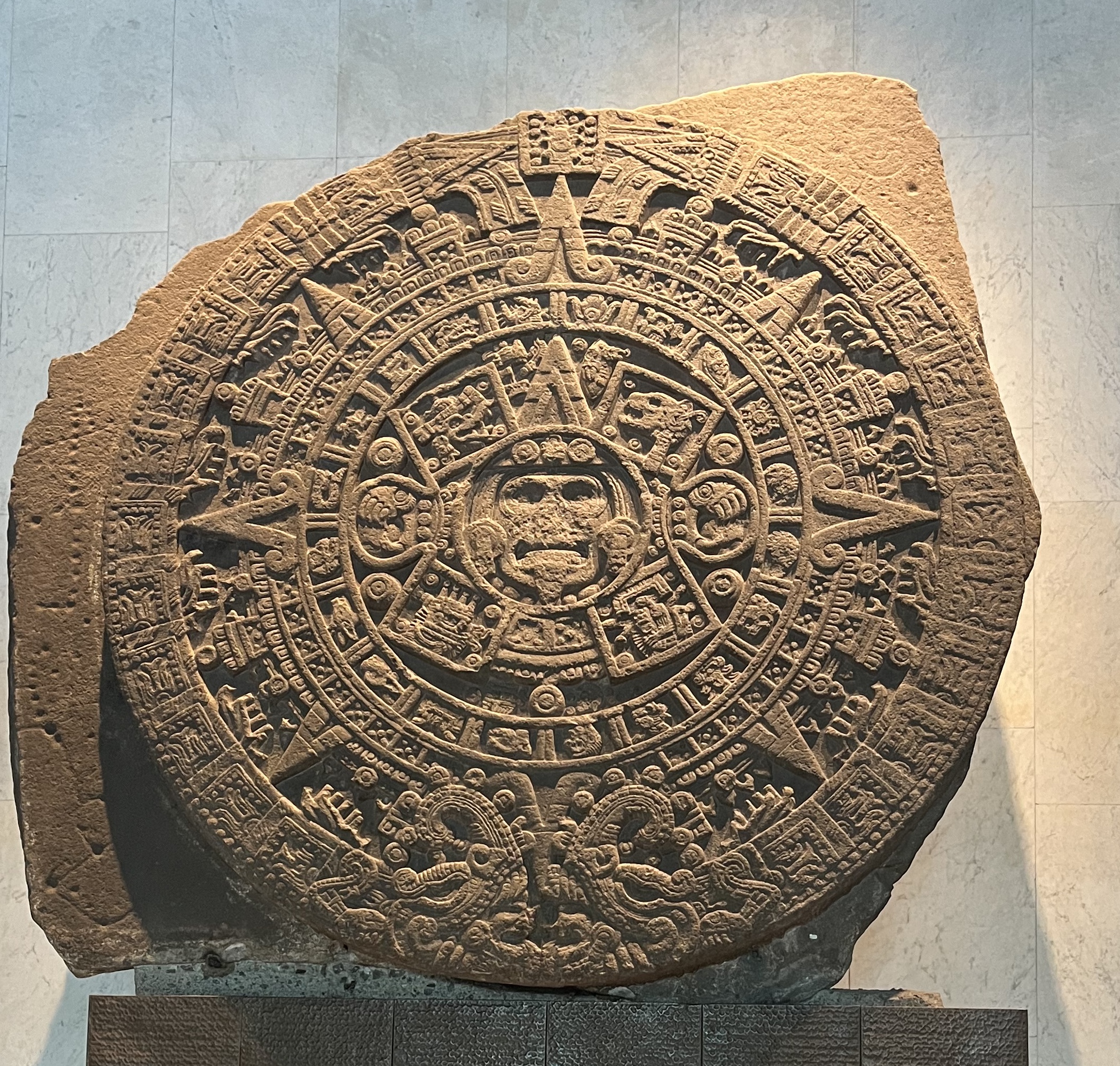
The stunning Sun Stone:

This thing is huge- so big that you could put it on the ground and have a sword fight on it. Which is apparently what it was used for! Sacrificial gladiatorial combat. It’s so much a part of Mexican identity that it’s on the 10 peso coin.

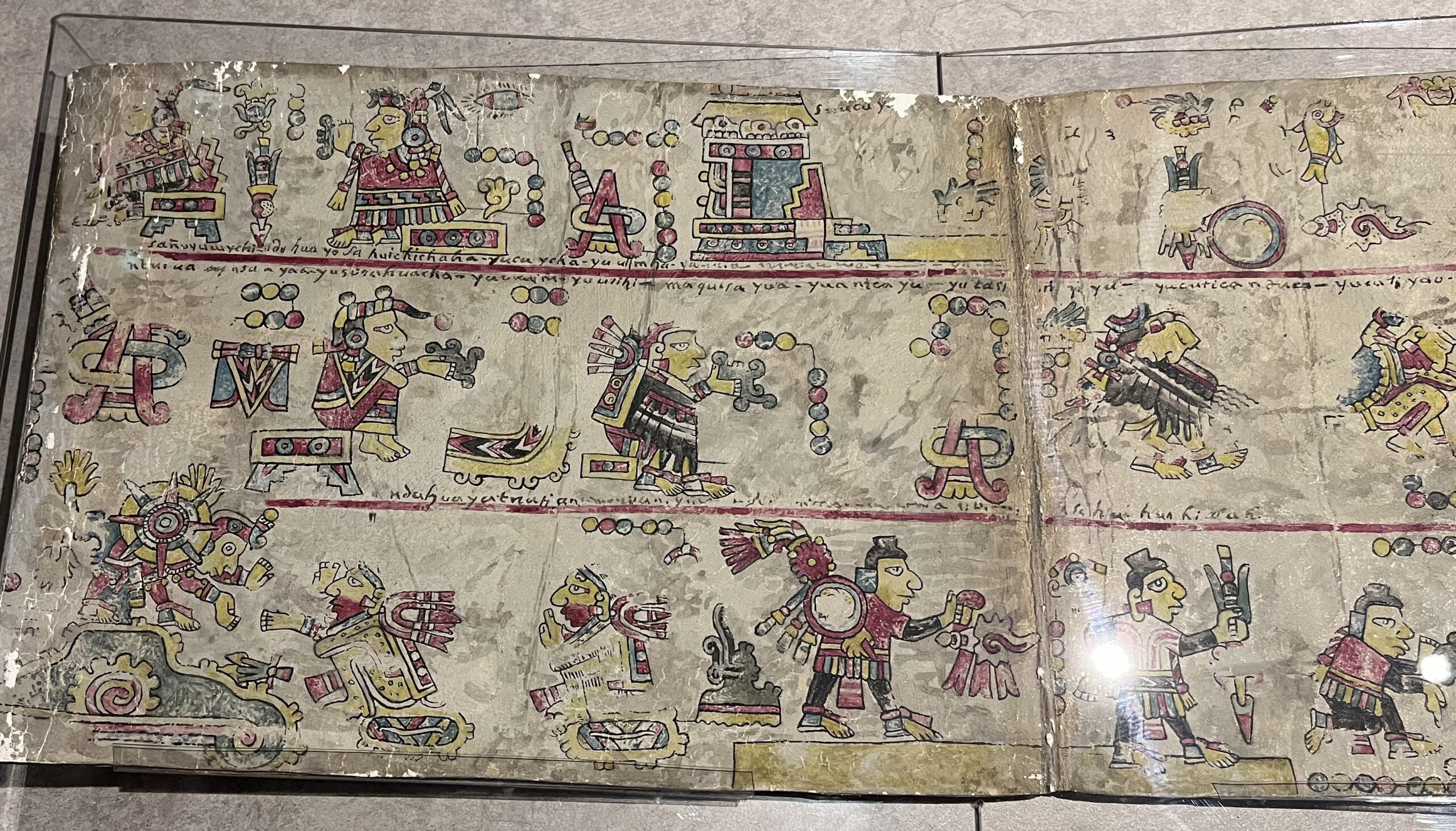
And I had no idea about the Codices of the Mixtec people (or even that the Mixtecs themselves existed). These are folded-up parchment documents that have a kind of pictographic writing on them. Sadly no fighting manuals, but a written record of aspects of their culture.

one of the Mixtec codices

The Panoplía Itself

The Panoplia began on Friday, and I did my usual thing of talking to lots of people, working with anyone who asked on whatever they were interested in, signing a lot of books (hurrah!), and I also led a discussion on balancing academic rigour with fencing skill. In other words, balancing knowledge, and skill development. It’s something I think every historical fencer should think about, and decide for themselves where they want to focus. There is room in the Art for pure academics, and pure competitive fencers. And pure “train to win real swordfights”. Most of us lie somewhere in the middle.

Saturday began for me with an impromptu bit of smallsword with Neuro, Arturo, and Leon. It started with me showing them some stuff from Angelo, and ended with a very friendly bit of light fencing. Which set me up perfectly for my longsword mechanics class. It was rather full (about double the signed-up students actually attended). My goal with mechanics classes is to get everyone moving better than they were before, and to generate at least one significant ‘aha!’ moment. I think we managed it. (I’m still waiting for the class photos- if you took one, please send it to me!)

After lunch (oh my goddess) I had my Capoferro rapier mechanics class, which was a bit smaller, and started with everyone present, so it was easier to build the experience for the students. I saw many, many, eyes flashing wide as something tiny and apparently trivial made all the difference in how the sword functioned. It was extremely satisfying!

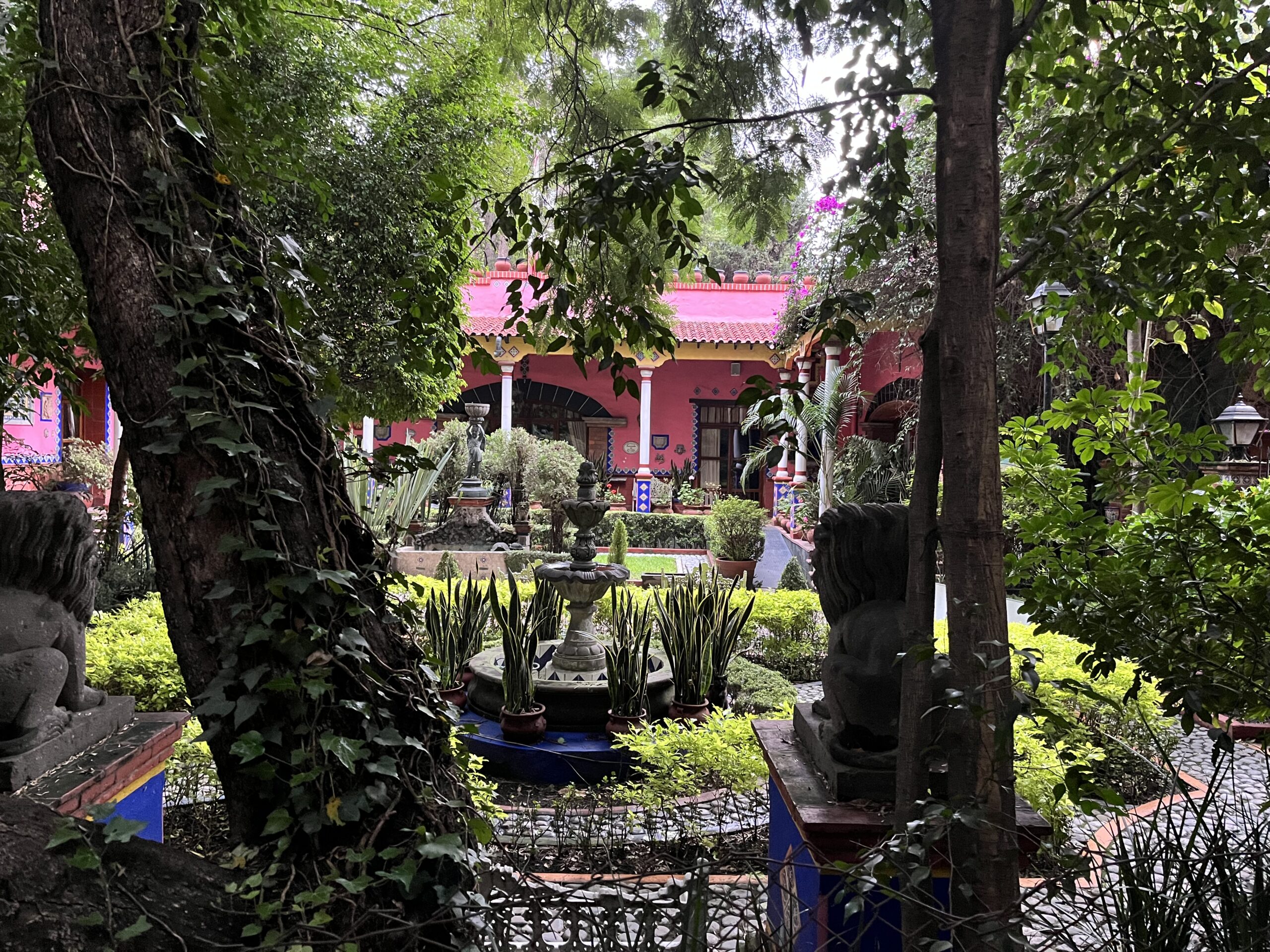
This was followed by the official event party, which was held in the Hacienda de Cortes.

I mean, really.

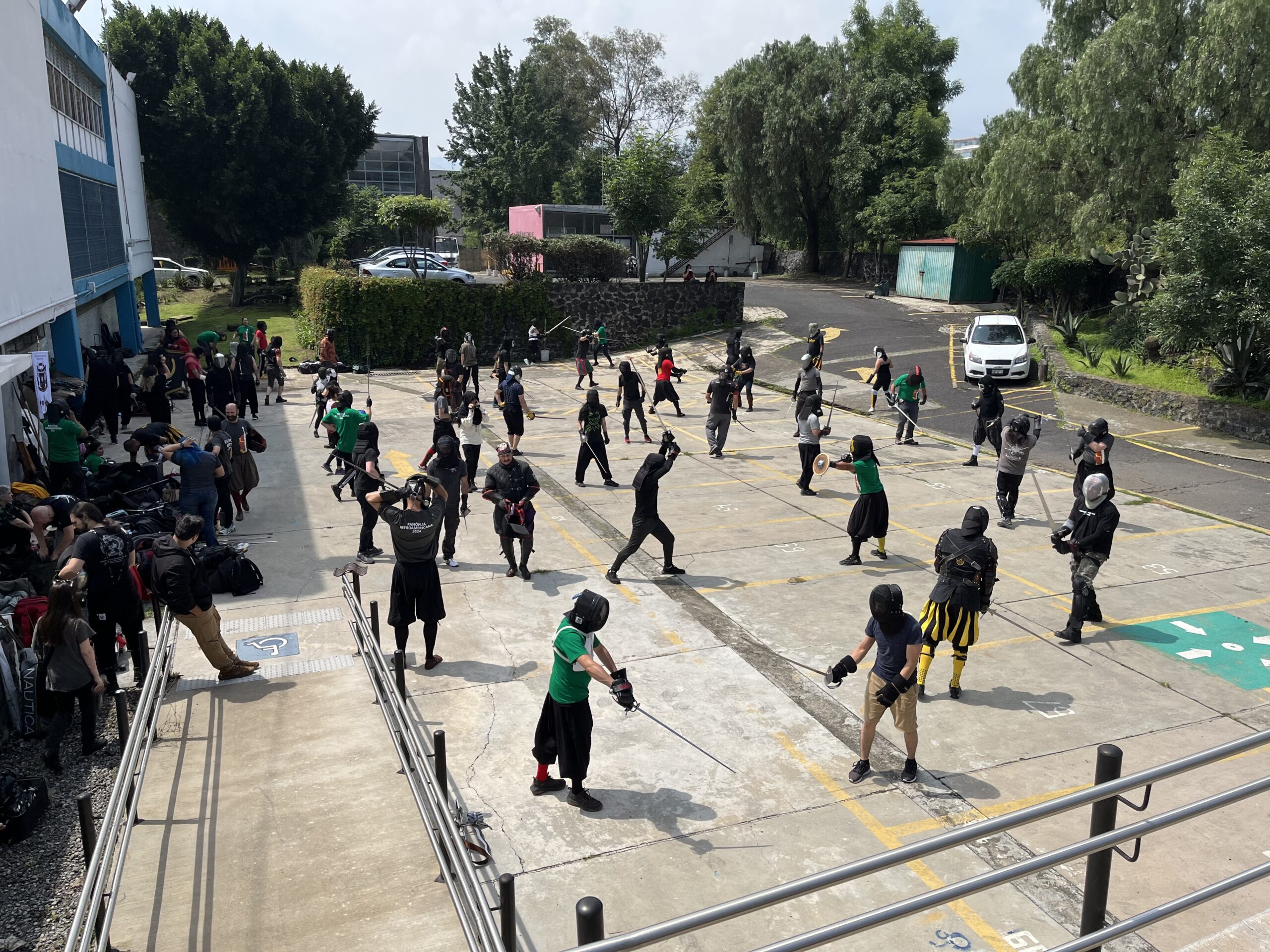
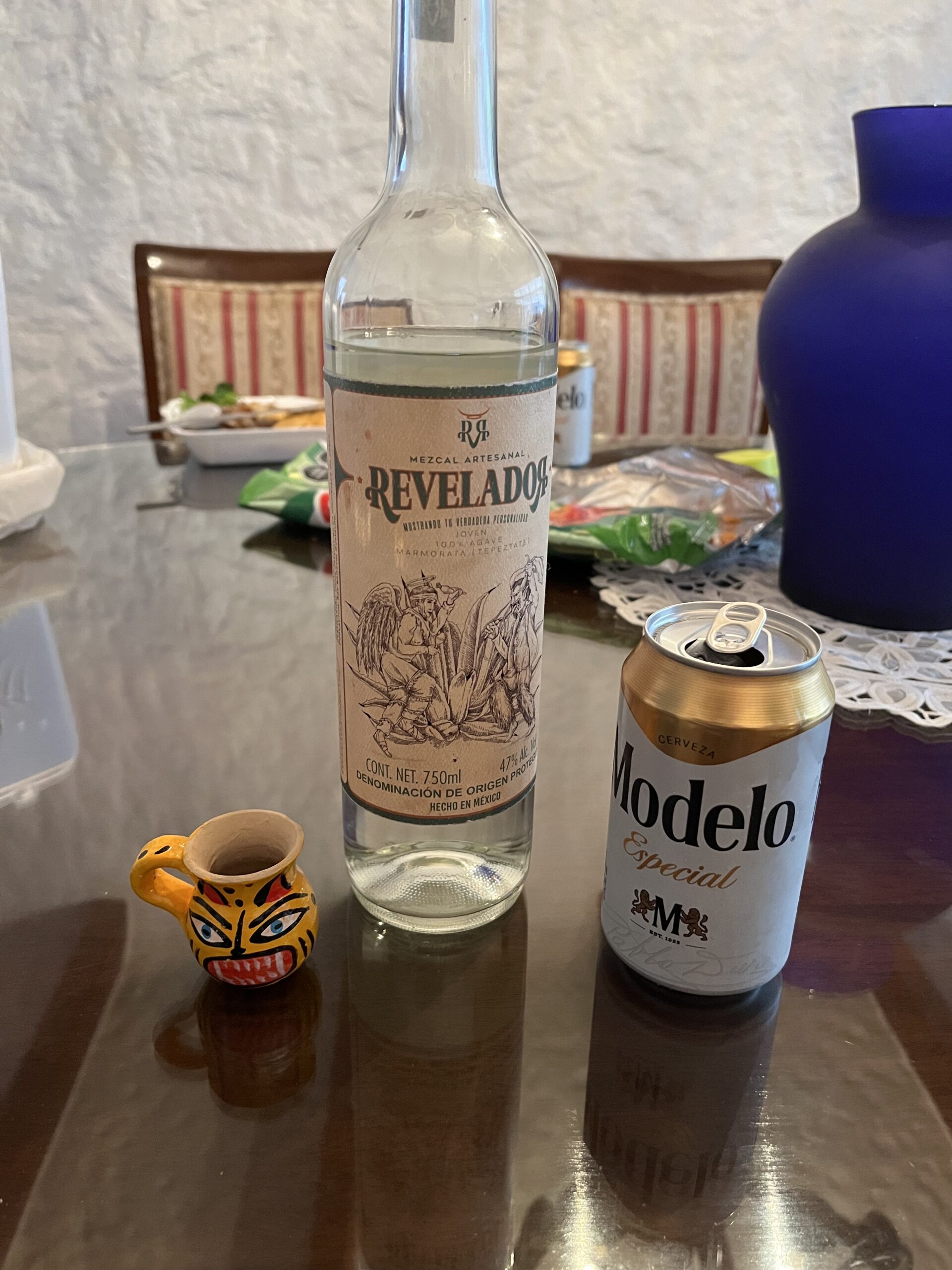
I was a bit of a party pooper, going home at about 1.30am. And on Sunday morning my hosts and I were (we thought) a bit early getting to the event. It was the free-fencing not-tournament process that the event’s godfather Pedro Velasco uses (which you may recall from the Panoplia Iberica, in December 2023). But it turns out that after an evening of Mezcal, beer, wine (thanks again, Carlos!) these folk were hard at it in the sunshine:

Personally, I needed a bit of maintenance so I found a quiet shady spot and did some physio, stretching, breathing form, and push-ups. I then got chatting to a group lead by one of the instructors (Gaute Raigorodsky) about Fiore mechanics. At one point I said ‘get some swords, let’s try it’ which inevitably lead to an hour or so of mechanics training in another shady spot. You can go much deeper with a small group that already know the basics.

And then the Panoplía was over… except for the after-party. Oh my god, the Mezcal!

Post-Panoplía “recovery”

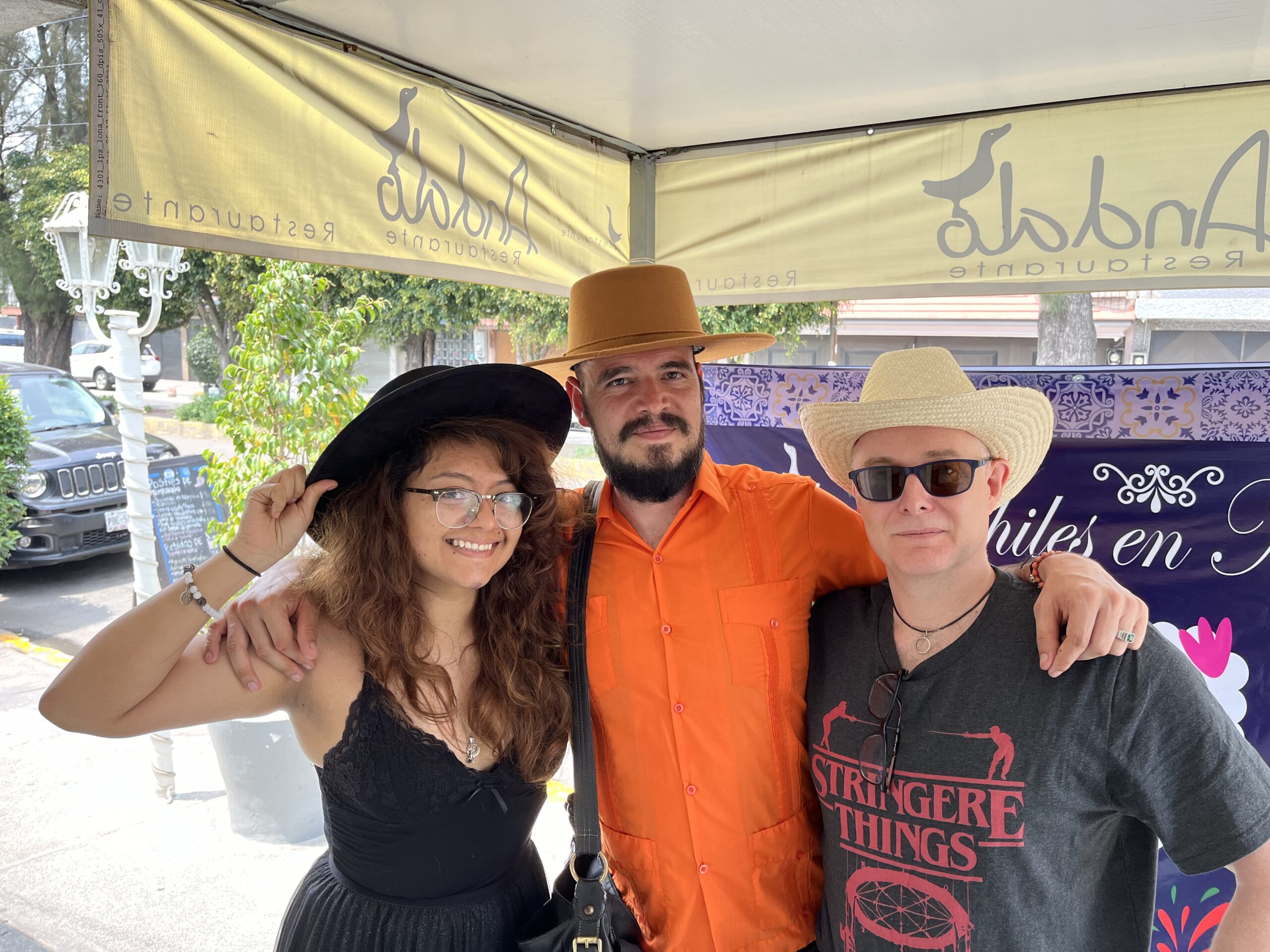
Monday started nice and slow with my lovely hosts Elena and Eduardo taking me to breakfast (which alone deserves a post of its own). Here we are: nice to know that I’m not the only hat wearer! My Mexican sun hat was a gift from my hosts.

(my very witty t-shirt is by the excellent Stephan Eichelmann).

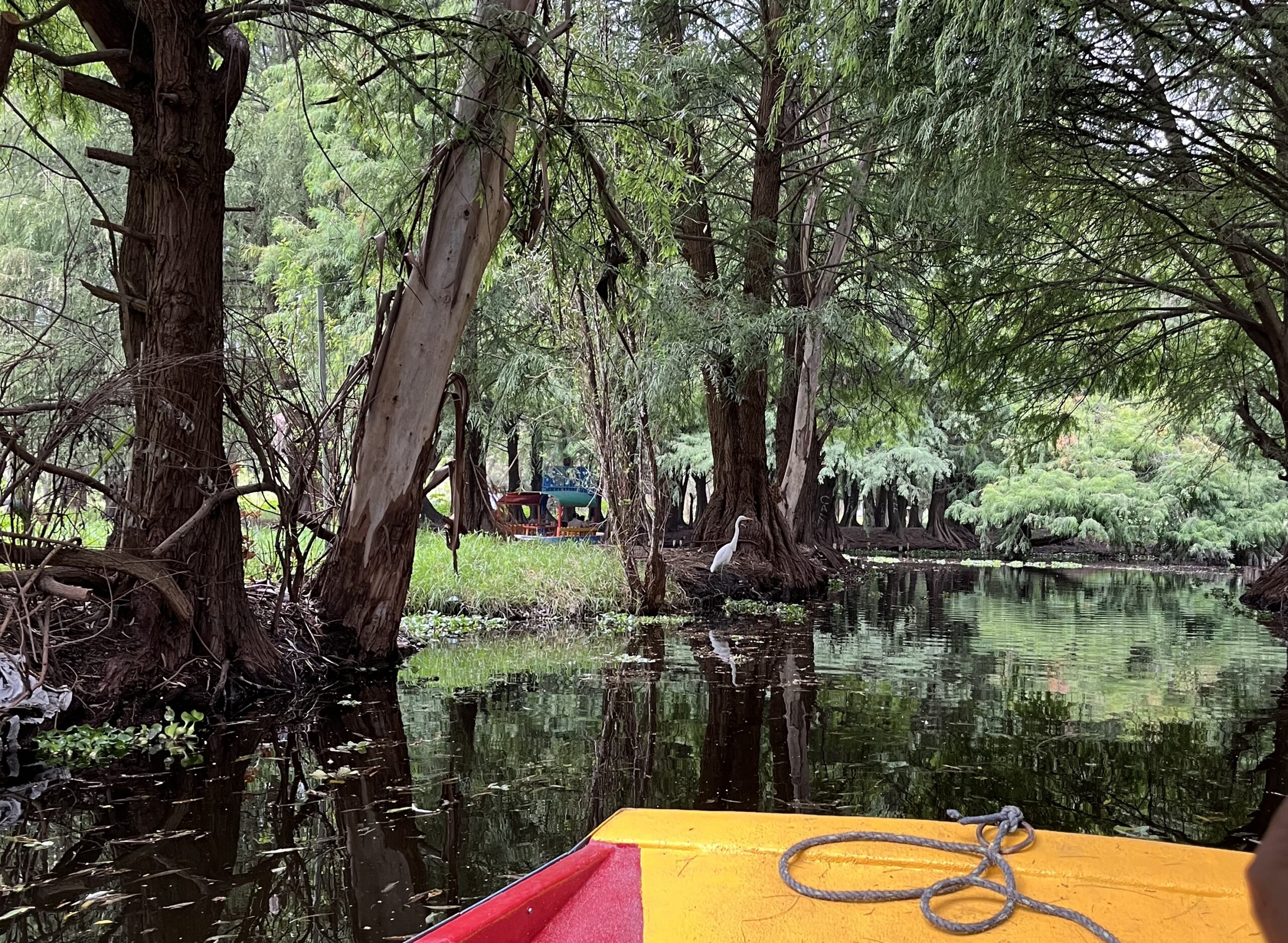
After which we went to find the elusive Axolotl in the extraordinary lagoons of Xochimilco.

the lagoons of Xochimilco- jungly venice

And we did!

the axolotl

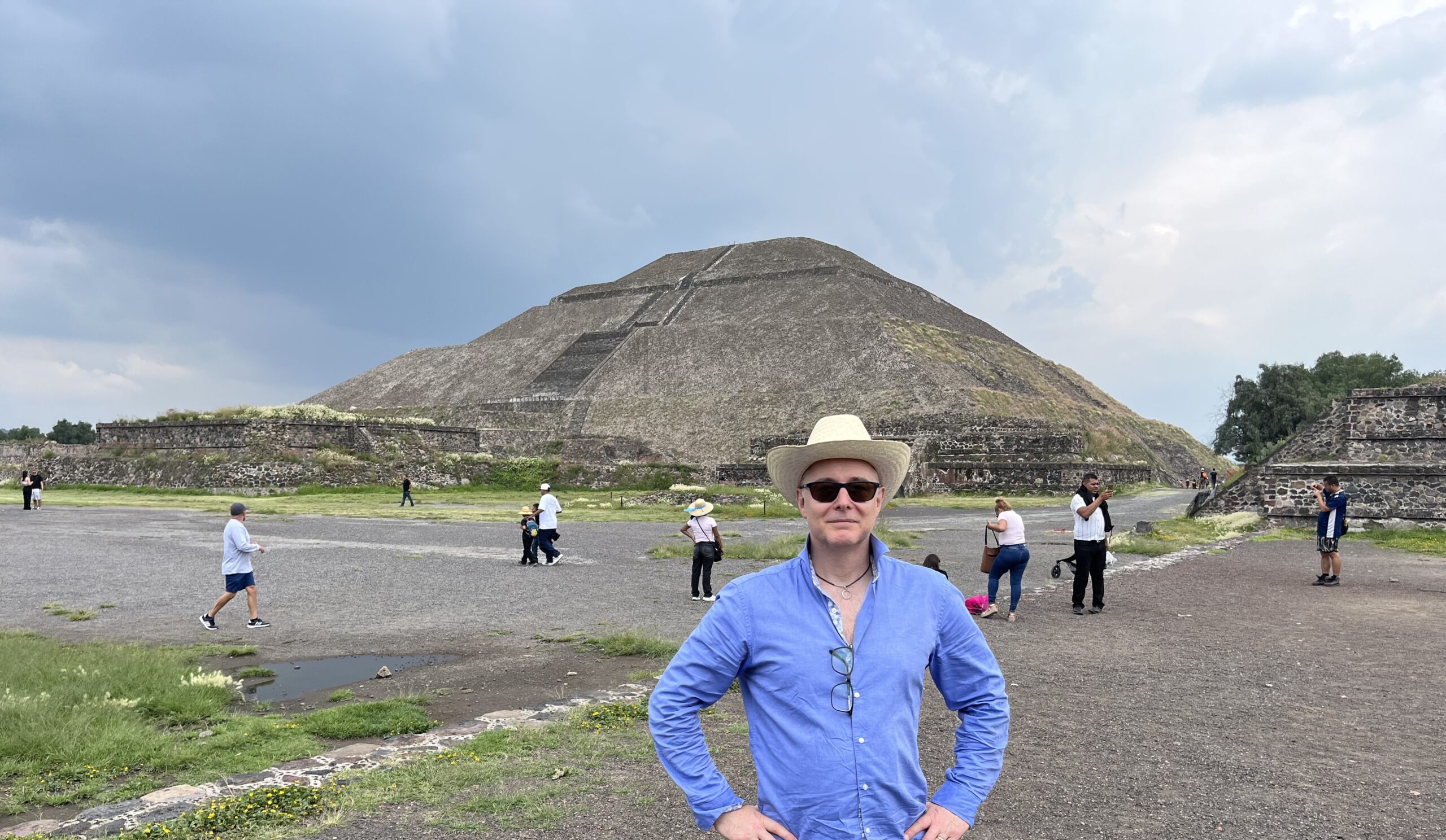
Then on Tuesday it was off to see one of the wonders of the world: the pyramids of Teotihuacan. Words fail me.

the sun pyramid at Teotihuacan, with Guy Windsor in the foreground

I rounded off Tuesday evening by teaching a Fiore mechanics class for Jorge Chavez and Eduardo Mayeya's club Arthenea. It was rather off-the-cuff: we decided to do it in the car on the way to the pyramids. But I think it was well received.

The organisers of the event (in no particular order), Jorge Chavez, Ana Tavera, Eduardo Mayeya, and Pedro Velasco have done an amazing job putting together the first (and I really hope not the last) of the Mexican edition of the Panoplía, and an even better job of looking after their guests. What a place. What people. Oh my. Muchisimas gracias a todos!

And a final note: if you have photos of my classes from the event, please send them to me to incorporate into this post. Thanks!

At the end of June I went to Kansas… and came back with footage of a whole lot of my interpretation of Fiore’s Il Fior di Battaglia, including all 73 plays of the dagger, and 7 new clips on Fiore’s footwork. These are now available with the re-edited and re-released Medieval Dagger Course.

Dagger Course Info

For the next ten days, you can get 40% off with this link: Click here for Dagger Course

Or use the code DAGGERLAUNCH2024 at checkout. Feel free to share the link, the code, and this post with your friends.

If you already own the old course you can get the new one for just $70 with a different link, please drop me an email and I'll send it to you. I tried to do that with a bulk email a while ago, and a) most people didn't get it and b) the link stopped working.

Fiore’s dagger plays comprise by far the largest single section of the manuscript, so there is a lot of new material, all organised according to where you’ll find it in the treatise. I’ve also included all the plays that include a dagger in any form, so, the defence of the dagger against the sword, the defence of the sword in the scabbard against the dagger, and even the dagger and the staff defending against a spear.

Veterans of my mailing list will know that when launching a new course, I have to send out a bunch of emails. I will try to make every email worth your time, whether you buy the course or not. To do that I’ll include a link to a piece of the course content, like the one with me throwing stuff at Jessica’s head that I shared last week. For now, the following sections of the course are already free to preview on the sales page:

  • Falling
  • Dagger Handling and Basic Strikes
  • The Nine Masters
  • First Master plays 1 and 2: disarm and counter

This way you can get the idea whether the course is for you, or not.

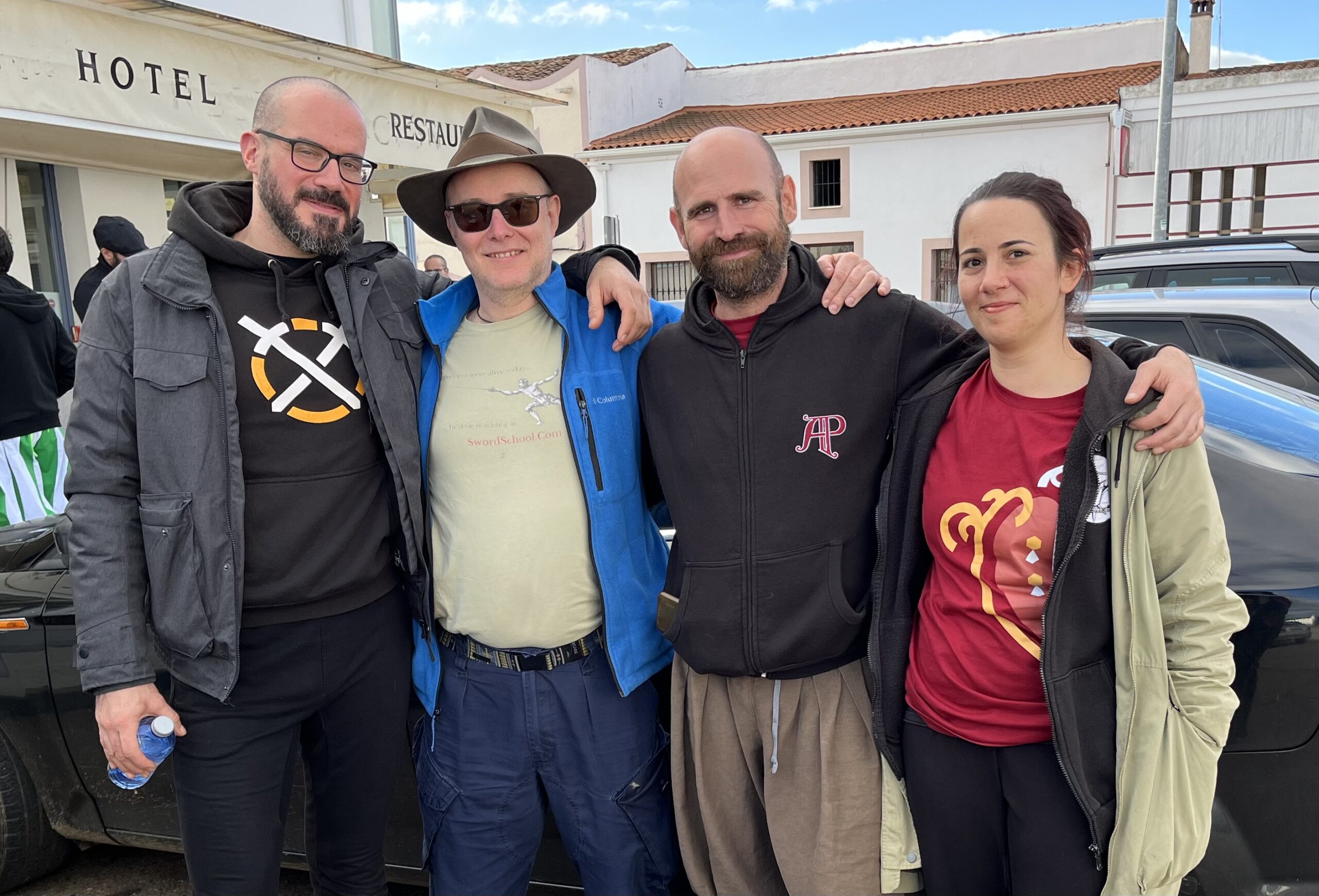
I’m just back from the Panóplia Iberica, held in Alconchel, a village in Spain near the border with Portugal. This was an utterly delightful event, all the more impressive for being the first time it has been run. Hats off to the organisers Pedro Velasco, whom I met in Warsaw in June; Jessica Gomes, whom you may recall from episode 38 of the podcast, and who also looked after me in Lisbon before and after the event; and Diniz Cabreira, from episode 157, who runs AGEA Editora, publishing historical martial arts books, primarily on La Verdadera Destreza in Portuguese.

Diniz, Pedro, and Jessica, with some bloke in a hat.

Every event has its own character, and its own strengths and weaknesses. The primary strength of this one was the tone in which everything was conducted. The organisers made it very clear what sort of behaviour they wanted. Collegial; friendly; competitive when fencing, perhaps, but in the spirit of seeking after truth, not climbing the hill of renown over the injured bodies of your opponents. There were a lot of attendees- it felt like something north of a hundred, many of whom taught classes or gave lectures in addition to attending classes and fencing a lot.

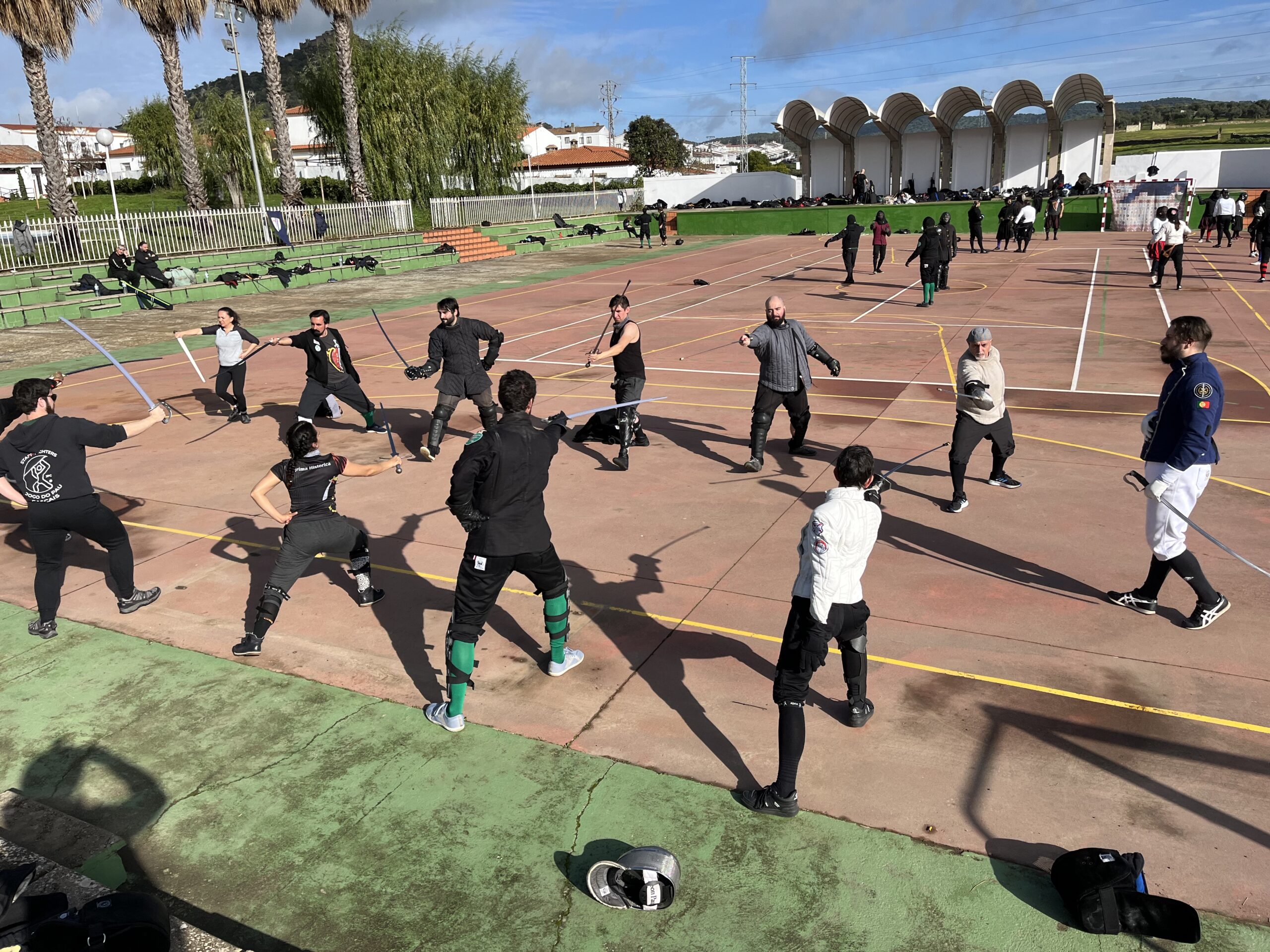
There was a lot of fencing. Everywhere you looked, all the time, there were people crossing swords. With so many hundreds of fencing hours, it’s astonishing that there were no injuries, and no falling out. I didn’t see a single disgruntled fencer at any point over the three days. Anyone who has been to a fencing event will know how unlikely that is. Fencers have egos, and fencing instructors have bigger egos. (Ask me how I know.)

Just one example: a smallsword instructor was disarmed three times by another smallsword instructor in friendly but competitive fencing. You might expect a bit of wounded pride there. But all I heard in his voice was a kind of glee to have been shown an area he could improve on, and respect and admiration for his opponent.

This is how it ought to be. And it didn’t happen by accident. Pedro, Jessica, and Diniz deliberately created the environment in which that attitude was natural. It started with a short introduction from Pedro, followed by an entire class, the only one in that first time slot on Friday morning, in which Pedro instilled the attitude in the attendees. I wasn’t paying close attention to the class because I was eyes-deep in the best Fiore nerd-athon discussion I’ve had in years (more about that later), and I wondered at the time why Pedro was running such a general and somewhat odd session. Then it dawned. He wasn’t trying to teach them a particular martial art. He was getting them to behave the way he wanted the event to run.

My own classes went well, I thought. I was invited because Pedro happened to be sitting across from me while I was chatting with Ton Puey (who sadly couldn’t attend this event) about creating scalable assets (like books and courses) and making passive income (so if you’re ill or injured you can still pay the bills).  So on Friday night I gave a talk about how to make a living as a historical martial arts instructor. I plan to write that up properly, as it’s probably useful to a lot of people who run clubs, and are thinking about turning pro, or who are already scraping a living teaching the noble art. I focussed on models and strategy, not specifics, because the specifics change greatly depending on your location, goals, and style. In the meantime, my not-terribly detailed presentation slides are in a pdf for you here:

Let them help Panoplia 2023

My second session was a rapier and dagger class on how to teach students to get comfortable using the dagger, and avoiding their opponent’s.

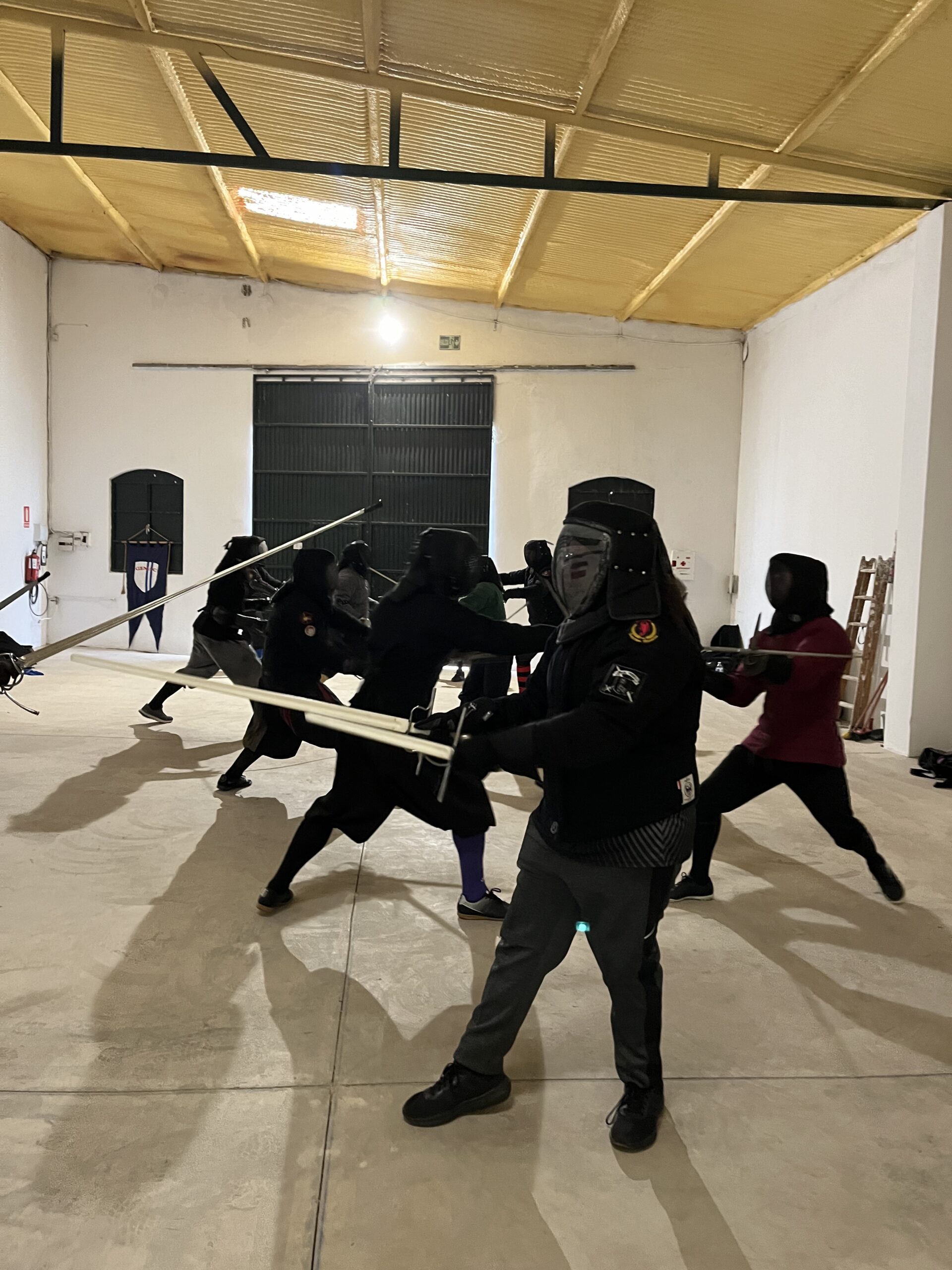
Some of my class after rain moved us indoors

You can find the basic content in section four of the Complete Rapier Workbook. The class went pretty well, I thought, with a range of experience levels in the students, from ‘never used a sword and dagger together before’ to ‘have taught rapier and dagger for years’, all of whom were a delight to have in class.

My goal when attending events like this is to make sword-friends, teach good classes, and to help at least one student make a game-changing breakthrough. As always, this mostly happens between classes, in the conversations and spontaneous private lessons that occur.

Such as passing a student who was practising something that looked a little bit like my Farfalla di Ferro drill, and spending some time with him getting it actually correct (Ibrahim, I’m expecting that video next month of you doing it flawlessly!).

Or spotting a mechanical error in a student’s lunge that would lead to injury eventually, and spending time with her correcting it (Anna, keep your knee tracking your foot, okay?).

Or showing the instructor who got disarmed three times a tiny adjustment to the way he was holding his sword that would dramatically improve his control over it (give it the finger, Rui).

Perhaps my most useful interaction, in terms of my fencing, was the aforementioned nerd-athon in which Dario Alberto Magnani blew my tiny mind with a re-reading of a critical passage in the Getty manuscript.  I will certainly be writing up what happened in depth and detail, but it will take a little while as I need to run it by him before publishing to make sure that I’m representing his position properly, and I need time to figure out how much of his position I actually agree with. There is nothing better in academia than finding the ground you’ve built on starting to shift under your feet. Watch this space…

It’s impossible to mention everyone who made a positive difference- there were so many! But I’d be remiss to not also thank Rui for long conversations about art and British sabre; Christina for showing me her astonishing paintings and making sure I knew where the wheatless food was; Dario (again) for discussing the business side of running the Thokk gloves empire; the entire Mexican contingent (Anna, Jorge, Sebas, Adrian, Yakimi and Eduardo) for making me even more excited to visit Mexico next year (it’s planned for March); Alex the vintner behind Portos dos Santos port (of which I now have a bottle in my house) for discussions about wine making and history, Ricardo Macedo for continuing a conversation and friendship that began in lockdown; and the list goes on.

All this in addition to spending some quality tourist time in Lisbon. Jessica picked me up from the airport and we went straight to the Gulbenkian museum for a spot of lunch and a massive art injection. It’s a truly fabulous collection, which while light on swords and armour, is really heavy on gorgeous furniture, paintings, sculpture, and tapestries. And a clock from 1745 that’s still running.

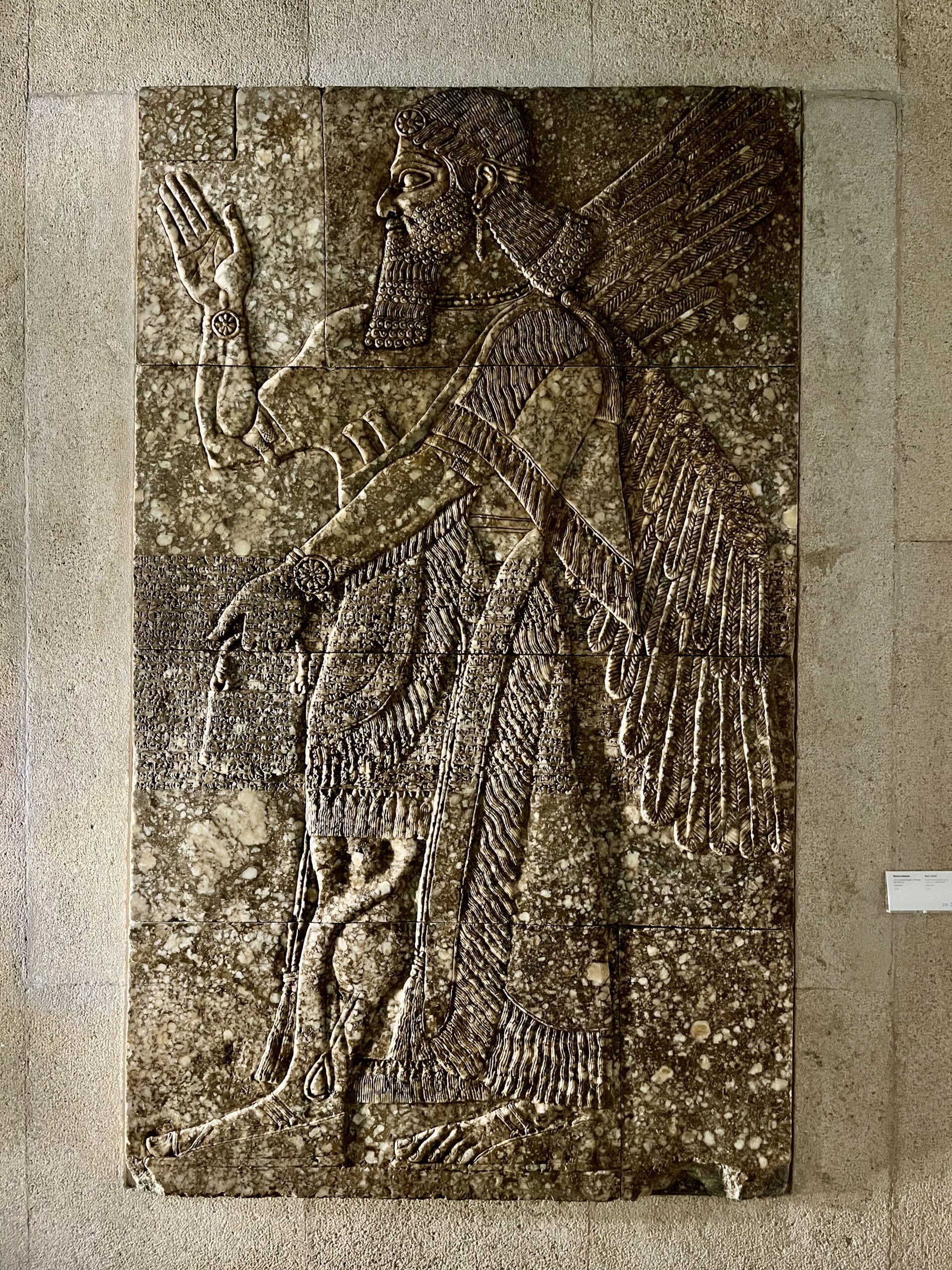
And an Assyrian relief sculpture that practically knocked me on my arse.

Abyssinian relief of Nimrod

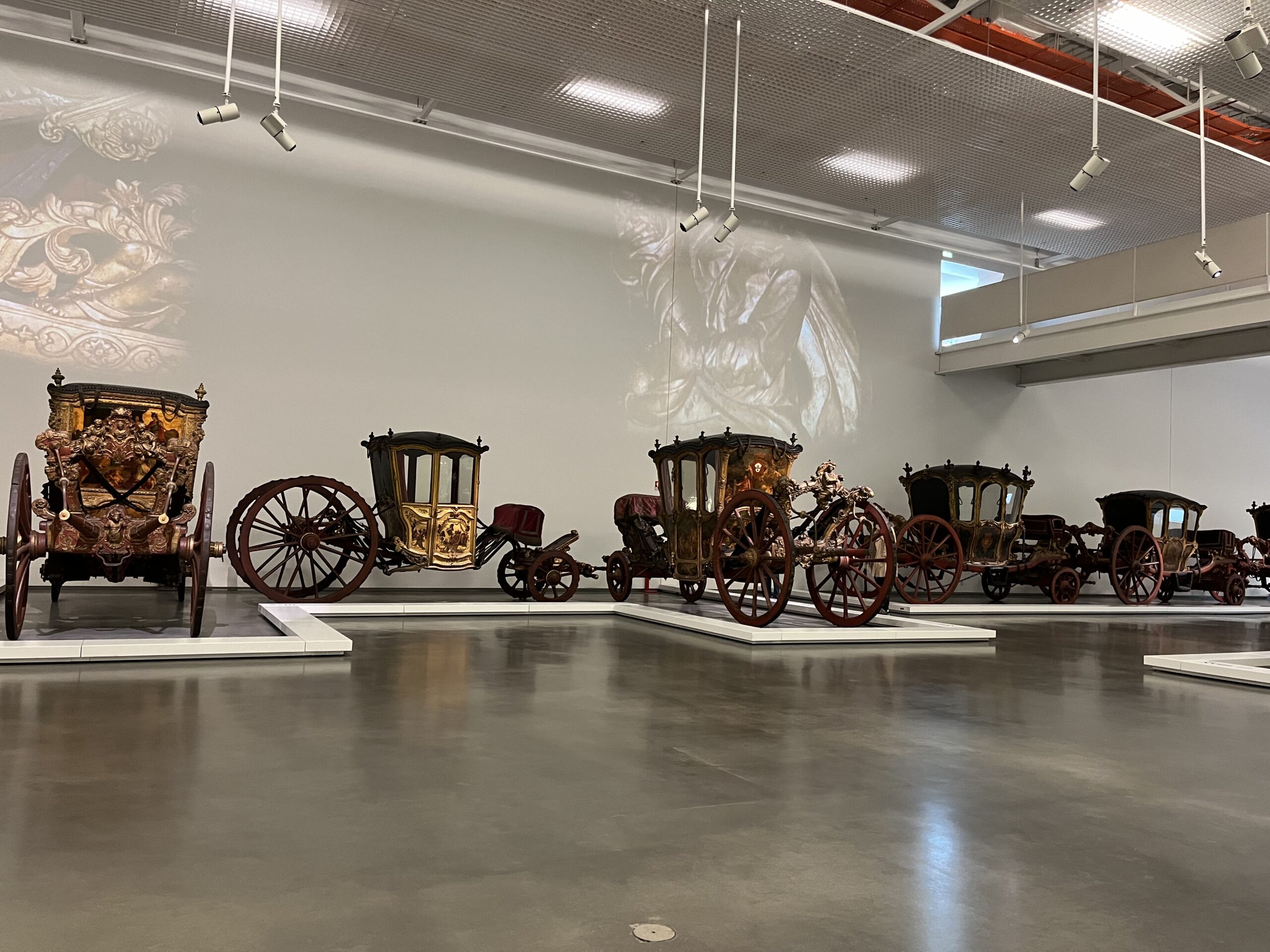
The next day I went for a wander on my own, and ended up in the Coaches museum. It’s an extraordinary collection of magnificent coaches, with incredible craftsmanship, housed in a state-of-the-art new museum building. And it’s a crap museum. The coaches are just sitting there, like they’re parked in a warehouse. There is no sense of flow, or mystery, or history, or discovery, or story.

The Coaches museum

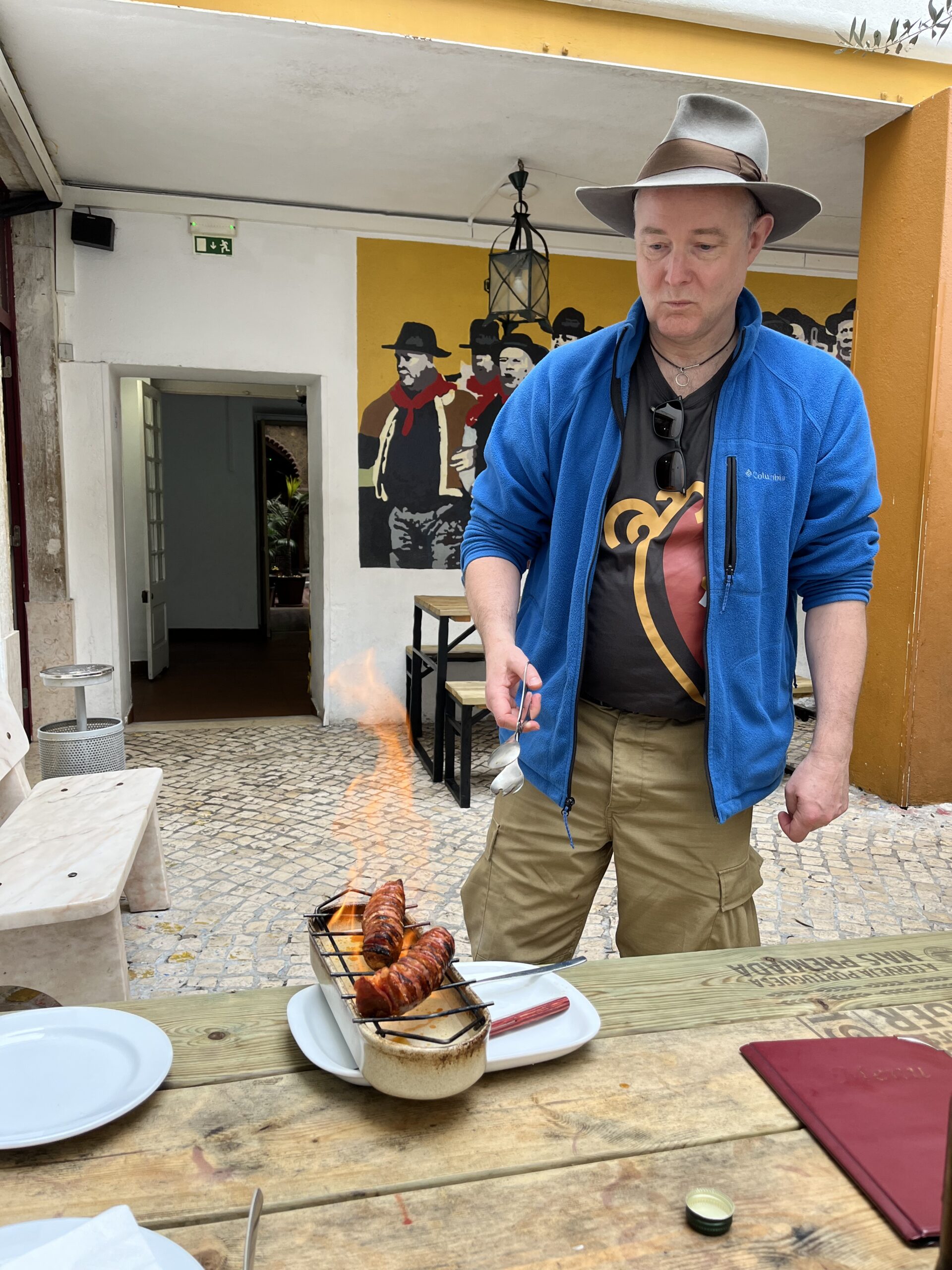
That evening we drove off to the Panóplia, and got back on Sunday evening. I was on the last flight home on Monday, so Jessica very kindly took me into the centre and we touristed the place up. (Yes, that’s a verb.) The view from the top of the Arco da Rua Augusta was superb, and lunch in a fabulous little restaurant that you’d never find without a guide was a cultural and gastronomic delight. Get this: they set fire to their sausages!

the waiter left me in charge…

There is nothing like wandering around a city to get a feel for the place. And having a glass of Ginja from the same little shop where Manuel dos Reis da Silva Buíça had a dram before heading off to shoot Carlos I (the last reigning King of Portugal; his younger son Manuel was technically king, but in exile, which in my view doesn’t count unless you mount a successful counter-revolution) in 1908. I’m happy to say that I’m feeling no more regicidal after the ginja than I was before.

So to everyone who made the trip such a spectacular success: gracias, grazie, obrigado, and thank you!

This Thursday, November 30th, I complete a half-century. And even more exciting than me getting a year older (which to be fair is an annual event), the TOP SECRET project I’ve been working on with Katie Mackenzie is ready!!

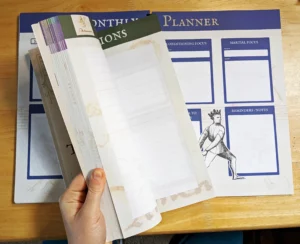
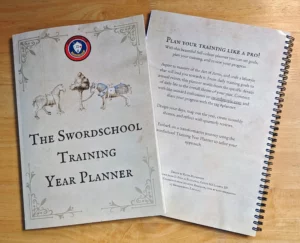
The Swordschool Training Year Planner


Plan your training like a pro!

With this beautiful full-colour planner you can set goals, plan your training, and review your progress. Embark on a transformative journey using the Swordschool Training Year Planner to tailor your approach.
Aspire to mastery of the Art of Arms, and craft a lifestyle that will lead you towards it. From daily training goals to annual events, this planner works from the specific details of daily life to the overall theme of your year. Connect with like-minded enthusiasts on swordpeople.com and share your progress with the tag #planner. Design your days, map out the year, create monthly themes, and reflect with quarterly reviews.


This was Katie’s idea, and her graphic design work, so full credit to her. Bob Charrette very kindly let me use his line-art versions of the illustrations from the Getty ms (which he originally created for his excellent book Armizare).
My contribution was the introduction, and the overall structure of the planner.
You can get it in print, either paperback or spiral-bound, or to save on shipping costs, you can get the pdf to print at home. Please note, the paperback can be printed and shipped in the USA, but the spiral bound can only be printed in the UK, which will affect shipping times and costs.

To celebrate this major milestone (though why we care so much about numbers that end in a zero, I’m not sure), I’m also running a special sale on The Medieval Longsword course, and The Complete Rapier course, and all ebooks and audiobooks. You can find the courses here:
https://swordschool.shop/pages/guys-50th-birthday-sale
And because of the whole “50” thing, you can have them for just £50 each (plus sales tax if your location requires it), which is an 85% discount on their usual price.
The discount will run from today (Nov 28th), through to the end of the weekend (Sunday Dec. 3rd).
Until then, you can use this code to get 50% off the usual price on all digital products (ebooks and audiobooks) on https://swordschool.shop:
guyturns50
(all lower-case, and no spaces either end).
Please note the sale offers don’t extend to the print books, because the printers and shippers don’t seem to care about my birthday at all (astonishing!), so the costs of printing and shipping remain quite high.
Feel free to share the courses and the discount code with anyone you think might benefit from them. These discounts will expire on Monday December 4th.

I’m just back from the International Rapier Seminar, held in Warsaw last weekend. It was an absolute blast, so the first order of business is a heartfelt dziękuję/gracias/thank you to the organisers, especially Lorenzo Braschi for inviting me (he was the very man who introduced me to the mighty porrón in Spain in 2012), and to Karol for driving all the way out to the Ryanair airport to get me, which was only marginally closer to Warsaw than it is to my house.

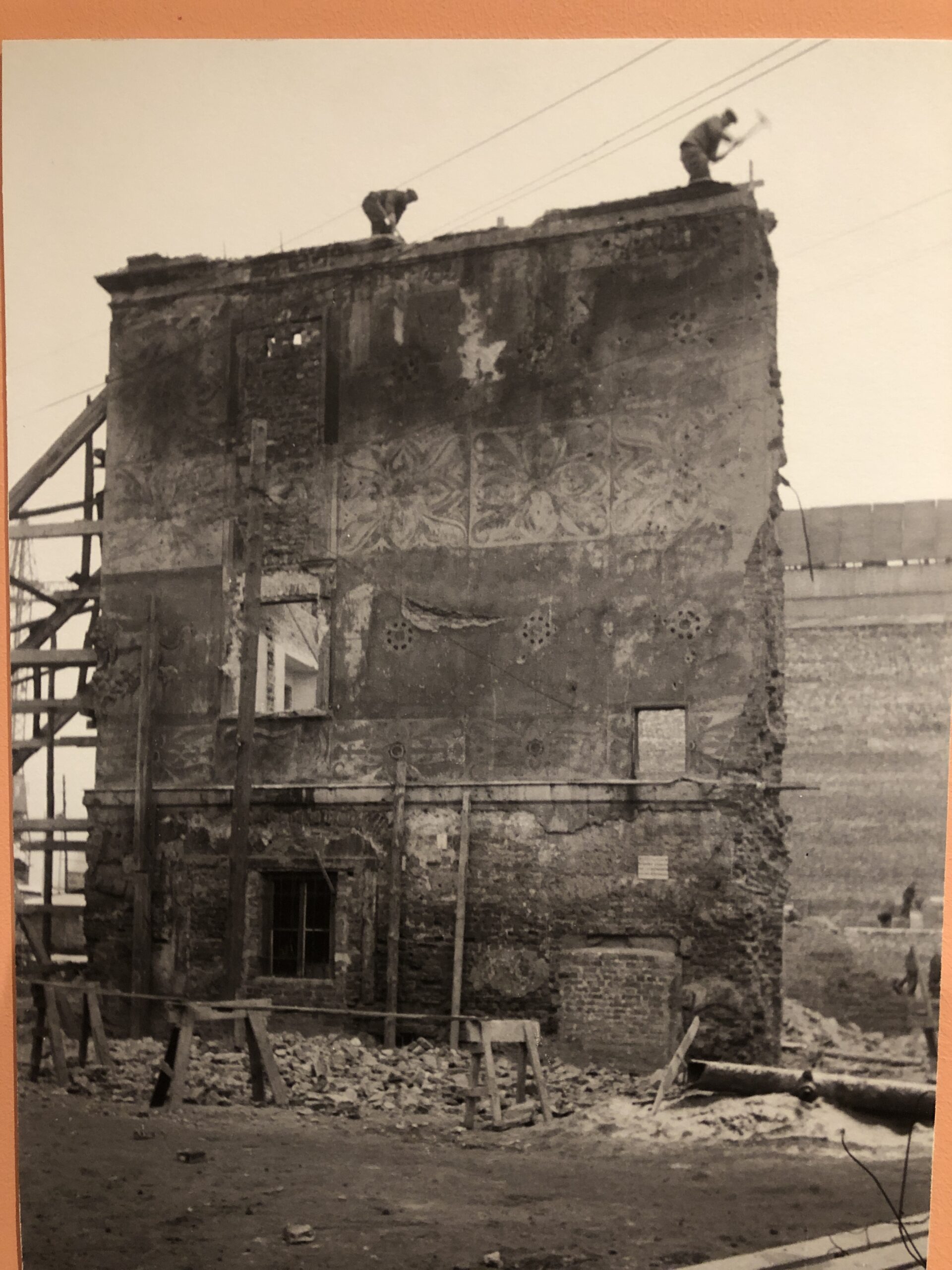
The event kicked off at 5pm on the Friday, so I spent the day in Warsaw being a tourist, mostly at the Warsaw Museum, which had a special exhibition on the reconstruction of Warsaw after the Nazi’s wantonly destroyed it (as in, 65% of the city completely levelled, 80% badly damaged) after the Uprising of 1944. I didn’t know much about the city before I got there, and it frankly blew me away. The sheer scale of the clearing and rebuilding beggars the imagination, especially when you realise it was done with picks, shovels, and horse-drawn carts, in a country ravaged by the war.

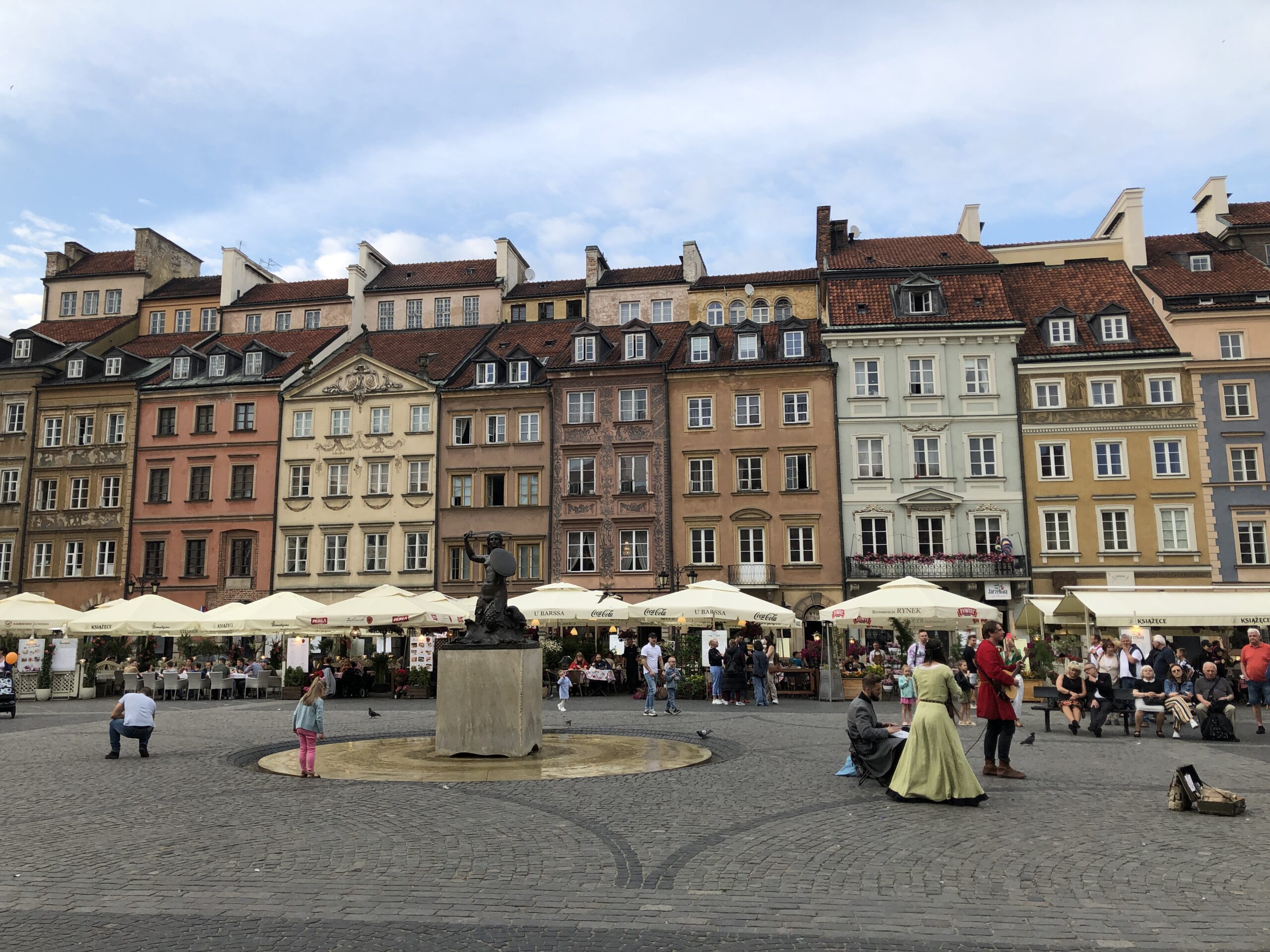
Walking around the old town, you wouldn’t immediately guess that the buildings were built 70 years ago.

The event began with a get-together, a bit of sparring and lots of chatting, and I got to meet a student I’ve been interacting with pretty much weekly since 2020 (hi Jas!). I taught two classes on the Saturday: How to Train, followed immediately by How to Teach. I can summarise them for you like so:

1. Run a diagnostic, fix the weakest link, run the diagnostic again

2. Generate the optimal rate of failure in your student/s.

Simple, yes. Easy? Not so much. But that’s why we practice, right? The classes were well attended, and I think well received. During the afternoon I dropped in and out of watching classes by the other instructors, and got to fence with Emilia Skirmuntt, she of episode 75 of the podcast. Plus a great catch-up with Alberto Bomprezzi, whom I haven’t seen since my trip to Spain in 2012, and meeting Jorge from Mexico who persuaded me to part with my proof copy of The Duellist’s Companion Second Edition.

There may or may not have been much carousing and revelry that evening…

Sunday was given over to the tournament, which had two excellent features: it didn’t occupy all the space, and I didn’t have to do any work on it. So I spent the day fencing people! Elmar, Radek (who went on to win the tournament, congratulations!), Chris, Heikki (the one Finn at the event), Cornelius, and Martin. Each bout was different, each one delightful in its own way. If I had them to give, I’d give out the special technical “this feels like fencing a specific historical system” award to Martin (organiser of Swords of the Renaissance, which I attended last year and will return to in September this year). We were both really tired (these events are exhausting), but there were moments when it felt like Capoferro and Fabris might not have been ashamed of us. Another highlight was working with Damian on grounding and mechanics. He’d asked for it in my class the day before, but we didn’t have time to go into sufficient detail. There's no substitute for working one-on-one with students.

I was too knackered by the heat to fence everyone I wanted to, so Pedro Velasco and Tomasz Kraśnicki, here’s your rain-check for my first two bouts next time!

The great thing about all the bouts, and the event itself really, is that it was all very collegial. There was plenty of competitive spirit, but none of the personality-driven jockeying for status etc. that can make fencing unpleasant. That’s down to the attendees, in part, but also to the spirit of the event itself, for which the organisers should be thoroughly applauded.

Dinner on Sunday night was a blast too; most of the attendees had gone home, but on my table at a restaurant in a square in the old town, there were 8 people, no two of them from the same country. We had the USA, UK, Denmark, Serbia, Bosnia, Finland, Denmark, and Italy represented. If I went on a bit much about flying and woodwork, then Marc, Nic, Nicole, and Vicky, my apologies. Blame the vodka! But to be fair, they did ask…

And breakfast on Monday involved an hour-long chat with Ton Puey, Chris Lee-Becker, and Pedro Velasco. I think that a huge part of the value of events like these is the unscheduled serendipitous interaction with colleagues and friends. I also found at least two new guests for the podcast whom I had never heard of before the weekend!

My main takeaways from this trip are 1) I should do more of them and 2) I need to work on my fencing fitness. My legs are killing me!

As is now traditional, the day after an event like this I'm flooded with Facebook friend requests, which is lovely, but I don't use Facebook. So, if you'd like to find me on social media, come to swordpeople.com and say hello!


Who doesn’t love Fiore’s art of arms? I mean really, it’s got everything. If you’re into medieval stuff, it’s the best-documented knightly sword, with source manuscripts dating back to the late 14th century. If you’re into any kind of unarmoured fencing, this system lays down the eternal fundamental rule: parry and strike. Then takes that idea and riffs on it with exchanges, breaks, and some very cool tricks.

I’ve been working with Fiore dei Liberi’s art of arms since first coming across a dodgy photocopy of the Pisani Dossi manuscript in the early nineties, and have been developing my interpretation and teaching classes regularly in the system since 2001. I've encapsulated my understanding and teaching method in The Complete Medieval Longsword Course.

This course bundle includes:

  • The Medieval Longsword Complete Course
  • The Medieval Dagger Course
  • Fundamentals: Footwork Course

The Longsword course is organised into nine main sections.

  1. Getting Started
  2. Basic Striking
  3. Basic Defences
  4. Counter-Remedies
  5. How to Strike
  6. The Cutting Drill, Complete
  7. Introducing Complexity
  8. Fiore’s Longsword Plays
  9. Advanced Training

The Medieval Dagger Course comprises:

  1. Foundations: theory, footwork, falling
  2. Basics: Dagger handling and joint locks
  3. The System Overview
  4. Other lines of attack
  5. The Dagger Disarm Flowdrill
  6. Completing the Base

Fundamentals: Footwork includes:

  1. Safety
  2. Grounding
  3. Controlling Measure
  4. Longsword module
  5. Rapier module
  6. Sword and Buckler module
  7. Bonus material

Together this bundle costs $600 (plus sales tax if you live in the EU). For the next week only, you can get 50% off the bundle price, so it will cost just $300 (or $60/month for five months). Just use this link: https://swordschool.teachable.com/p/complete-medieval-longsword?coupon_code=FIORESUMMERSALE

All my courses come with a 30-day money back guarantee. If you buy it but find it’s not for you, then just let me know and I’ll refund you with a couple of mouse clicks.
But I'm confident you'll love it. Why? Because so far less than one student in 400 has asked for a refund, and we get testimonials like this one from Jason:

I was living in a historical martial arts desert during the pandemic, so I started with Swordschool's free introductory class for longsword and was immediately hooked. Guy provided clear instruction with video demonstration. I was able to run a small Fiore study group working through the materials here to jump start me into using the manuscripts themselves. Guy provided that necessary bridge that I needed to into being able to interpret and work through the material first hand. And best of all, he was only an email away if I had questions. I would absolutely recommend these courses to anyone who needs a historical martial arts starting point, especially if you are trying to enter into this world of swordsmanship on your own or to challenge your interpretation of your own art or to try a new historical form. – Jason James

Interested? here's the link: https://swordschool.teachable.com/p/complete-medieval-longsword?coupon_code=FIORESUMMERSALE


Back before the internet, back before Wiktenauer, in the days when historical fencing treatises were photocopied and distributed by hand, one man did something extraordinary, which we benefit from to this day. Dr. Patri Pugliese was finding, reproducing, photocopying and distributing fencing treatises back in the bad old days, before many of our community's leading lights were even born, let alone had begun fencing. I did all my early work on Capoferro, Viggiani, Angelo, Silver, DiGrassi, I.33 and other systems from Patri's photocopies. I never met him, but I owe him an enormous debt.

The torch Patri lit and carried has been taken up by Michael Chidester, architect of the Wiktenauer, so it's appropriate that I reproduce his tribute here (with his permission, of course).

11th May 2021 would mark the 71st birthday of Dr. Patri Pugliese, the most important person in the history of modern HEMA that you've never heard of. I will go so far as to say that there is no one in this world who contributed more to the spread and development of the HEMA movement, and especially of HEMA in America, than did Patri.

For himself, he was a passionate student of both historical combat (not just fencing, but also drill with pike and musket) and historical dance, and founded or participated in groups dedicated to those activities around New England. Most recognizably to readers today, he co-founded the Higgins Armory Sword Guild, which not only provided online resources and public classes and demonstrations for over a decade, but also supported his friend and fellow instructor Dr. Jeffrey Forgeng in his translation and interpretation efforts (leading to his publication of I.33, Meyer, and others).

But Patri's more profound legacy is fencing manuals. Throughout the '90s and continuing until his death, he distributed a staggering catalog of fencing treatises. This was before (and while) the consumer computing revolution changed everything—he was physically mailing sheaves of paper, loose or stapled together. Some were fencing manuals that he photocopied at local research libraries, others were printed from microfilm ordered from museums. He was the first person in the community to do this, and he charged only the cost of printing and postage, or in some cases a slight premium to recoup the initial purchase.

Of this, he simply wrote “I regard myself as a student of the sword rather than a publisher, and am making these manuals available to support research in this area. It would, of course, be selfish and inconsistent with the honorable traditions associated with fencing to do otherwise.”

I will include a partial list of Patri's catalog below. As the internet became more established, most of these were scanned and placed online (with his blessing—he was happy to increase their accessibility). If you ever accessed black and white scans of any of these texts from sites like Bill Wilson's homepage, the ARMA site, the Raymond J. Lord Collection, or the Higgins Sword Guild, then you have likely benefited from Patri's work. Wiktenauer itself could not have grown so quickly or easily without these scans, some of which we still use.

I often joke that our patron saint is Paulus Hector Mair, the shady 16th century Augsburg patrician who embezzled public funds to cover the cost of collecting fencing manuals and throwing lavish parties.

It was Patri, however, who embodied our highest aspirations of disseminating knowledge and resources as widely and freely as possible, and thereby pushing the bounds of our understanding of historical fencing traditions.

Patri Pugliese died after a struggle with illness in 2007, fourteen years ago. One of my greatest HEMA regrets is that even though I spent considerable time in Massachusetts during the years between 2001, when I started, and his death, I never crossed paths with him.

Fourteen years is an eternity in the world of HEMA. It is enough time that his name is no longer familiar to most teachers and students of historical fencing, but if any one of us deserves to be remembered, he does.

So raise a glass to Patri, my friends. He was a pioneer, not just of the study of fencing, but of the sharing of it. The edifice of knowledge that we have constructed in HEMA today was built on the materials he offered us, freely.

And then tell your students about this man to whom we all owe a great debt.

Search

Recent Posts

Categories

Categories

Tags