Guy's Blog

Guy frequently keeps this blog updated with thoughts, challenges, interviews and more!

Roubo Bookstand, a wedding present for my sister.

 My sister, a writer, is marrying David, a historian and writer who has a special interest in 18th century France. So what could be more fitting than a Roubo bookstand?
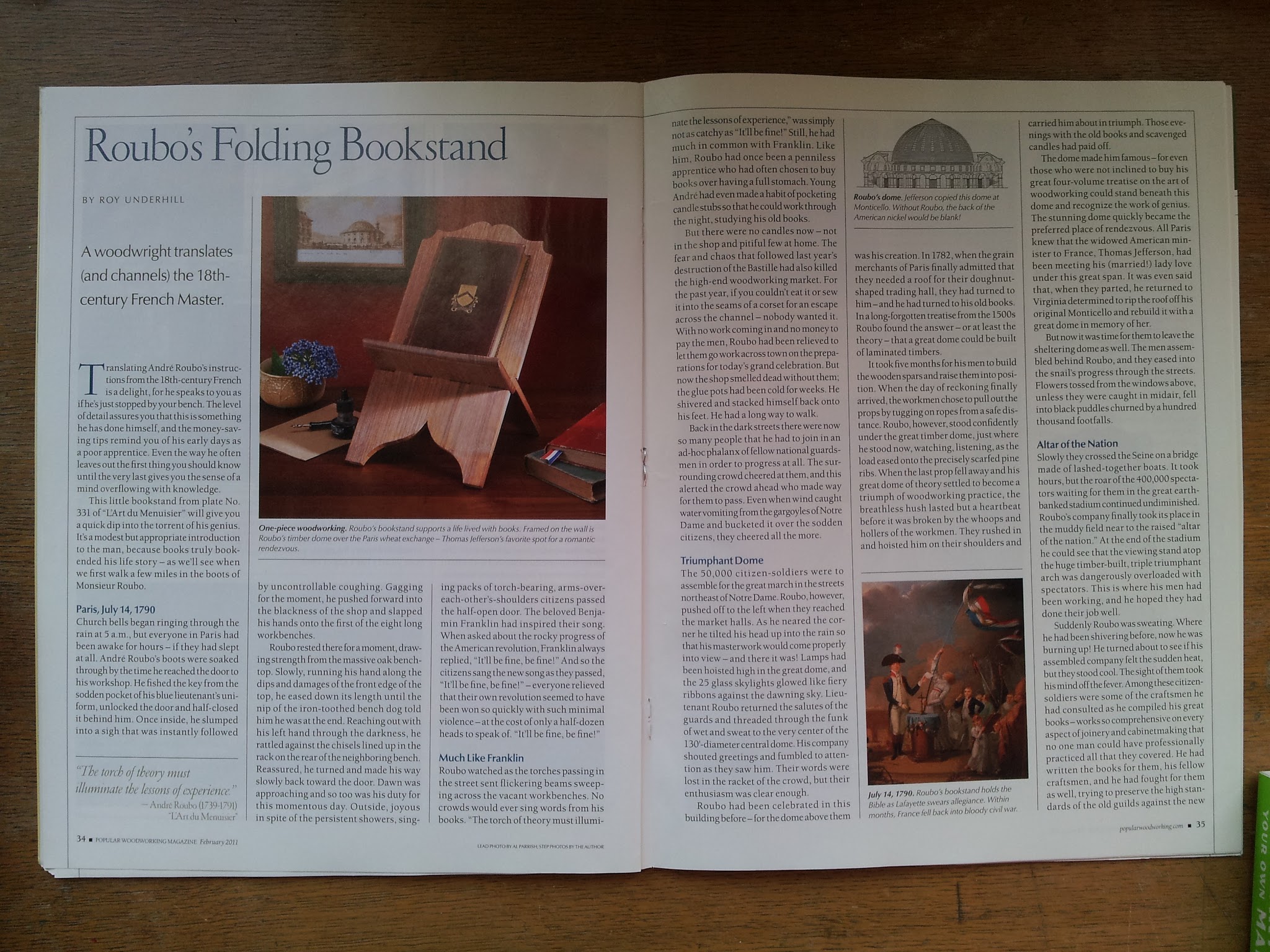
I came across it in an article in Popular Woodworking Magazine (Feb 2011), picked up on a trip to the States. In the article, Roy Underhill not only shows something of how to make it (though it's not a how-to article), but also provides a translation of the original section from Roubo.
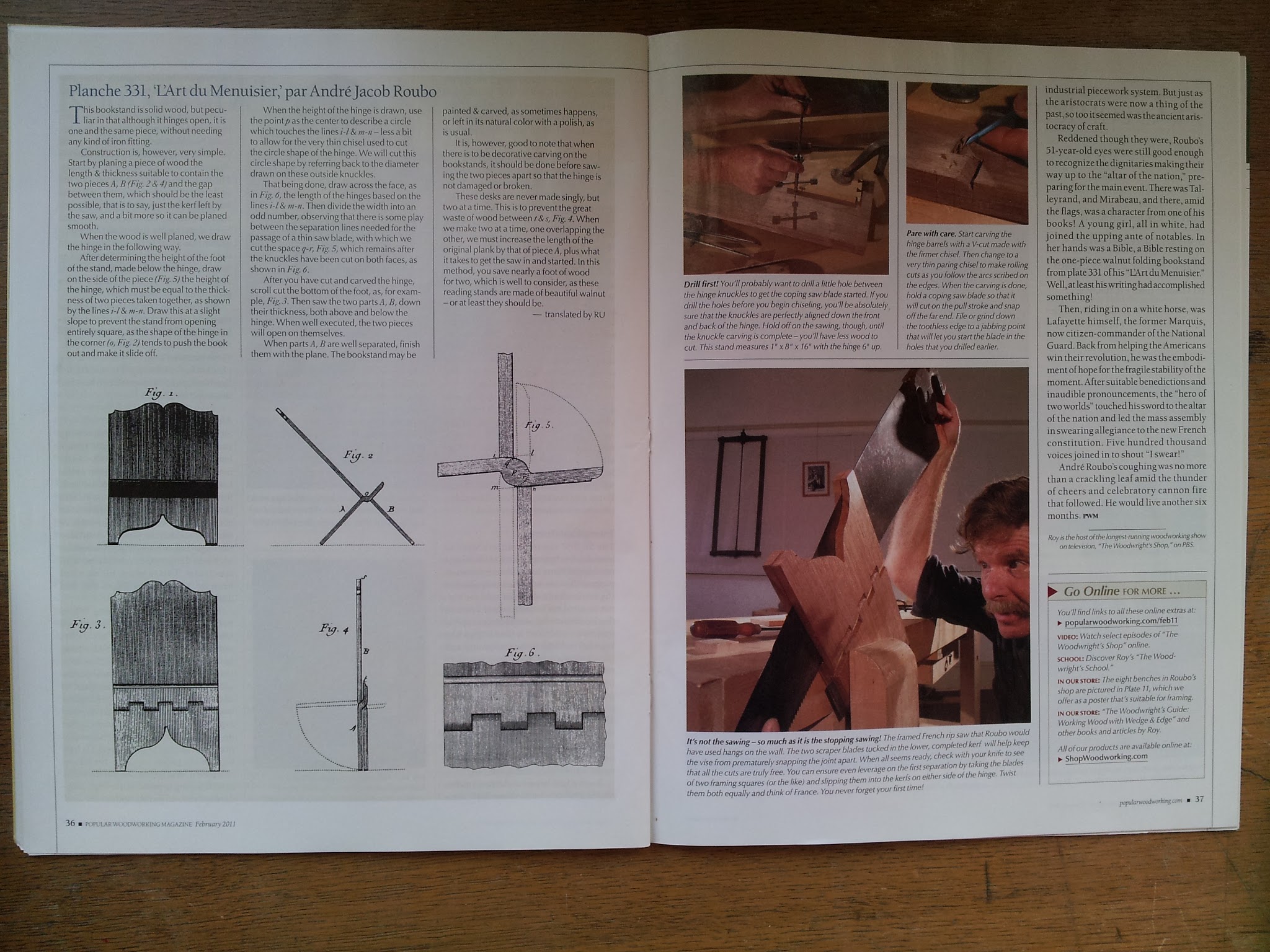
Further help came from watching the episode of his show that deals with it. Roy has an engaging enthusiasm for his topic, and as a professional recreator of one lost art, I am a fan of his desire to revive another.

One thing conspicuously lacking from either of these sources is actual dimensions for anything. So I bashed out and nailed up a maquette, here:

after some tweaking, I got the proportions how I wanted them, so the stand will be stable and functional. Here is a book (my latest) on it:

And held open by a hammer: the bit the book sits on has to be quite big.

I had already sourced a lovely bit of walnut (as specified by Roubo) so out with the saw to hack off the piece.

And then planed carefully flat and square all round:

To mark it out, I used a yellow pencil borrowed from my kids' pencil box, and established the main points:
the piece is 17 3/4″ long, 7″ wide, and a shade under 1″ thick. The midpoint of the hinge is at 6 5/8″ from the bottom.
The next step was to cut out the waste slab, as the two sides of the stand are of different lengths. I was dreading this step, as it meant accurately rip-sawing by hand down about 8″ of 7″ wide walnut. But it went just fine: I first cut across:
then cut diagonally down one corner, then the other, then joined up the cuts:

Note: if possible, start the cut from edge to end, so the ripsaw teeth are going with, not into, the grain. (So, the saw should be the other way round). Once the cut is deep enough, I used little wedges to keep the cut open, so the saw didn't bind:

and coming carefully to the crosscut, out came the waste piece. Please note that Roubo expressly states that these stands should be made in pairs to avoid this waste, but this piece is too wide to rip on the bandsaw, and I don't have a bowsaw, so I had no way to easily start the cut in the middle of the board. So sorry, Mro Roubo. I'll find some nice use for the offcut.

Then the feet: the first thing was to lay out the ogee, using Mr Underhill's instructions (from the video, not the article:

And then use a coping saw to cut it out. I started the rip cut first, to make sure its plane was well established, as it's easier to do that on a nice flat end, then got to work with the coping saw.

After which, I continued the rip (though that could have waited until much later on).

Then the edge of the bit the book will sit on: I found to my relief that I had no router bit that would do the job, so I had to use a knife, chisel and shoulderplane to do it. Damn that hand work, give me the roar and the dust… or not.

Then the ogees for the top edge. I wanted this to be much like the one in Roubo, so worked it out geometrically on paper first:

And then recreated the geometry on the wood.

A bit of coping-saw work and some sanding lead to this:

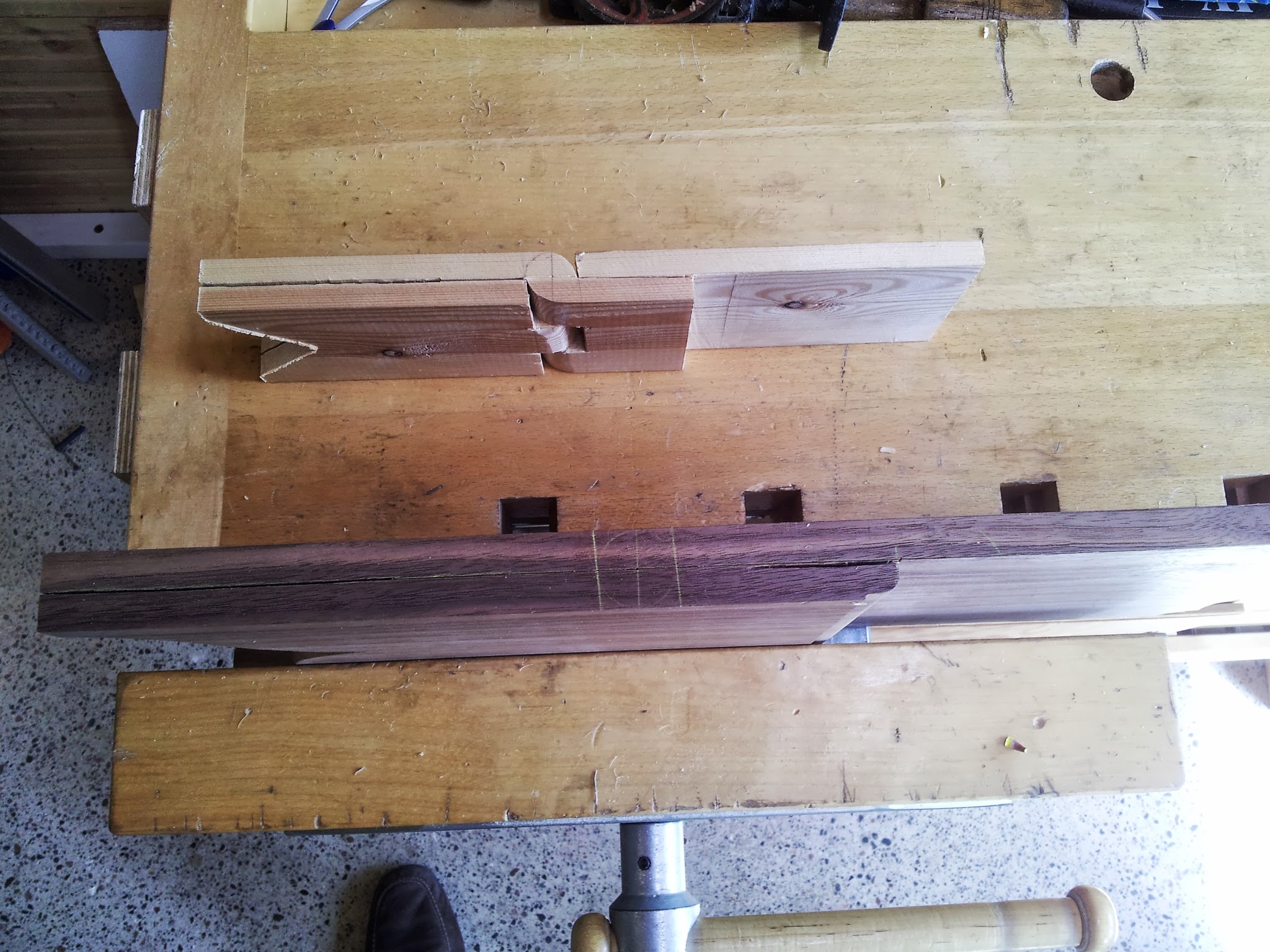
And there the matter stood for some weeks, as family holidays and a week-long swordsmanship seminar took up all my time. I realised that I really did not understand the knuckle joint hinge I was going to cut, so hacked out a practice piece out of a bit of scrap pine:
Snazzy, huh? do not be fooled: I managed to break it when opening the joint. This has only three knuckles, so the middle piece connecting the long back and the front legs was the weak spot. For the sake of figuring out the joint I glued it back together. One thing that nobody I've found online does is accurately reproduce Roubo's version of the joint. He is explicit: the cuts into the depth should not be at 90 degrees, but slanted to prevent the stand opening quite square, so the hinge does not push the book off. Even Mr Underhill does it square: it's MUCH easier! And most others (such as Christopher Schwarz, author of the excellent Workbenches book), cut the knuckles flat instead of round. You can see Mr. Schwarz's very useful video of his way of doing it here). The joint works just fine, but the look, to me, is way off. I am known in my profession for rabid adherence to the letter of the Book, so naturally (despite the issue of not making two of these at a time), I wanted to do the joint as God  Roubo intended. You can see the angles here:

 And note, Roubo does not tell you how far off square to be, so this was a bit extreme.

 With some careful chiselling, I got the stand to open right. It actually works as a mobile phone stand:

So now, on to cut the knuckles in the real thing…
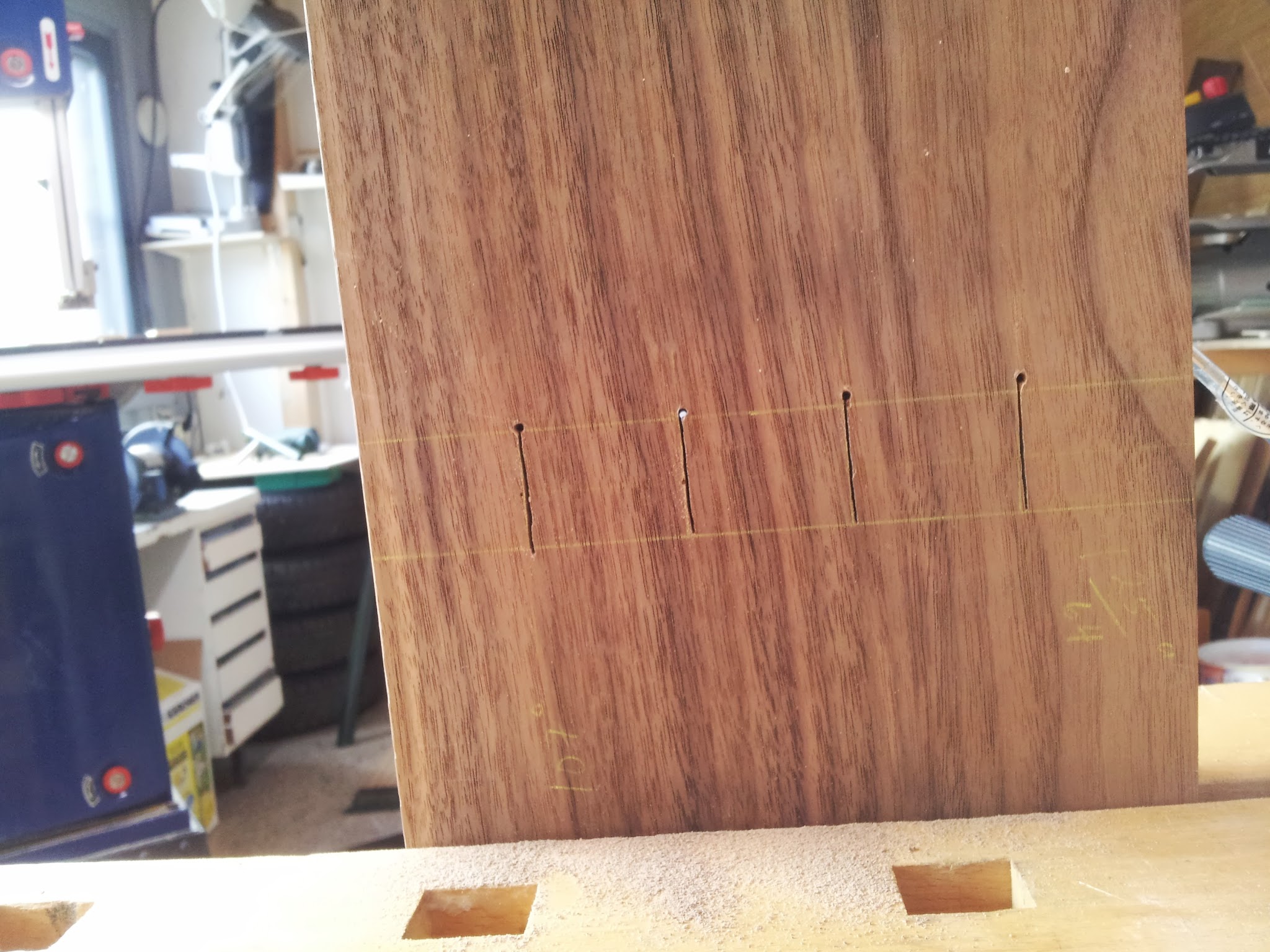
First up, marking it out, making damn sure that the angle of the knuckles goes the right way:

 Then I had to mark out the pilot holes, and set the whole thing on a mandril, left over from the canteen project, where I used it to clamp and cut the cutlery frames.
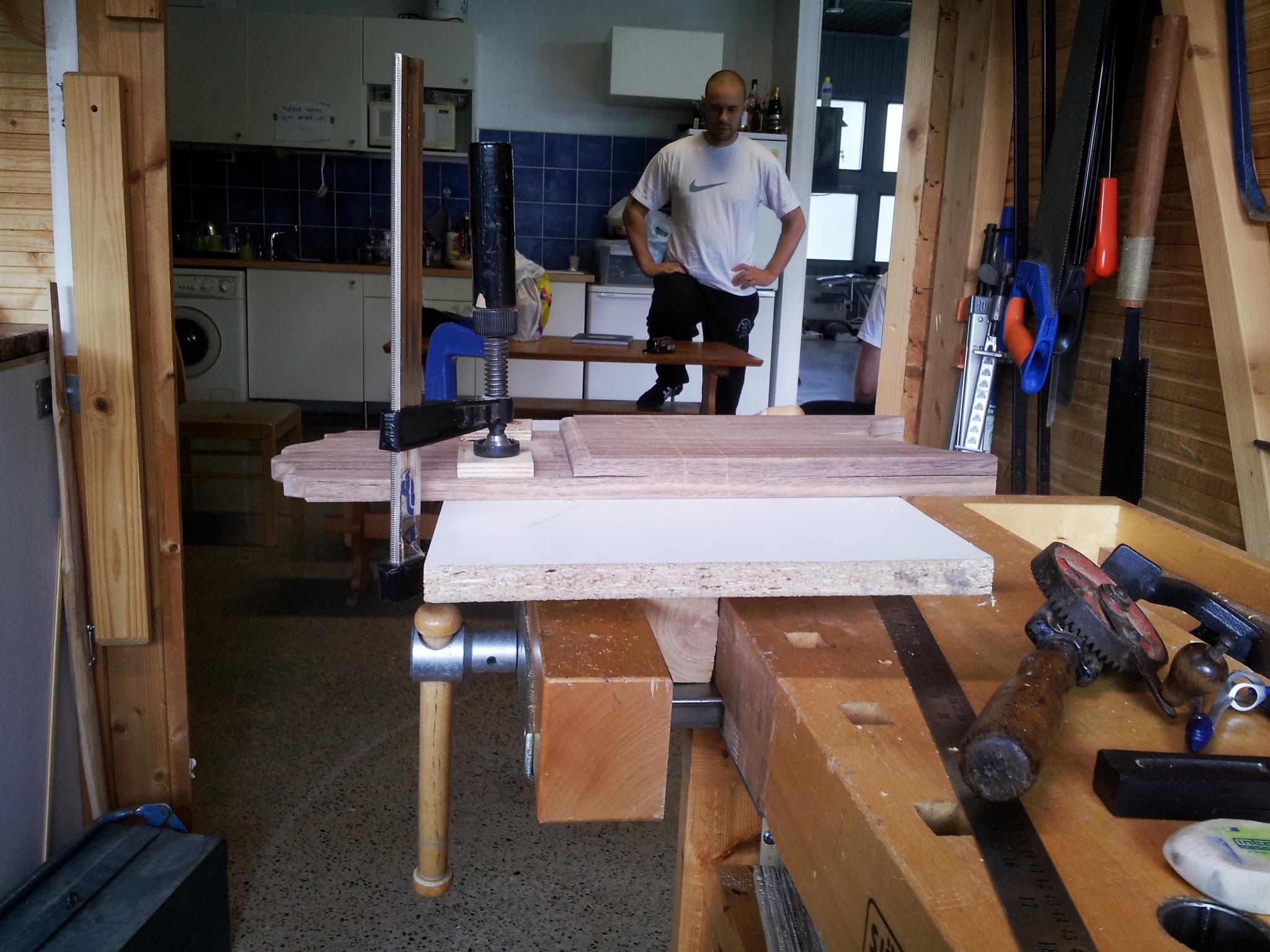
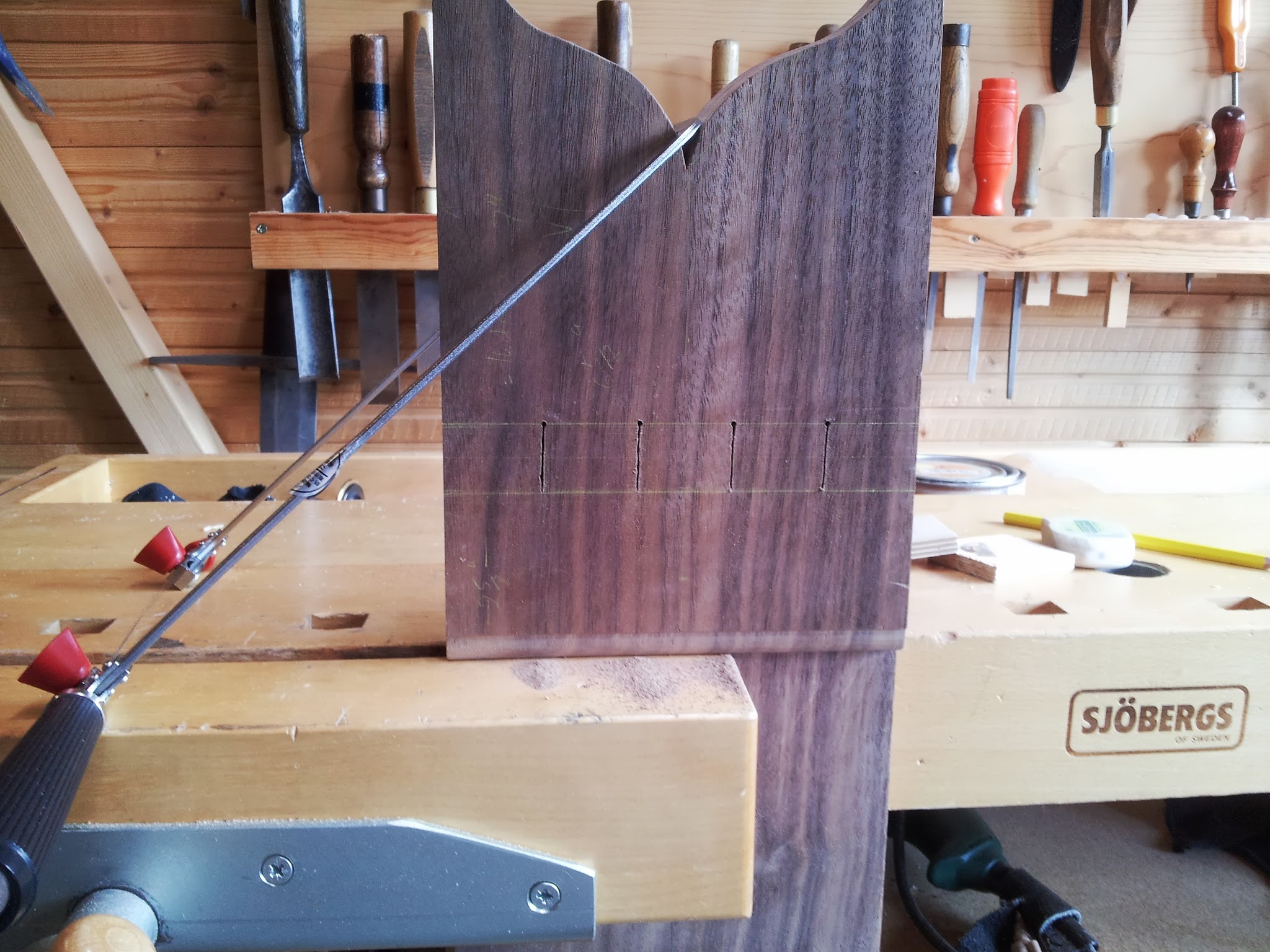
I drilled the holes with my trusty hand drill (inherited from my grandfather), and cut the verticals with a new coping saw, bought for this project. My other one couldn't take smooth-ended blades, only the crossbar type, so no good for fitting through small holes. This new one also has a much deeper bow, so I could saw the lines with the saw vertical. Much easier than at 90 degrees, which this rather good tool can also do. 

 A bit wiggly, but there it is:

 Then, time to sharpen up all chisels and knives I expect to use, raising a burr on the bevel with my 1200 grit, and polishing off both bevel and flat on my 8000 grit, finishing off on the strop with a 10000 grit paste. Shiny 🙂
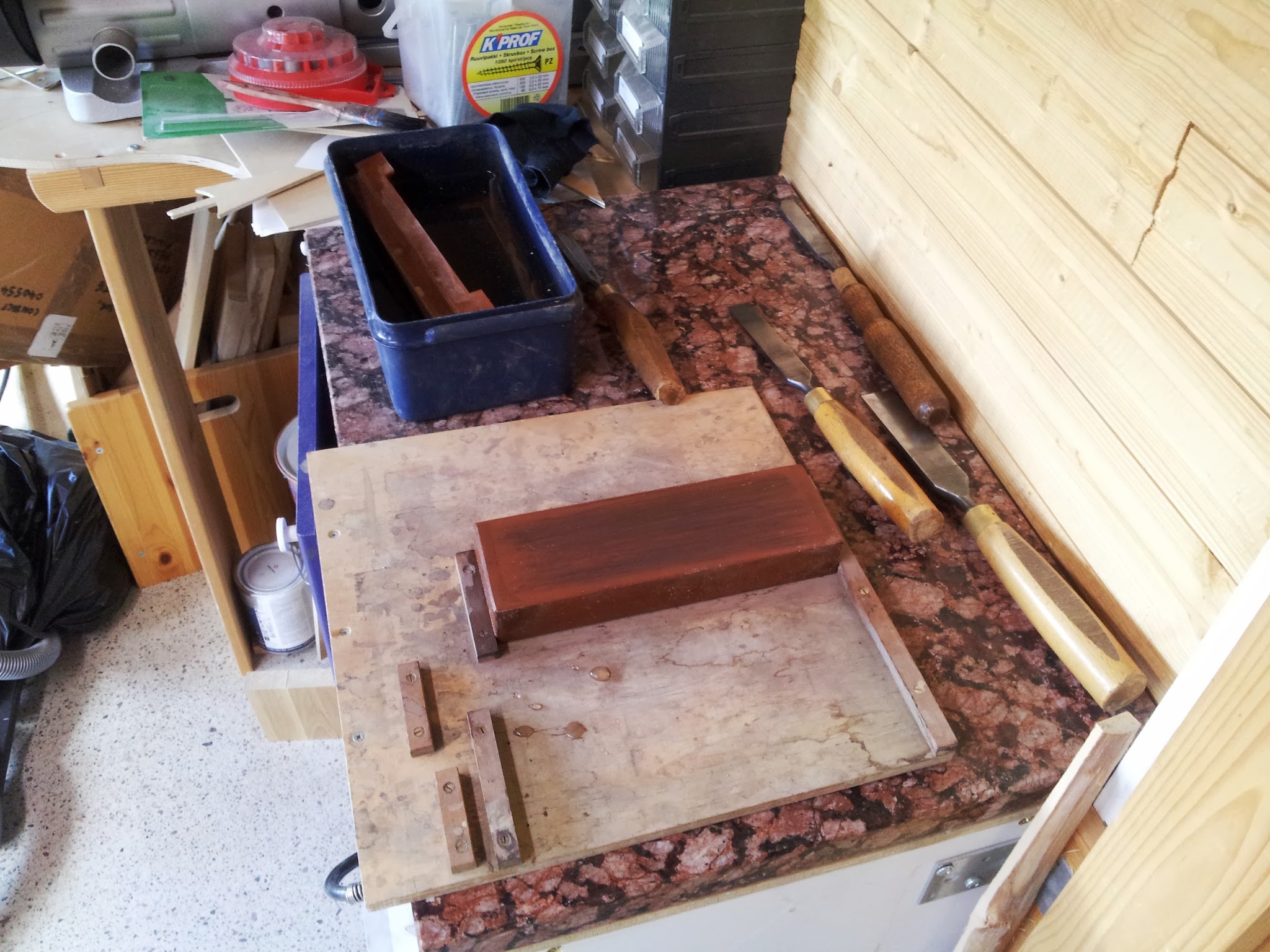
 I also ground the bevel of a paring chisel back a bit, to help it fit into the tight spaces in the knuckles. Failing to get all the way down to the centreline was why the test piece broke.
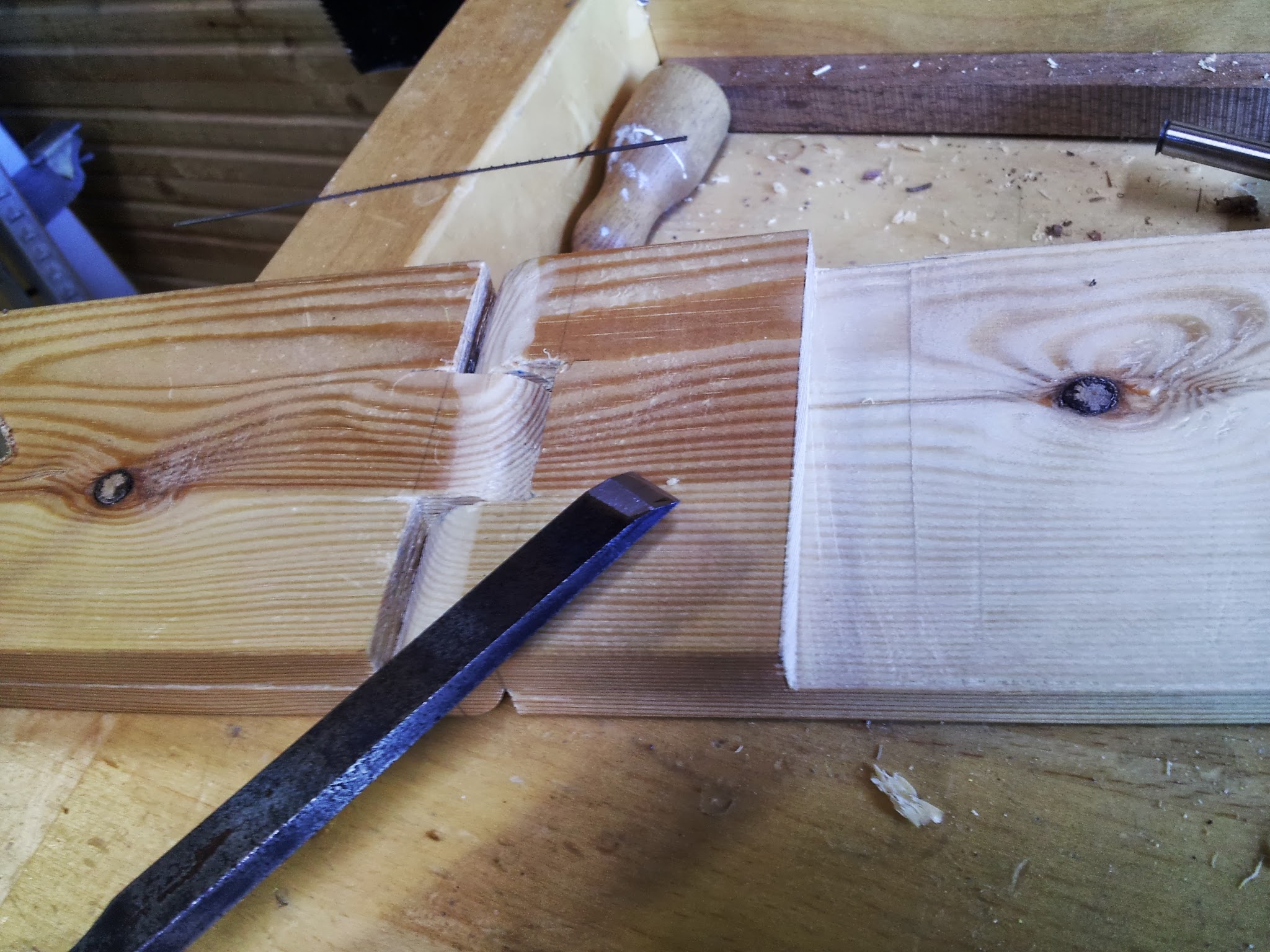
 then clamp it up and cut! Not easy, but actually much easier in the thicker walnut than it was in the thinner pine test piece.
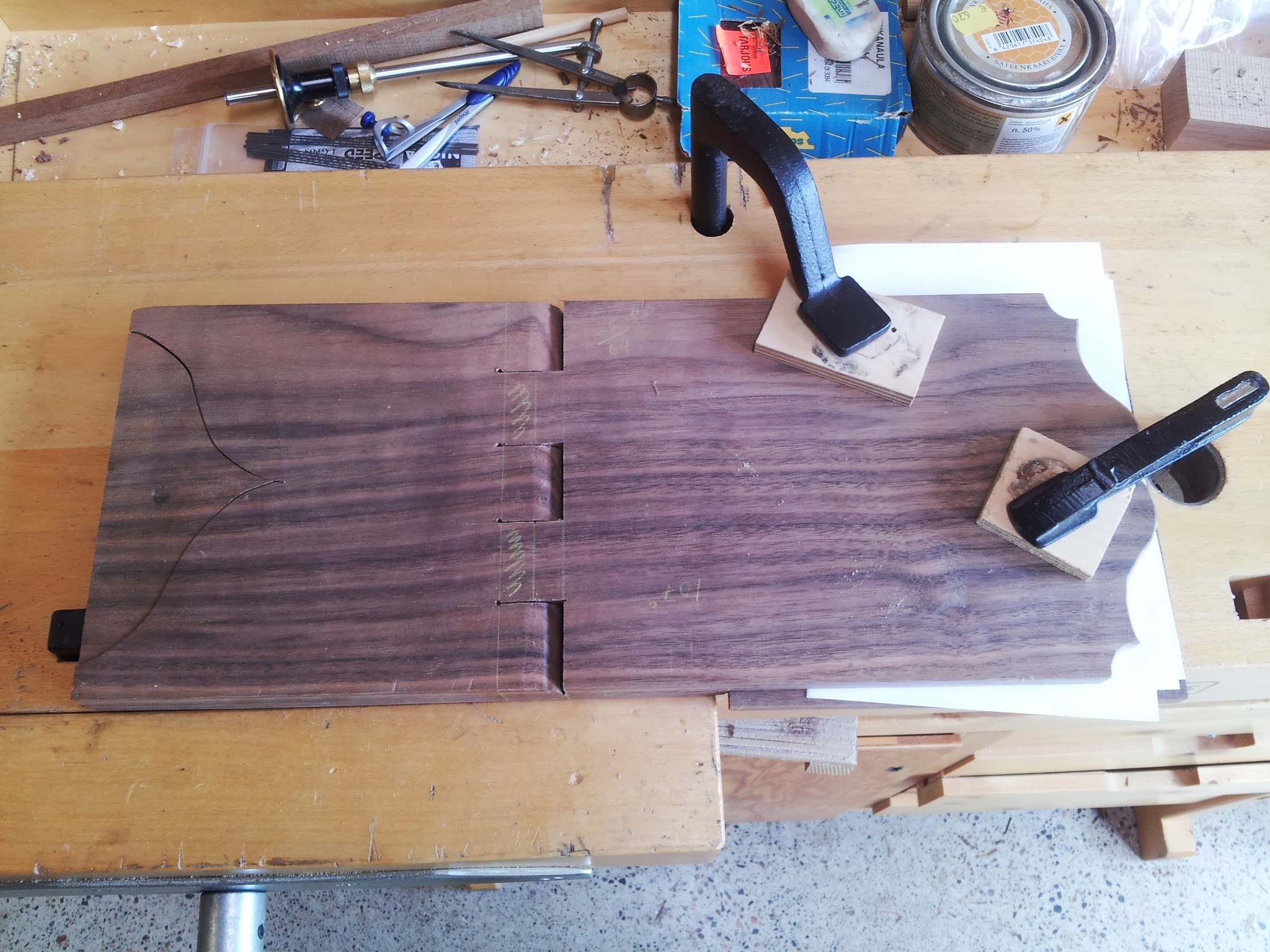
Note the use of the offcut from the feet as a clamping block. I also used the waste piece from the top face, and some paper to make up for the kerf, to get the top end supported level with the thicker bottom end.

I have shot video of the tricky bits here:

Cutting the knuckles: this is perhaps the most critical process.


Then opening the joint, and cleaning it up, getting it to open smoothly.

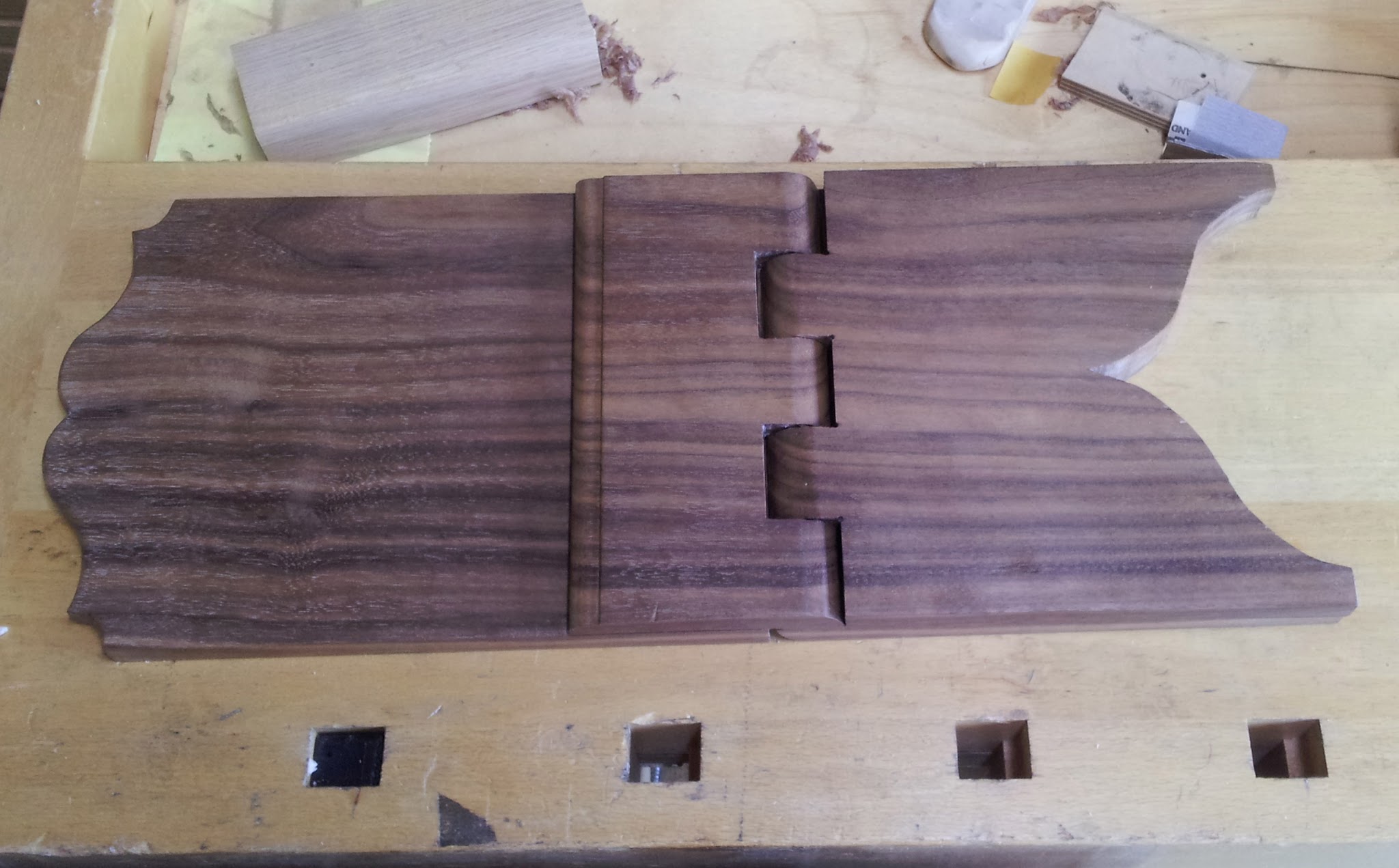
Lastly, sand with 200 grit, raise the grain, sand with 320 grit, and three coats of beeswax-based polish, and we're done! All in all, a fun and challenging project, which will be going to a good home.
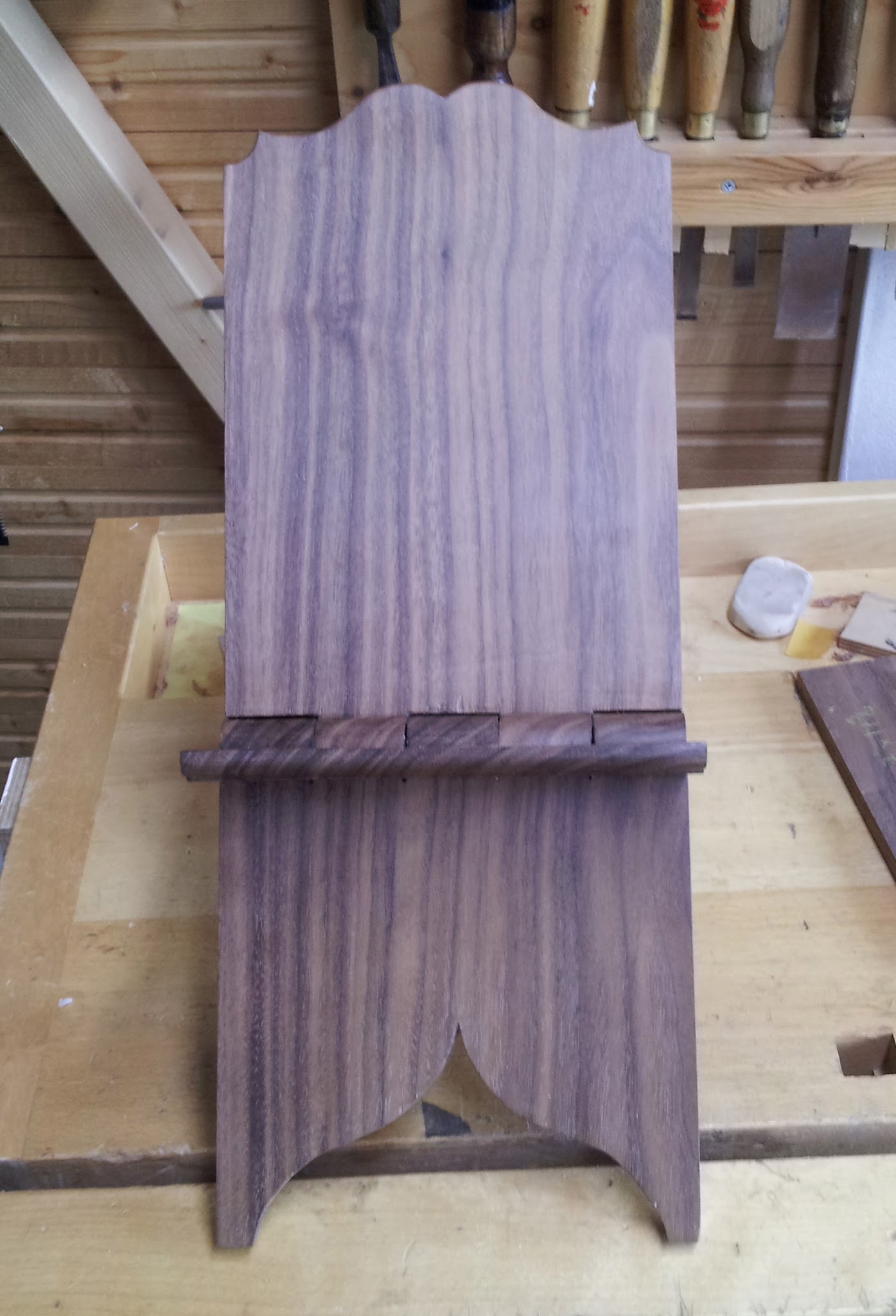
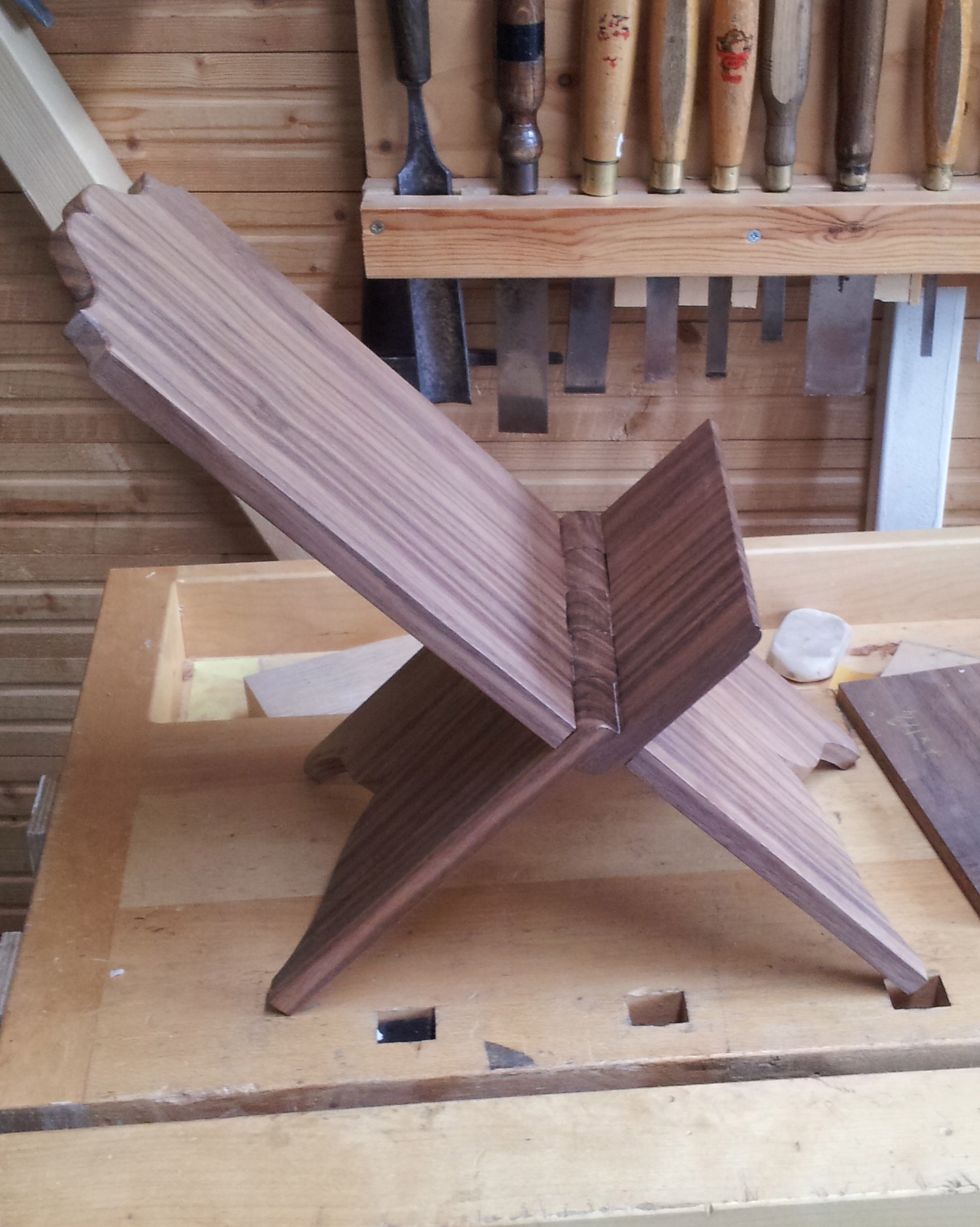
I'm sure you have an opinion: do share!

Leave a Reply

Your email address will not be published. Required fields are marked *

Search

You May Also Like

Excalibur Book Nook

 I came across the idea of a book nook quite recently; one just popped up

Recent Posts

Categories

Categories

Tags